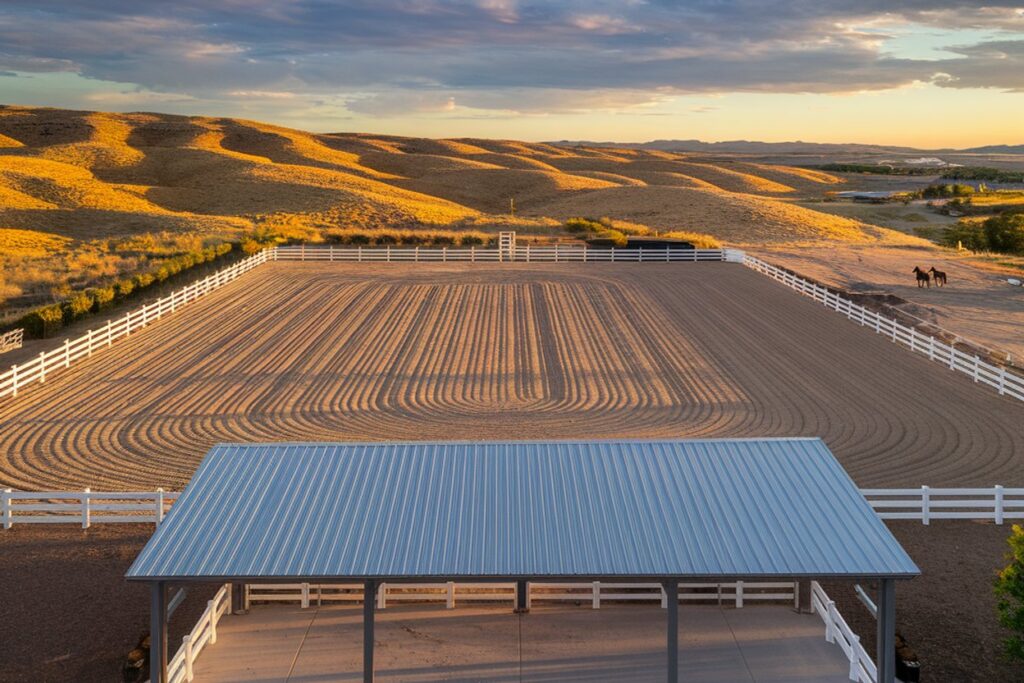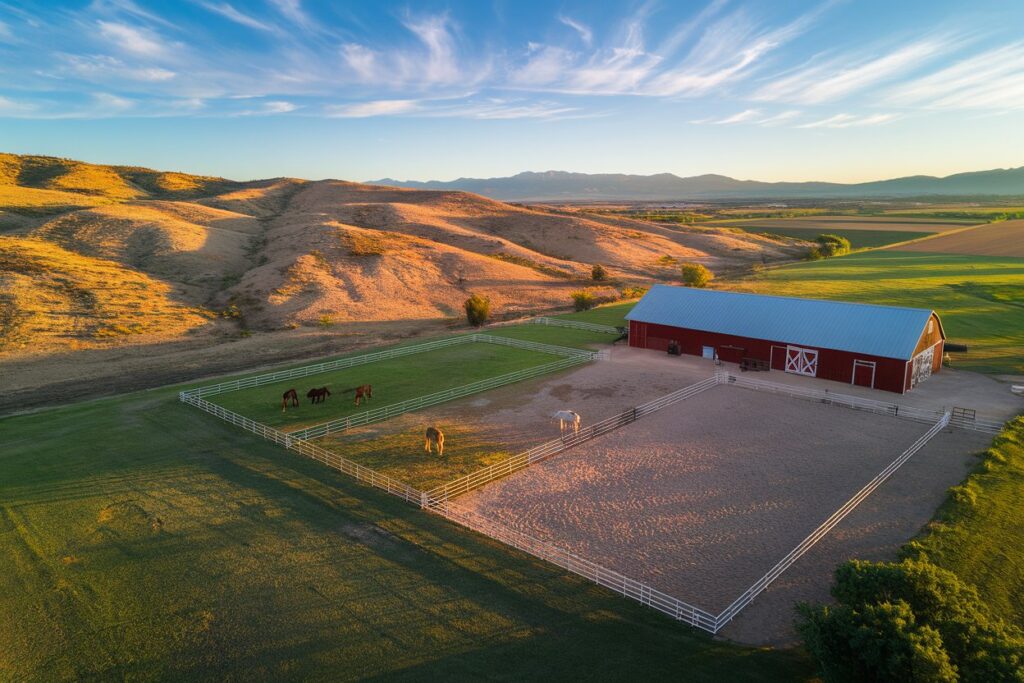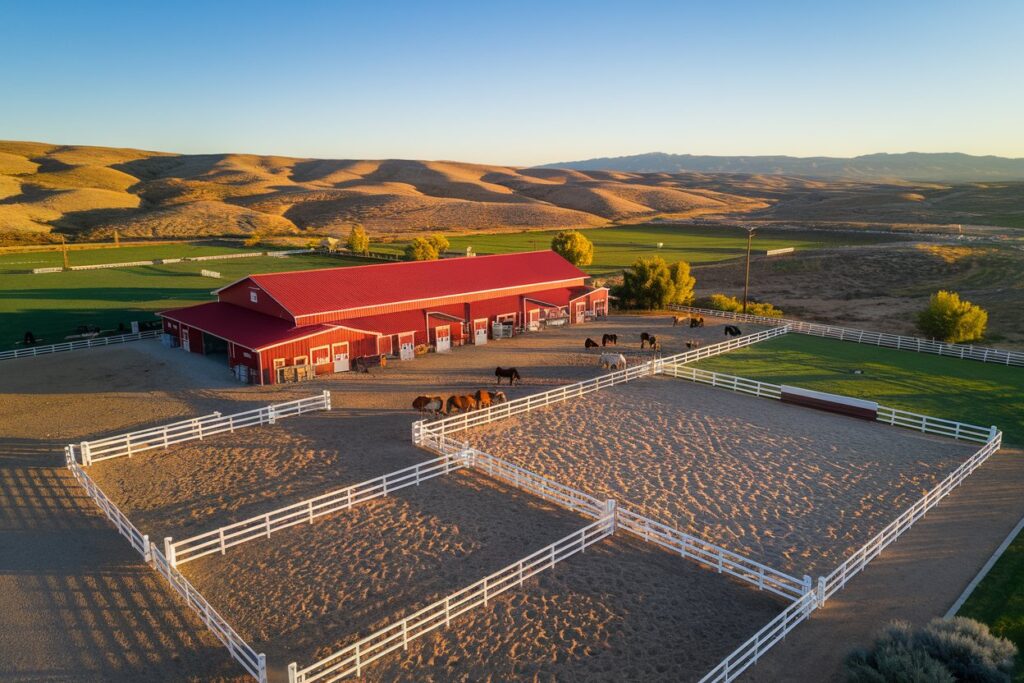
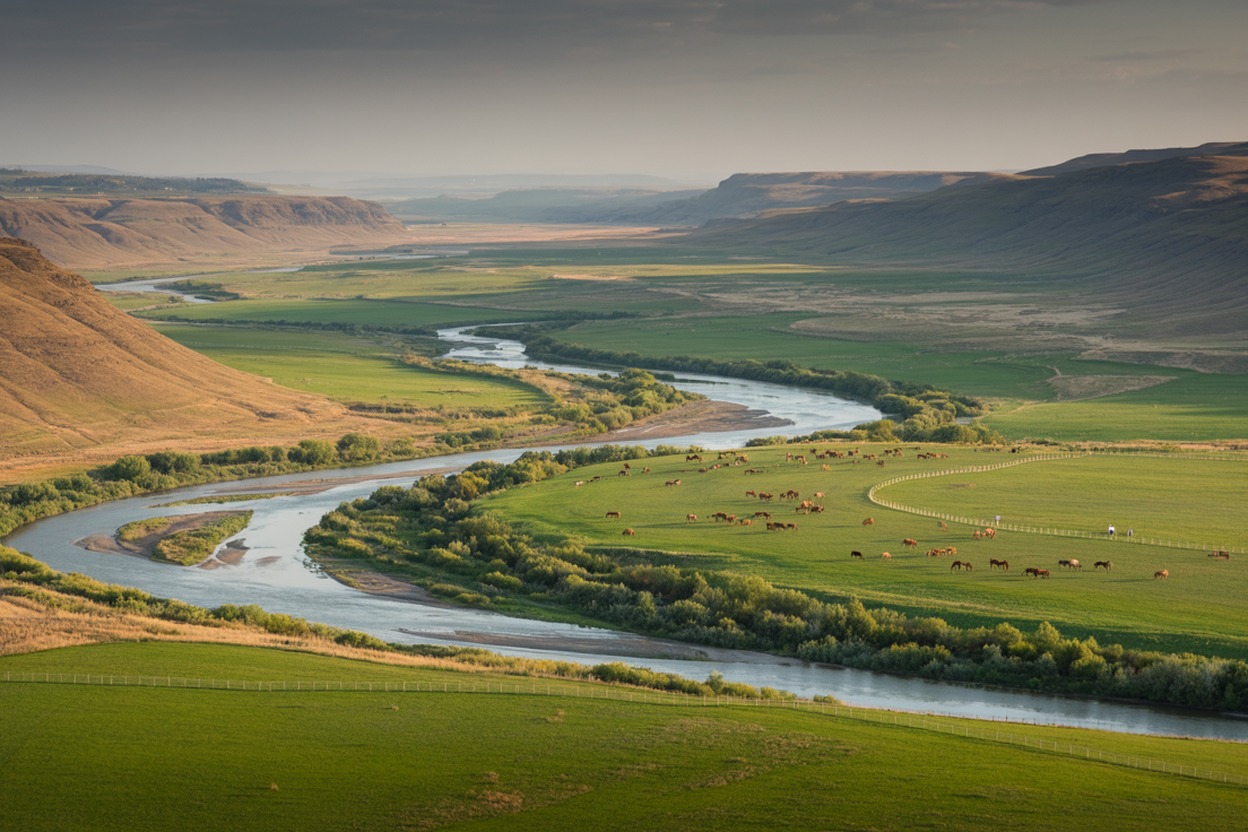
If you have been shopping for an Oregon horse ranch for sale or browsing horse properties in southwest Idaho, you have probably noticed that the best options sit on both sides of the Snake River. The Treasure Valley straddles the Idaho-Oregon state line, and serious equestrian buyers who limit their search to just one state are cutting their options in half. At True North Equine Land & Ranch, our broker Kellie Robinson is licensed in both Idaho and Oregon, has competed as a reiner for over a decade, and has spent more than 15 years helping horse people buy property across this border region.
This guide is not another general horse-property checklist. We have already published a comprehensive Complete Guide to Buying Horse Property in Eastern Oregon that covers acreage, barns, arenas, fencing, water, and financing in depth. This post focuses on what is different between the two states, why those differences matter to a horse buyer, and how to evaluate parcels on each side of the line so you can make the comparison that actually serves your goals.
In This Guide
Why Buyers Shop Both Sides of the Snake River
The Idaho-Oregon border in the Treasure Valley is not a natural barrier. Ontario, Oregon and Fruitland, Idaho are separated by a bridge and a few minutes of driving. Boise’s economy, medical facilities, and airport serve the entire region regardless of which state you live in. For horse buyers, this means the practical differences between a 20-acre horse property across Payette, Ada, Canyon, Gem, and Owyhee counties, Idaho and a similar parcel in Malheur County, Oregon are not about lifestyle convenience. They are about water law, zoning rules, tax structures, and the regulatory frameworks that govern what you can do on your land.
| Category | What to Check | Why It Matters |
|---|---|---|
| Water | Water rights, well flow rate, irrigation district membership | Without water, pasture dries out and property value drops significantly |
| Fencing | Type (pipe, wire, wood), condition, height, gate quality | Horse-safe fencing is expensive to replace; budget $8 to $15/linear foot |
| Soil & drainage | Drainage patterns, mud-prone areas, soil type | Chronic mud causes hoof problems and limits usable space 4 to 5 months/year |
| Structures | Barn condition, roof, electrical, arena footing | Structural repairs on ag buildings can cost $20K to $100K+ |
| Zoning | Livestock allowed, max animal count, setbacks | Some parcels limit the number of horses or require conditional use permits |
| Access | Road quality, trailer turn radius, winter plowing | Large horse trailers need wide turns; unpaved roads can be impassable in spring |
Buyers relocating from out of state often do not realize how different the two states’ rules are until they are deep into a transaction. We see this regularly: a family falls in love with a property, makes an offer, and then discovers during due diligence that the water situation, the zoning for boarding, or the property tax picture does not match what they assumed. Starting your search with a clear understanding of both states’ frameworks saves time, money, and frustration.
The Typical Cross-Border Buyer
The horse buyers we work with across this border region tend to fall into a few profiles:
- Competitive riders relocating from higher-cost states (California, Washington, Colorado) who want affordable acreage near a strong equestrian community
- Families consolidating from a leased boarding situation to their own property
- Existing owners upgrading from a smaller place to a larger one within the region
All three groups benefit from seeing what both states have to offer before committing.
Water Rights: Key Differences for Equine Use
Water is critical for any horse property: horses drink commonly 5 to 12 gallons per day per animal, pastures need irrigation to stay productive through the dry summer months, and arena footing may need occasional watering. Both Oregon and Idaho follow the prior appropriation doctrine (“first in time, first in right”), but the agencies, processes, and practical details differ in ways that affect horse-property buyers directly.
We have written a full comparison of Oregon and Idaho water rights at Understanding Water Rights When Buying Ranch Property. Here is a quick summary of what matters most for equine buyers.
Oregon Water Rights
Oregon water rights are administered by the Oregon Water Resources Department (OWRD). Water rights in Oregon are tied to the land and the specific beneficial use described in the right. If you want to change the use of a water right (for example, converting an irrigation right to include stock water), you may need to go through OWRD’s transfer process, which can take months. Oregon also enforces a “use it or lose it” standard more rigorously than some states: rights that have not been exercised for five or more years can be subject to cancellation proceedings.
Idaho Water Rights
Idaho water rights are administered by the Idaho Department of Water Resources (IDWR). Idaho completed a massive water-rights adjudication of the Snake River Basin (the SRBA) that clarified and confirmed most of the water rights in southwest Idaho. For buyers, this is actually an advantage: the certainty around Idaho water rights in this region is generally higher than in parts of Oregon where adjudication is still ongoing. Stock water rights for livestock (including horses) are commonly held separately from irrigation rights, and IDWR’s online database makes verification relatively straightforward.
The Practical Difference for Horse Buyers
In both states, you need to confirm that the water right covers your intended use and is in good standing. The key practical difference is the verification process:
- Idaho: Post-SRBA adjudication clarity tends to make water-right due diligence faster and more predictable. IDWR’s online database is straightforward to search.
- Oregon: Transactions may require more time to confirm right status and any needed changes of use through OWRD’s formal transfer process.
Zoning and Equine-Use Rules, Side by Side
Zoning is where the two states diverge most sharply for horse-property buyers, because the frameworks governing what you can do on agricultural land are fundamentally different.
Oregon: Exclusive Farm Use (EFU)
Most agricultural land in Malheur County falls under Oregon’s Exclusive Farm Use zone, which prioritizes farming and limits non-farm uses. Horse keeping is generally allowed as a farm use on EFU land, but commercial equine activities such as boarding, lessons, and training facilities may require conditional-use permits depending on the county’s interpretation of the rules. If operating a small equine business is part of your plan, confirm the specific allowed uses with Malheur County planning before you make an offer.
Idaho: County-Level Agricultural Zoning
Idaho’s zoning is administered at the county level without Oregon’s statewide land-use framework. Payette, Canyon, and Washington Counties each have their own agricultural zoning designations, and the allowed uses tend to be more permissive than Oregon’s EFU for equine activities. Boarding operations, riding lessons, and small-scale equine businesses are more may be permitted depending on county code and parcel zoning; verify with county planning staff or with a simple conditional-use process in Idaho’s rural ag zones. For buyers who want to offset property costs with a boarding or training operation, this flexibility is a meaningful advantage on the Idaho side.
Idaho vs Oregon Horse Property: What to Compare
The table below summarizes the key differences that matter most to horse-property buyers comparing parcels on both sides of the state line. These are general patterns, not guarantees. Always verify specific details for any parcel you are considering.
| Number of Horses | Recommended Irrigated Acres | Key Facilities Needed |
|---|---|---|
| 1 to 2 | 4 to 5 acres | Run-in shelter or small barn, 1 turnout paddock, round pen or small arena |
| 3 to 4 | 8 to 12 acres | 2 to 3 stall barn, arena (min. 60×120 ft), 2+ turnout areas, hay storage |
| 5 to 8 | 15 to 25 acres | Multi-stall barn, full-size arena (min. 100×200 ft), pasture rotation, dedicated hay ground |
| 9+ | 30+ acres | Commercial-grade facility, covered arena recommended, multiple pastures, on-site hay production |
| Factor | Idaho (SW Idaho / Treasure Valley) | Oregon (Malheur County / Eastern OR) |
|---|---|---|
| Typical price per acre (improved horse property) | $8,000 to $20,000+ (higher near Boise corridor; broker market observations, not appraised values) | $4,000 to $12,000 (generally lower, less demand) |
| Zoning for equine use | County ag zones; boarding/lessons often permitted | EFU zone; commercial equine may need conditional use |
| Water-right clarity | Post-SRBA adjudication; generally well documented | Varies; some areas still under adjudication |
| Property tax structure | Ag assessment under Idaho Code 63-604 (land used for personal/pleasure horses rather than a for-profit enterprise may not qualify); a lower, flatter individual income tax structure than Oregon (currently 5.3%) | Farm-use special assessment; state income tax applies |
| Commute to Boise metro | 20 to 60 minutes from Payette/Fruitland/Canyon County | 50 to 90+ minutes from Ontario/Vale |
| Equestrian community density | Higher; more trainers, farriers, equine vets nearby | Smaller but committed; less competition for arena time |
| State income tax | A lower, flatter individual income tax than Oregon (currently 5.3%) | Oregon state income tax applies |
Property Tax and Assessment Differences
The tax picture is one of the most common reasons buyers choose one side of the border over the other, and it deserves a careful look because the headline comparison can be misleading.
Idaho: 5.3% flat individual income tax (lower and flatter than Oregon), Ag Assessment Available
Idaho does not impose a state income tax on individuals, which is a significant draw for buyers relocating from income-tax states. On the property tax side, qualifying agricultural land can receive an agricultural assessment under Idaho Code 63-604 that taxes the land on its productive value rather than market value. For a 40-acre horse property that qualifies, this can reduce the annual property tax bill substantially compared to a market-value assessment. However, Idaho property tax rates themselves can be higher in certain counties, particularly in Canyon County where levies for schools and services have increased with population growth.
Oregon: State Income Tax, but Farm-Use Deferral
Oregon does impose a state income tax, which offsets some of the land-cost savings for buyers who earn income in Oregon. On the property tax side, Oregon’s farm-use special assessment can produce very low property tax bills on qualifying agricultural land, and Oregon’s overall property tax rates in rural Malheur County tend to be lower than in Idaho’s more urbanized counties. The net calculation depends on your income, the specific parcel, and your intended use. We always recommend that buyers considering properties on both sides of the line consult with a CPA or tax advisor who understands both states’ systems before making a final decision.
Equestrian Community and Event Access
For many horse buyers, the quality of the equestrian community matters as much as the property itself. Where can you compete? Where can you trail ride? Where are the vets, farriers, and feed suppliers you will rely on every week?
Idaho Side
Southwest Idaho has a thriving equestrian community. Key resources and events on the Idaho side include:
- Ford Idaho Center (Nampa) hosting major reining, cutting, and barrel racing competitions year-round
- Caldwell Night Rodeo and the Snake River Stampede plus numerous county fair events
- Higher concentration of trainers, equine vets, and farriers due to the larger population base
- Trail riding access on BLM land, the Boise Foothills trail system, and informal riding areas throughout the rural landscape
Oregon Side
Eastern Oregon’s equestrian community is smaller but deeply committed. The Malheur County Fair in Ontario hosts horse events, and regional rodeos draw competitors from across the border region. Trail riding access on BLM land in the Owyhee country is virtually unlimited, offering solitude and terrain variety that is harder to find on the more populated Idaho side. The trade-off is fewer local trainers and specialists, though most Oregon-side horse owners in this region travel into Idaho for veterinary care, farrier services, and competition events without considering it unusual.
For our detailed look at the equestrian lifestyle in this region, including arena comparisons, see our post on Indoor vs Outdoor Arenas and our community profile of Weiser and Fruitland Idaho.
Working With a Dual-Licensed Broker Who Can Show You Both Sides
Most real estate agents are licensed in one state. That means if you are searching for horse property across the Idaho-Oregon border, you typically need two agents, two sets of MLS access, and two people who may not communicate well with each other. That is exactly the problem Kellie Robinson built True North Equine Land & Ranch to solve.
Kellie holds active real estate licenses in both Idaho and Oregon and has worked rural equine transactions on both sides of the Snake River for over 15 years. She is a competitive reiner who evaluates properties through a horseperson’s lens, not just a real estate agent’s. When we show you a horse property, we are looking at the same things you would look at: whether the barn layout actually works for daily chores, whether the arena footing will hold up through the seasons, whether the pasture and water can sustain your herd, and whether the fencing is safe for horses or just looks good in a listing photo.
The cross-border advantage goes beyond convenience. Water-rights verification, zoning confirmation, title research, and closing procedures differ between the two states. Having a broker who understands both systems, and who has professional relationships with the attorneys, appraisers, and inspectors on each side, means your transaction moves forward without the communication breakdowns that plague multi-agent deals.
Browse our current horse property listings:
Frequently Asked Questions
How many acres do you need for a horse in Oregon?
Oregon State University Extension recommends approximately 2 acres of well-managed irrigated pasture per 1,200-pound horse. In Eastern Oregon where we operate, irrigation makes a significant difference: irrigated pasture supports more horses per acre than dryland grazing. Beyond pasture, you need space for shelter, a riding arena (a standard dressage court is 66 by 197 feet), turnout paddocks, and hay storage.
What is the 20% rule with horses?
The 20% rule is a guideline that says a horse should carry no more than 20% of its body weight, including the rider and all tack. For property buyers, this matters because it affects the size of horses the property needs to support, which influences pasture requirements, shelter sizing, and arena dimensions. A 1,200-pound horse carrying 240 pounds total needs more robust facilities than a property designed for smaller breeds.
Is 2.5 acres enough for 4 horses?
Generally not. At 2.5 acres for 4 horses, you have roughly 0.6 acres per horse, which is well below the recommended 2 acres of managed pasture per horse. You would need to feed hay year-round, manage mud and manure intensively, and rotate turnout carefully. For 4 horses in our Oregon-Idaho market, I recommend at least 8 irrigated acres to maintain healthy pasture and a functional property layout.
What are some good questions to ask when viewing horse property?
Ask about water rights and well capacity, fencing age and condition, zoning restrictions on livestock, the property’s flood history, what irrigation district it belongs to, whether hay can be grown on-site, road access for large trailers, and proximity to equine veterinary services. Also ask about neighboring land use, since feedlots, construction, or highway noise can affect horses. I prepare a property-specific question list for every buyer showing.
What are the red flags when buying horse property?
Watch for properties with no verified water rights, wells with low flow rates, fencing in poor condition (replacement costs add up fast), inadequate drainage that creates chronic mud, and zoning that restricts the number of animals you can keep. Also be cautious of properties with extensive deferred maintenance on barns and outbuildings, since structural repairs on agricultural buildings can be very expensive. I flag all of these during property walkthroughs.
When you are ready to compare properties on both sides of the border with someone who knows this landscape from the saddle and from the closing table, we would welcome the conversation.
Market data disclaimer: Per-acre price ranges, tax comparisons, and other quantitative information in this post are general estimates based on market observation and should be independently verified with a licensed appraiser, your county assessor, a qualified tax advisor, and the relevant state agencies before making any purchase decision. Figures may have changed since publication. True North Equine Land & Ranch does not guarantee the accuracy of third-party data. Full Disclaimer.
About the Author
Kellie RobinsonBroker/Owner of True North Real Estate Group, licensed in Idaho and Oregon. Competitive reiner, rancher, and 15+ years helping buyers find land that works.