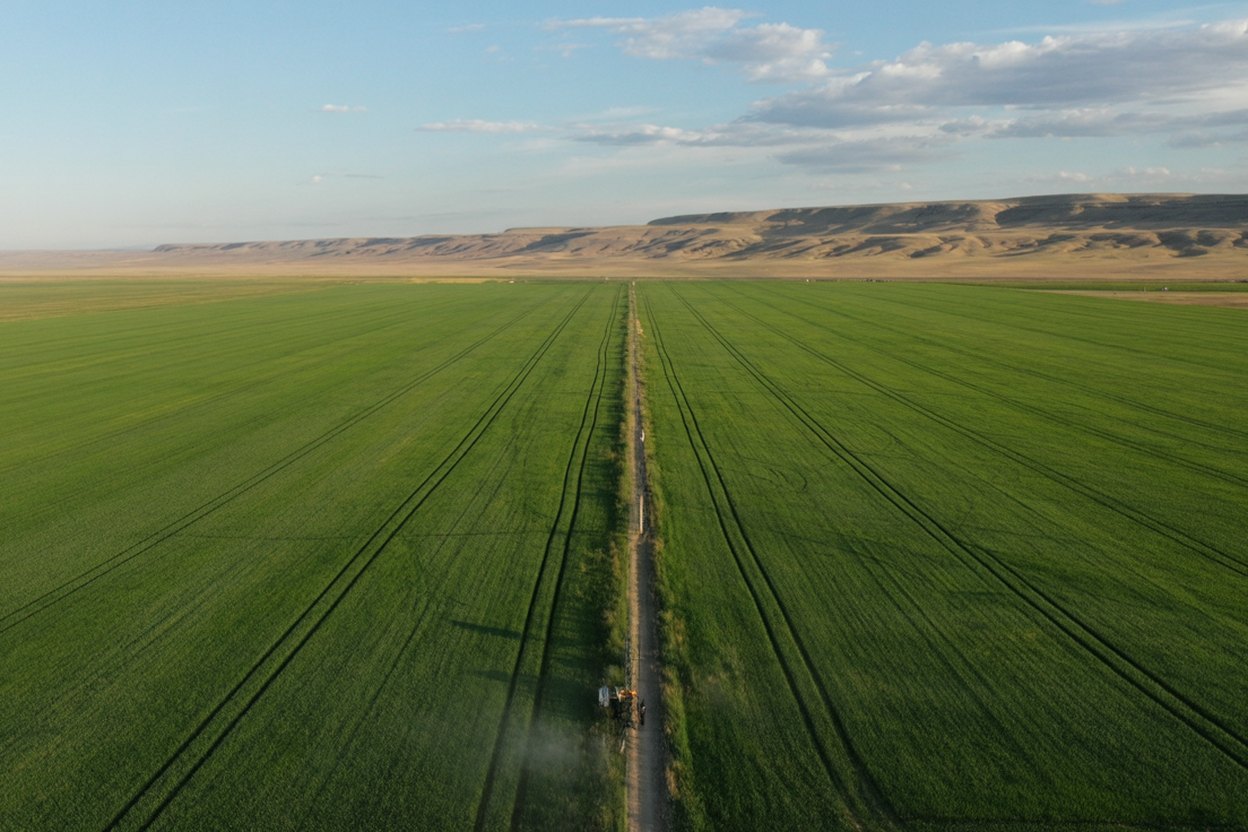
If you are looking at water rights for sale alongside ranch or equine land in Oregon or Idaho, understanding what a water right actually is, and what it means for the property you are buying, may be the single most important piece of homework you do before writing an offer. At True North Equine Land & Ranch, our broker Kellie Robinson has spent more than 15 years working rural transactions where water rights are often the largest hidden variable in the deal, and she has seen firsthand what happens when buyers skip this step.
This guide is the plain-English version: what a water right is, how prior appropriation works without the legal jargon, what types of water rights you will encounter, how to verify them before you commit, and what red flags to watch for. We have also published a deeper, more technical companion post at Understanding Water Rights When Buying Ranch Property in Oregon and Idaho that covers the legal framework, agency processes, and state-by-state differences in detail. Read this post first for the big picture, then go deeper if you want the full technical treatment.
In This Guide
What a Water Right Actually Is
In the Western United States, owning a piece of land does not automatically mean you own the right to use the water on or under it. This surprises many buyers, especially those relocating from eastern states where water rights are rarely discussed in real estate transactions. In Oregon and Idaho, water is a public resource managed by the state, and the right to divert and use that water for a specific purpose on a specific piece of land is a separate legal instrument that must be properly established, maintained, and transferred.
Think of a water right as a separate legal authorization to use public water. In practice, it works like this: the state says you may take this much water, from this specific source, for this specific purpose, on this specific piece of land. That license has a priority date, which determines where you stand in line when water is scarce. The right is tied to beneficial use, meaning you must actually use the water for its approved purpose to keep the right alive. And the right can be lost if it goes unused for too long.
Why This Matters to You as a Buyer
When you buy land with water rights for sale, you are not just buying dirt. You are buying a legal entitlement to use water that may have been established decades or even a century ago. That entitlement can be worth as much as the land itself, sometimes more. And if the water right has problems, such as a lapsed beneficial use, a junior priority date that gets curtailed in dry years, or a transfer that was never properly completed, those problems become your problems the moment you close.
Prior Appropriation in Plain Language
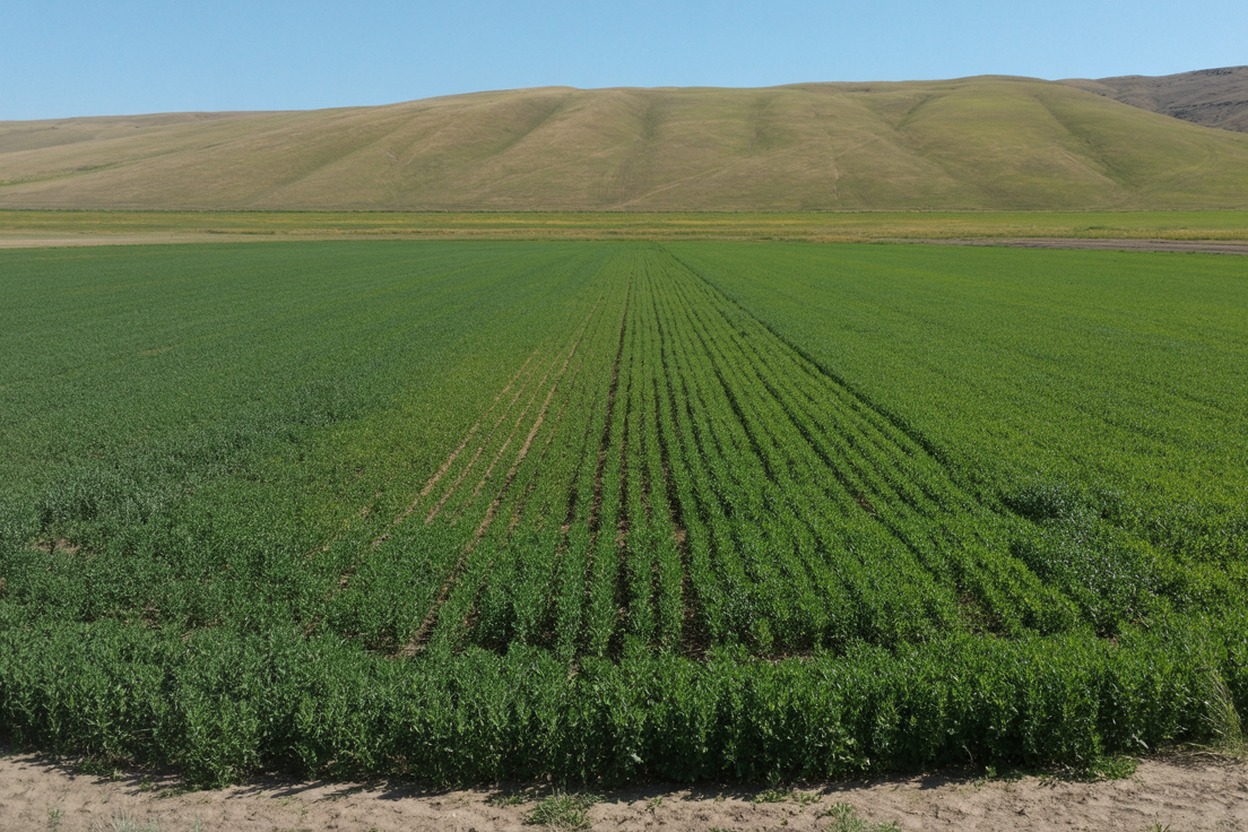
Both Oregon and Idaho follow a water-law system called prior appropriation, and understanding it does not require a law degree. The core principle is simple: first in time, first in right.
Here is how it works in practice. Imagine a river that supplies water to 20 different farms along its banks. Each farm’s water right has a priority date, which is the date that right was originally established. Farm A might have a priority date of 1890, Farm B might be 1920, and Farm C might be 1965. In a normal water year, there is enough water in the river for everyone. But in a dry year, when the river cannot supply all 20 farms, the most senior rights (the oldest priority dates) get their full allocation first. Junior rights get what is left, which might be a reduced allocation or nothing at all.
What This Means for Your Purchase
Priority date is not just an academic concept. It directly affects the reliability and value of the water right you are buying. A property with an 1890s water right is a fundamentally different asset than a neighboring parcel with a 1960s right, even if both are entitled to the same volume of water on paper. In a drought year, the senior right holder gets water while the junior right holder may be curtailed. Over a 30-year ownership horizon, that difference in reliability can translate into tens of thousands of dollars in crop or forage value and can significantly affect your ability to sustain livestock or maintain irrigated pasture.
Types of Water Rights and What They Allow
Not all water rights are the same. The type of right determines what you are allowed to do with the water, and confirming that the right matches your intended use is a critical step in any purchase. The table below summarizes the most common types you will encounter when buying ranch and equine land in Oregon and Idaho.
| Type of Water Right | What It Allows | Key Questions to Ask the Seller |
|---|---|---|
| Irrigation right | Divert water to irrigate a specified number of acres for crop or pasture production | How many acres are covered? What is the priority date? Is the right delivered through a district or a direct diversion? Has it been used continuously? |
| Stock water right | Use water specifically for watering livestock (cattle, horses, sheep, etc.) | Is the stock water right separate from the irrigation right? What is the source (stream, spring, well)? Is it year-round or seasonal? |
| Domestic right | Use water for household purposes: drinking, cooking, sanitation, lawn and garden (typically limited volume) | What is the source (well, spring)? What volume is authorized? Does it cover the residence and any outbuildings? |
| Ground water / well permit | Pump water from a well for a specified use and volume | What is the permitted pumping rate? Has the well been tested recently? Are there any basin restrictions or moratoriums on new wells? |
| Irrigation district delivery | Receive water through an organized irrigation district (the district holds the underlying right) | What are the annual assessments? What is the district’s delivery reliability? Are there delinquent assessments on this parcel? |
Many ranch properties hold multiple types of water rights simultaneously. A typical working ranch might include:
- An irrigation right for pasture and hay ground
- A separate stock water right for watering livestock
- A domestic well permit for the residence and household use
Each right is a separate legal instrument with its own priority date, conditions, and verification requirements. Missing one during due diligence can leave you without a critical water source you assumed you were buying.
A note on wells and exemptions: A well construction permit, an exempt domestic well, a groundwater right, and a certificated water right are not the same thing. Oregon allows exempt domestic groundwater use up to 15,000 gallons per day without a permit; Idaho’s domestic exemption covers homes, livestock, and up to one-half acre of irrigation if total use stays under 13,000 gallons per day. If your intended use exceeds these thresholds, you need a permitted or certificated water right. Your attorney or water-rights consultant can clarify which category applies to the property you are evaluating.
The Two-State Reality: Oregon vs Idaho
Because our service area straddles the state line, we regularly work with buyers comparing properties in both Oregon and Idaho. Both states follow prior appropriation, but the administering agencies, the verification processes, and some of the practical details differ.
| Factor | Oregon (OWRD) | Idaho (IDWR) |
|---|---|---|
| Governing doctrine | Prior appropriation | Prior appropriation |
| Online database | OWRD Water Rights Info System | IDWR Water Rights Search |
| Transfer process | Formal application + public notice period | Transfer application to IDWR |
| Forfeiture period | 5 years of non-use (with exceptions) | 5 years of non-use (with exceptions) |
| Post-adjudication clarity | Varies by basin | High (SRBA completed) |
In Oregon, water rights are administered by the Oregon Water Resources Department (OWRD). Oregon maintains an online water-rights information system, but some historical records may require direct inquiry with OWRD staff, and the transfer or change process for an existing right can involve a formal application and public notice period.
In Idaho, the Idaho Department of Water Resources (IDWR) administers water rights. Idaho completed the Snake River Basin Adjudication (SRBA), a massive court process that confirmed and clarified water rights across the Snake River Basin. The Final Unified Decree was signed in August 2014. For buyers in southwest Idaho specifically, this post-adjudication clarity means that most water rights in this region are well documented and their status is relatively easy to verify through IDWR’s online database.
For a full comparison of the two states’ water-rights systems, including how transfers work, what “forfeiture” and “abandonment” mean in each state, and how irrigation districts operate differently, see our companion post: Understanding Water Rights When Buying Ranch Property in Oregon and Idaho.
How to Verify a Water Right Before You Make an Offer
Verification is the step that separates a confident purchase from a gamble. Here is the process we walk through with every buyer on every rural transaction where water is part of the value.
| Step | Action | Who to Contact |
|---|---|---|
| 1 | Request all water-right certificates, permits, and district records from seller | Seller / listing agent |
| 2 | Search the state agency database by property legal description or certificate number | OWRD (Oregon) or IDWR (Idaho) |
| 3 | Confirm beneficial use: has the right been actively used in the past 5 years? | Seller, neighbors, irrigation district |
| 4 | Check for encumbrances: liens, pending transfers, delinquent district assessments | State agency + irrigation district |
| 5 | Verify boundary match: does the water right legal description match the parcel? | Title company + water-rights consultant |
Step 1: Request the Seller’s Documentation
Ask the seller for copies of all water-right certificates, permits, and irrigation district records associated with the property. A cooperative seller should be able to provide these or direct you to the relevant records. If the seller cannot produce water-right documentation or claims “the water just comes with the land,” treat that as a yellow flag and proceed to independent verification immediately.
Step 2: Search the State Agency Database
Both OWRD (Oregon) and IDWR (Idaho) maintain publicly searchable water-rights databases. Search by the property’s legal description, the owner’s name, or the water-right certificate number to confirm the right exists, its priority date, the authorized use and volume, and its current status. This search is something your agent, attorney, or a water-rights consultant can do, and it should happen early in due diligence, not at the last minute.
Step 3: Confirm Beneficial Use
A water right on paper is only as good as its actual use. Both Oregon and Idaho can cancel or forfeit rights that have not been put to beneficial use for an extended period (typically five years of non-use, though the specifics and exceptions vary). If the property has been idle, or if the previous owner stopped irrigating years ago, investigate whether the right is still in good standing. This is one of the most common and most expensive surprises we see in rural land transactions.
Step 4: Check for Encumbrances
Water rights can be encumbered by liens, pending transfer applications, court orders, or irrigation district assessments. Your title company will catch some of these, but water-right encumbrances do not always appear on a standard title report. A direct inquiry to the state agency and, for district-delivered water, to the irrigation district itself is the safest approach.
Red Flags to Watch For
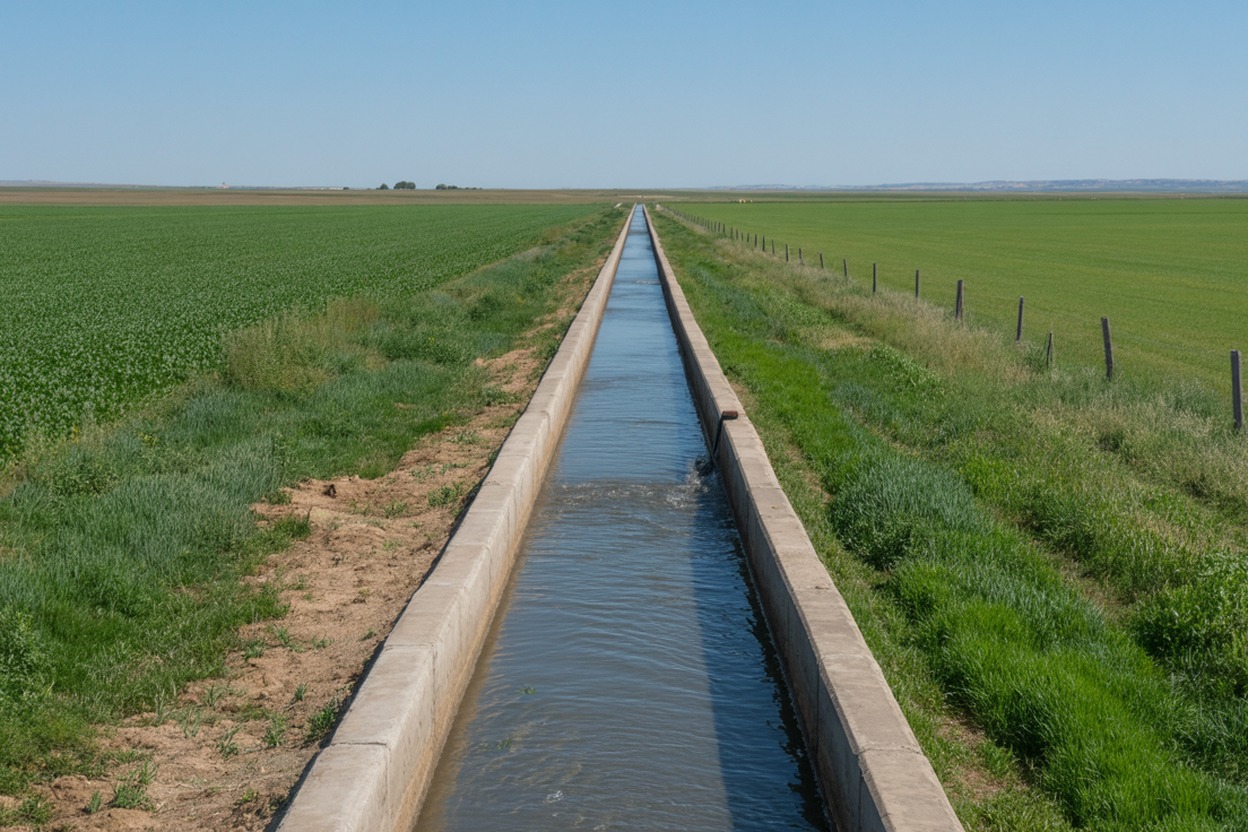
After 15 years of rural transactions, we have developed a short list of water-right red flags that should prompt deeper investigation before you proceed.
Curtailment History
If the property’s water right has been curtailed (reduced or shut off) in recent dry years, that tells you something about its priority date and reliability. Steps to take:
- Ask the seller for any records of curtailment or reduced delivery
- Contact the irrigation district for the parcel’s delivery history
- Check whether the right has been curtailed in any of the last five to ten years
Curtailment is not necessarily a deal-breaker, but it needs to be priced into your evaluation.
Abandonment or Non-Use
Both states allow water rights to be forfeited or cancelled for prolonged non-use. If the pasture has not been irrigated in years, if the irrigation infrastructure is in disrepair, or if the seller cannot demonstrate recent beneficial use, the right may be at risk. This is where a conversation with the state agency (OWRD or IDWR) is essential.
Irrigation District Transfer Rules
Some irrigation districts have specific rules about how water-right obligations transfer when a property changes hands. There may be outstanding assessments, capital improvement levies, or transfer fees that the buyer inherits. Ask the district directly for the parcel’s assessment history and any pending obligations. Do not rely solely on what the seller or listing agent tells you.
Boundary and Conveyance Issues
Water rights are appurtenant to specific land, described by legal description. Watch for these boundary and conveyance red flags:
- Property has been subdivided since the water right was established
- Boundaries have been adjusted through lot-line changes or surveys
- Previous owner sold a portion of the land without properly dividing the water right
Any of these can create a mismatch between the water right and the land you are buying. Title research and a water-rights report should catch this, but only if someone is looking for it.
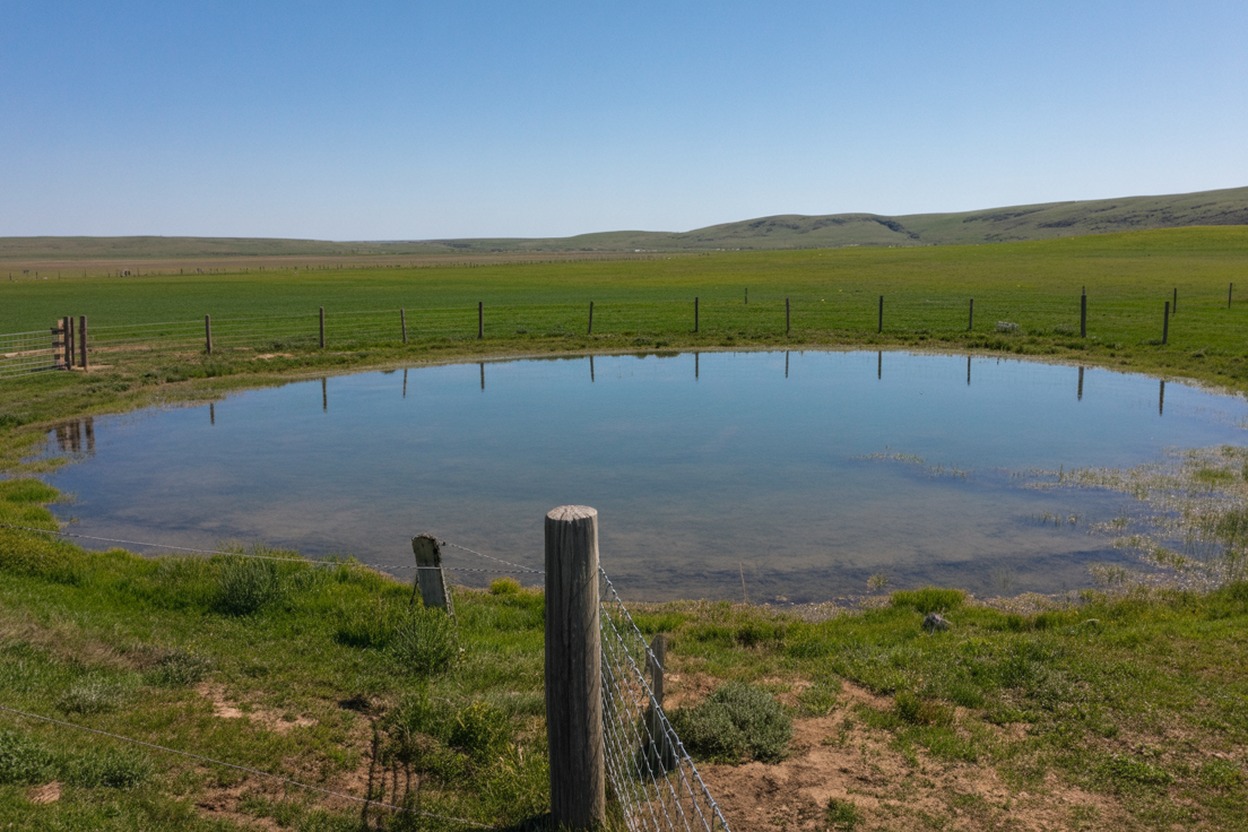
Why Water Is Often the Single Biggest Value Driver on Rural Oregon and Idaho Land
We tell every buyer the same thing: in the arid West, water is the asset that makes everything else work. Without reliable water, ranch land is rangeland that supports limited grazing. With reliable water, that same land becomes irrigated pasture that can sustain a horse herd year-round, produce multiple cuttings of hay, or support a cow-calf operation at dramatically higher stocking rates.
The price difference is stark. In southwest Idaho, irrigated crop ground with a senior water right can sell for roughly $4,000 to $9,000 or more per acre based on recent market observations in our service area, while comparable dryland without water rights may trade in the $800 to $2,500 per acre range (these are local market observations, not appraised values; verify current figures with a licensed appraiser) (verify current figures with your appraiser). In Malheur County, Oregon, the spread is similar. That gap represents the capitalized value of the water right itself, and it is why water-right verification is not optional. It is the most important step in your entire due-diligence process.
For buyers evaluating land with water rights for sale in our region, as a matter of investment due diligence, we always recommend thinking about water reliability over a 20- to 30-year ownership horizon, not just current conditions. A senior water right that has delivered reliably through multiple drought cycles is worth paying a premium for, because it protects your investment in ways that a junior right or a “usually available” water source cannot.
Frequently Asked Questions
Do I have water rights on my property in Oregon?
Not automatically. Under Oregon law, all water belongs to the public. Owning land next to a stream or over an aquifer does not give you the right to use that water without a permit from the Oregon Water Resources Department. When buying ranch or equine property, verifying what water rights convey with the sale is one of the most important steps in due diligence. I check irrigation district records, well permits, and ditch rights before we write an offer.
Is it illegal to collect rainwater on your own property in Oregon?
No, collecting rainwater is legal in Oregon. You can collect rainwater from rooftop surfaces in storage containers without a permit. Many communities actively encourage it. What you cannot do without a water right is divert water from streams, rivers, or springs. For ranch buyers, this distinction matters: roof runoff for garden use is fine, but irrigating pasture from a creek requires a valid water right.
Are water rights worth anything?
Yes, water rights can add significant value to a property, especially in arid regions like Eastern Oregon and Southwest Idaho. Properties with senior water rights (older, higher-priority rights) are worth more than comparable properties without them. In some areas, water rights are bought and sold separately from the land. When evaluating ranch property, I always assess the water rights as a distinct asset in the total property valuation.
What is the new water law in Oregon?
Oregon updated its groundwater allocation rules effective September 17, 2024, affecting how the state grants new groundwater rights. These updates do not affect existing water rights, exempt groundwater uses, or transfers. The most relevant impact for rural property buyers is increased scrutiny on new groundwater appropriations in some of the 22 groundwater administrative, critical, or withdrawn areas across the state. Before purchasing ranch property, I verify the current status of water availability in the specific groundwater basin where the property sits. The Oregon Water Resources Department maintains current rules by basin.
What does 1 acre-foot of water mean?
An acre-foot is 325,851 gallons of water, enough to cover one acre of land with one foot of water. It is the standard unit for measuring water rights allocations in Oregon and Idaho. For ranch buyers, knowing how many acre-feet your water right provides tells you how much irrigation you can run. A typical irrigated pasture in our region often needs roughly 2 to 4 acre-feet per acre per growing season, though actual requirements vary significantly based on crop type, soil, elevation, precipitation, irrigation efficiency, and the legal duty limits attached to the specific water right.
When you are ready to evaluate water rights on a specific property, or if you want to understand how water shapes value across the parcels you are considering, we would welcome the conversation. Water is what we check first on every deal, and Kellie Robinson can walk you through the verification process step by step.
Market data disclaimer: Per-acre price ranges and other quantitative information in this post are general estimates based on market observation and should be independently verified with a licensed appraiser, your county assessor, and the relevant water-resource agencies (OWRD, IDWR) before making any purchase decision. Water law is technical and varies by state and parcel; consult a water-rights attorney for legal advice specific to your transaction. Figures may have changed since publication. True North Equine Land & Ranch does not guarantee the accuracy of third-party data. Full Disclaimer.

About the Author
Kellie RobinsonBroker/Owner of True North Real Estate Group, licensed in Idaho and Oregon. Competitive reiner, rancher, and 15+ years helping buyers find land that works.