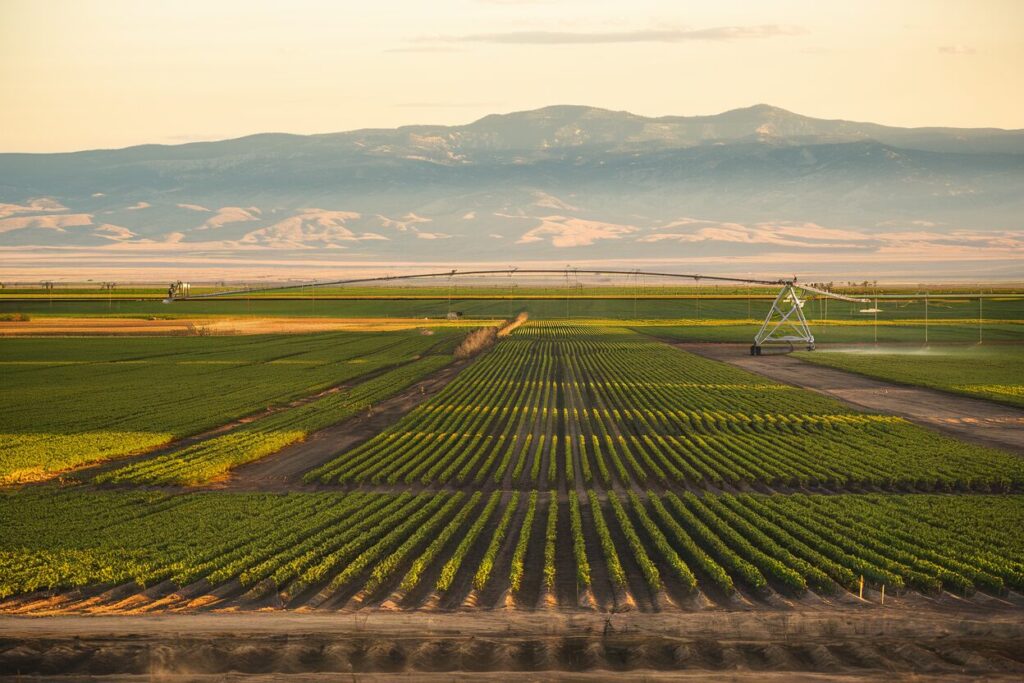
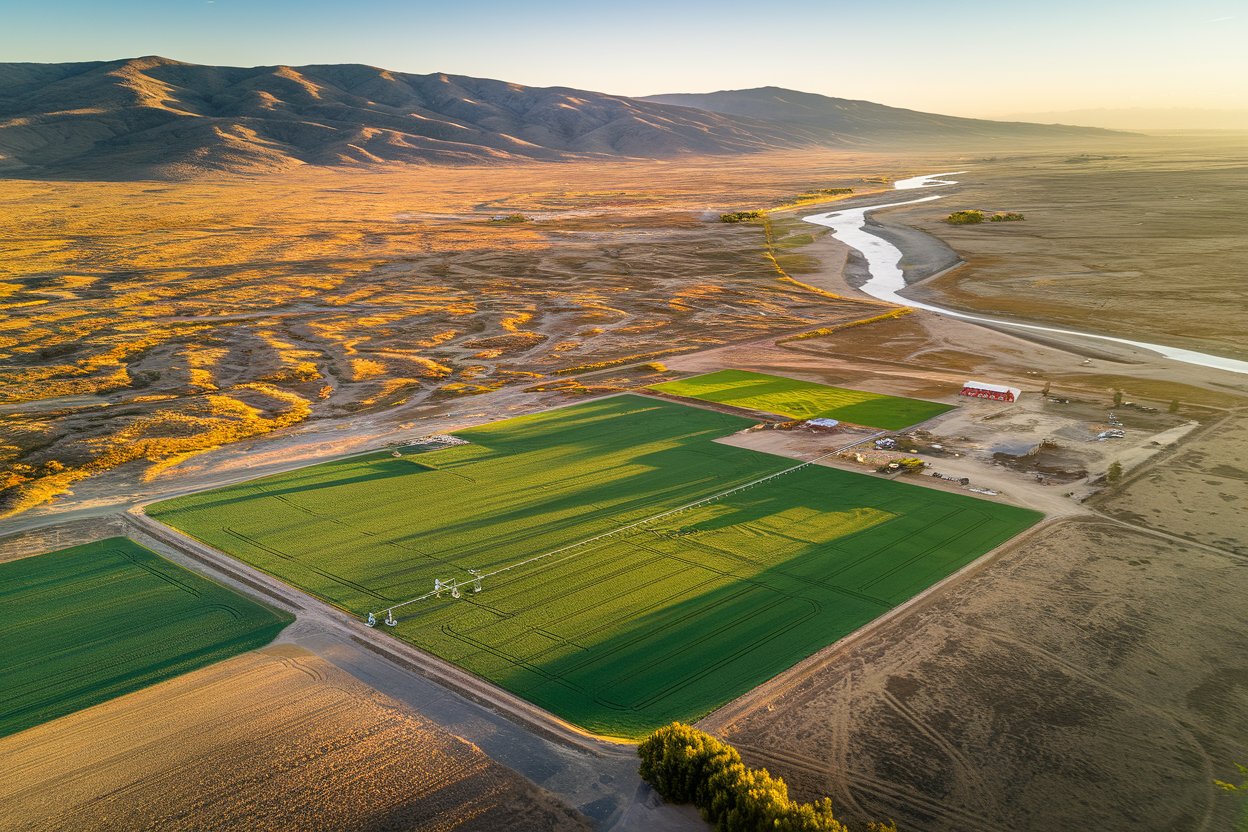
Water rights can make or break a ranch purchase in Oregon and Idaho. In the high desert country along the Snake River corridor—from Vale and Ontario in Eastern Oregon to Weiser, Payette, and beyond in Western Idaho—annual rainfall often measures in single digits. The legal right to use water determines whether land supports a thriving operation or sits as unproductive rangeland. If you’re searching for ranch properties with strong water rights, understanding water law in both states isn’t optional—it’s essential to protecting your investment.
This guide explains what every ranch buyer needs to know about water rights in Oregon and Idaho, from the fundamental legal principles to the practical steps for verifying rights before you close. Whether you’re looking at property in Malheur County, Oregon or Washington County, Idaho, this information will help you evaluate properties with confidence.
New to water rights? Start with our Water Rights 101 guide for a plain-English overview before diving into the technical details below.
In This Guide
Why Water Rights Matter More Than Anything
In the arid regions of Eastern Oregon and Western Idaho, water rights often carry more value than the land itself. A ranch with senior irrigation rights and reliable delivery can command prices two or three times higher than identical acreage without water. Understanding why requires knowing how water law actually works in both states.
The Value of Senior Water Rights
What Is Prior Appropriation?
Prior appropriation is the foundational water law doctrine in both Oregon and Idaho, operating on the principle “first in time, first in right.” The first person to put water to beneficial use holds the most senior right. During water shortages, senior rights are satisfied completely before junior rights receive any water—regardless of how much the junior user needs or how much they paid for their property.
Both states adopted this doctrine over a century ago—Oregon in 1909, Idaho even earlier. According to the Idaho Department of Water Resources, when there isn’t enough water to satisfy all rights, the oldest (senior) water rights are satisfied first, continuing in order until no water remains. Junior rights simply go without.
This priority system means that in drought years—increasingly common across the region—senior water rights provide security that money can’t buy after the fact. A property with a priority date from the early 1900s carries genuine, tangible value that a 2020 priority date simply cannot match.
Water Rights vs. Land Ownership
Many buyers assume that purchasing land automatically includes any associated water rights. This assumption can lead to expensive surprises. While water rights in both Oregon and Idaho are typically “appurtenant” to land—meaning they transfer with the property unless formally severed—several situations can separate water from land.
Water rights can be sold, leased, or transferred independently from the property they serve. Previous owners may have sold water rights separately, leased them to neighbors, or allowed them to lapse through non-use. The deed to a property tells you nothing about the status of water rights, because water rights are recorded through each state’s water resources department, not county deed records.
The danger for buyers is real: you could purchase what appears to be irrigated ranch land only to discover the water rights were sold years ago or forfeited through non-use. Without water rights, that irrigated pasture becomes dryland sage—and your investment loses substantial value.
Types of Water Rights in Oregon and Idaho
Both states recognize similar categories of water rights, though the specific regulations differ. Understanding these categories helps you evaluate what water access a property actually provides.
Surface Water Rights
Surface water rights cover rivers, streams, creeks, lakes, and springs. In both Oregon and Idaho, these rights require either a water right certificate (for established rights) or a permit (for rights still being developed). Every surface water right includes a priority date that determines its standing relative to other users on the same water source.
For ranch buyers, surface water rights offer both advantages and limitations. They often provide larger volumes suitable for irrigation, but availability varies seasonally. Many streams in the region run high in spring and early summer but diminish significantly by August—precisely when pastures need water most. Understanding the seasonal pattern of your water source is as important as knowing your priority date.
Groundwater Rights
Groundwater rights govern wells and aquifer access. Both states distinguish between permit-exempt wells and permitted wells, with significant implications for ranch operations.
Permit-Exempt Well Uses
Both Oregon and Idaho allow certain groundwater uses without a water right permit, though the specific limits differ:
- Stock watering: No permit required in either state for watering livestock
- Domestic use: Oregon allows up to 15,000 gallons/day; Idaho allows up to 13,000 gallons/day
- Lawn and garden: Both states allow irrigation of up to one-half acre without a permit
- Commercial/industrial: Oregon allows 5,000 gallons/day; Idaho requires permits for most commercial uses
Even exempt wells require proper construction permits and must comply with well construction standards. The exemption applies to the water right, not to drilling and construction requirements.
For ranch operations requiring irrigation beyond one-half acre, a groundwater permit is required in both states. These permitted wells establish a priority date and face the same seniority system as surface water rights.
Irrigation Districts
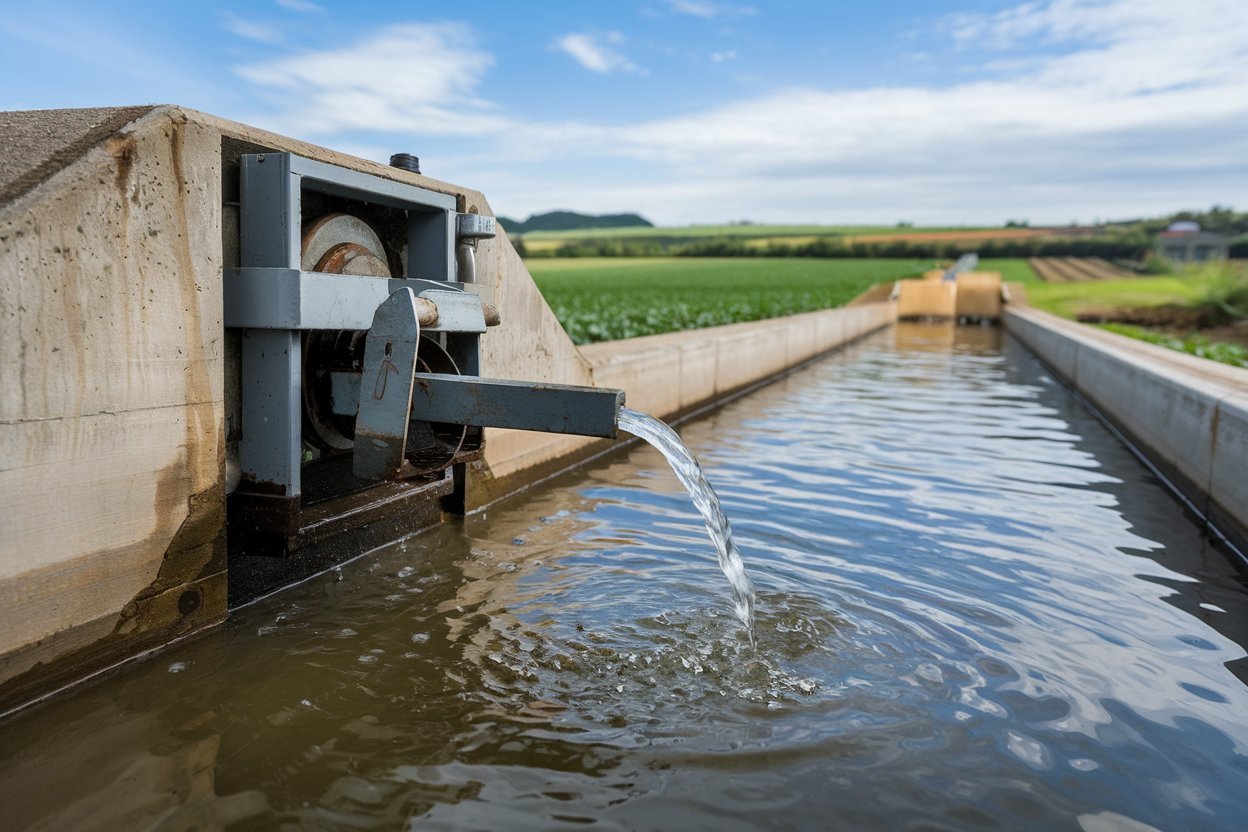
Many ranches in our service area receive water through irrigation districts rather than individual water rights. These organizations hold water rights collectively and deliver water to member properties through shared canal systems.
In Eastern Oregon, the Vale Oregon Irrigation District serves approximately 35,000 acres in Malheur County, delivering water from the Malheur River through over 365 miles of canals. In Western Idaho, multiple districts serve the Weiser, Payette, and Emmett areas, including Water District 65 covering the Payette River basin.
Properties within district boundaries benefit from established infrastructure, professional water management, and reliable delivery schedules—but also carry ongoing assessment obligations that become liens against the property if unpaid.
Key Differences: Oregon vs. Idaho Water Law
While both states follow the prior appropriation doctrine, important differences affect how you verify, use, and protect water rights. Understanding these distinctions matters when evaluating properties on either side of the Snake River.
Oregon vs. Idaho Water Rights Comparison
| Factor | Oregon | Idaho |
|---|---|---|
| Administering Agency | Oregon Water Resources Dept (OWRD) | Idaho Dept of Water Resources (IDWR) |
| Online Database | WRIS (apps.wrd.state.or.us) | research.idwr.idaho.gov |
| Domestic Exemption | 15,000 gallons/day | 13,000 gallons/day |
| Forfeiture Period | 5 years non-use (rebuttable presumption) | 5 years non-use |
| Transfer Timeline | 2-4 years typical | Several months to 2+ years |
| Temporary Leasing | Temporary transfers (up to 5 years) | Water Supply Bank program |
Idaho’s Water Supply Bank
One unique feature of Idaho water law is the Water Supply Bank, managed by the Idaho Water Resource Board. This program allows water right holders to lease unused water rights into the bank, protecting them from forfeiture while making water available to others who need it temporarily. For ranch buyers, this can provide flexibility—you might rent additional water from the bank during dry years, or lease excess water during years you don’t need it all.
Conjunctive Management
Idaho administers surface water and groundwater together through “conjunctive management”—recognizing that pumping from wells can affect surface water flows. This has significant implications in the Eastern Snake Plain Aquifer area, where groundwater users with junior rights must sometimes curtail pumping or provide mitigation to senior surface water users. While this primarily affects areas east of our service area, it demonstrates how interconnected water resources can create complex management situations.

How to Verify Water Rights Before Purchase
Thorough water rights verification before closing protects your investment and prevents costly surprises. This process requires research through state databases and direct inquiry with sellers and local officials.
State Water Rights Databases
Both states provide free public access to water rights records online:
Oregon: The Water Rights Information System (WRIS) allows you to search by property location using Township, Range, and Section, or by water right certificate number.
Idaho: The IDWR Research Portal provides similar functionality, including map-based searches and access to scanned documents.
What Water Right Records Show
Water right certificates in both states document the following key information:
- Certificate/license number: Unique identifier for the water right
- Priority date: Determines seniority relative to other users
- Source: The specific stream, river, well, or aquifer
- Beneficial use: Authorized purpose (irrigation, stock water, domestic)
- Rate: Maximum flow in cubic feet per second or gallons per minute
- Volume: Total annual amount, typically in acre-feet
- Place of use: Specific land where water may be applied
- Point of diversion: Where water is taken from the source
- Season of use: Dates when water may be used
Questions for the Seller
Beyond database research, direct questions to the seller provide essential information that records alone cannot reveal.
Request copies of all water right certificates associated with the property. Ask about the priority date for each right and whether water has been used continuously. Both Oregon and Idaho have “use it or lose it” laws creating forfeiture risk after five consecutive years of non-use, so understanding recent usage history is critical.
Inquire about any pending transfers, disputes, or legal proceedings involving the water rights. Ask what actual water usage has been—the certificated amount often exceeds what’s practically available or historically used. For irrigation district properties, request records of recent assessments and delivery history.
Red Flags to Watch For
Certain warning signs should prompt additional investigation or reconsideration of a purchase:
Missing documentation: If the seller cannot produce water right certificates or claims uncertainty about water rights status, proceed with extreme caution.
Very junior priority dates: Rights from the past 20-30 years may be curtailed during any drought, especially in fully-appropriated basins.
Gaps in usage history: Under both Oregon law (ORS 540.610) and Idaho Code § 42-222, five consecutive years of non-use creates forfeiture risk.
Water rights not included in sale: Some sellers attempt to retain water rights while selling the land. Your purchase agreement should specifically identify all water rights by certificate number.
Undisclosed irrigation district obligations: Unpaid assessments become liens against the property.
Schedule a Water Rights Consultation
Transferring Water Rights
When water rights transfer with property, the process is relatively straightforward in both states—the new owner notifies the appropriate agency of the ownership change. However, any change to the place of use, point of diversion, or type of use requires a formal transfer application.
The Transfer Process
How to Transfer Water Rights
Transferring a water right in Oregon or Idaho involves similar steps:
- Confirm the water right has been used within the past five years
- Engage a certified water rights examiner to prepare required maps (Oregon) or complete application mapping requirements (Idaho)
- Obtain land use compatibility documentation from the county
- Complete and submit the transfer application to OWRD or IDWR
- Pay application fees
- Respond to any agency requests for additional information
- Wait for public notice and comment period
- Address any protests from other water users
- Receive approval and new certificate reflecting changes
Timeline and Costs
Transfer timelines vary significantly between the two states. Oregon transfers commonly take two to four years due to agency backlogs and complex review processes. Idaho transfers often process faster—several months to a year for straightforward changes—though complex transfers or those facing protests can take much longer.
Current base fees for permanent transfers are approximately $2,040 in Oregon and vary by water volume in Idaho (starting around $420 for small rights and increasing based on flow rate or volume). Both states charge additional fees for complex transfers or ownership changes.
For time-sensitive situations, both states offer alternatives. Oregon allows temporary transfers up to five years. Idaho’s Water Supply Bank enables short-term water rentals that process more quickly than permanent transfers.

Protecting Your Investment
Standard title insurance does not cover water rights in Oregon or Idaho. This critical gap surprises many buyers who assume their title policy protects all property interests. Title companies explicitly exclude water rights because these rights aren’t recorded in county deed records—each state’s water resources department maintains separate ownership records.
Protecting your water rights investment requires proactive due diligence beyond title insurance:
Search state databases thoroughly using the property’s legal description. Cross-reference what the seller claims against official records.
Obtain written documentation from the seller confirming beneficial use within the past five years. Review at least fifteen years of use history for any gaps that could indicate forfeiture risk.
Contact the local watermaster for field-level information about actual water availability and any known issues with the water rights.
Verify irrigation district standing for properties within district boundaries. Confirm the property’s delivery eligibility and check for unpaid assessments.
Include specific water rights provisions in your purchase agreement. List each water right by certificate number and include seller representations about status, recent use, and absence of disputes. Both Oregon and Idaho law require sellers to disclose water rights information, but standard disclosure forms don’t substitute for thorough independent verification.
Consider professional examination for complex situations. Both states certify water rights examiners who can provide detailed analysis of rights, potential issues, and transfer requirements.
Get Expert Help
Water rights complexity catches many real estate agents off guard. Standard residential training doesn’t cover water law, and agents unfamiliar with agricultural transactions may not know what questions to ask or what warning signs to recognize.
Our local expertise in Eastern Oregon and Western Idaho ranch properties includes deep knowledge of water rights issues specific to this region. We understand the irrigation districts on both sides of the Snake River, know the watermasters, and recognize the practical realities that database records alone don’t reveal. When you’re evaluating farm properties or ranches in our service area, we guide you through water rights due diligence as a standard part of the buying process.
With Kellie Robinson’s licensing in both Idaho and Oregon, True North Equine Land & Ranch can help you navigate water rights whether you’re looking at property in Vale, Ontario, Weiser, Payette, or anywhere in our dual-state service area. For properties with complex water situations—multiple rights, unclear history, or irrigation district complications—we can connect you with qualified water rights attorneys and certified examiners who specialize in the laws of each state.
If you’re also considering horse properties in the region, water rights are equally important for maintaining pastures and providing reliable water for your horses. We help equine property buyers understand what water access they’re actually getting.
Disclaimer: This article provides general information about water rights in Oregon and Idaho and is not legal advice. For specific legal questions about water rights, consult with a qualified water rights attorney licensed in the appropriate state. Water rights regulations and processes are subject to change. Verify all zoning, water rights, and permitted uses with appropriate authorities before purchasing property.

About the Author
Kellie RobinsonBroker/Owner of True North Real Estate Group, licensed in Idaho and Oregon. Competitive reiner, rancher, and 15+ years helping buyers find land that works.