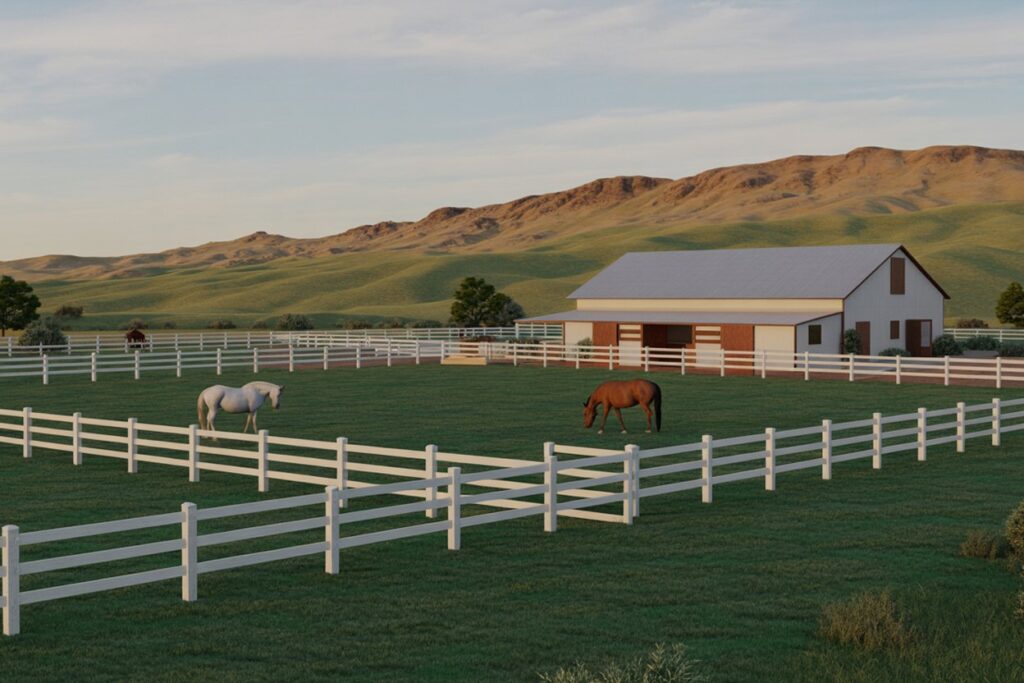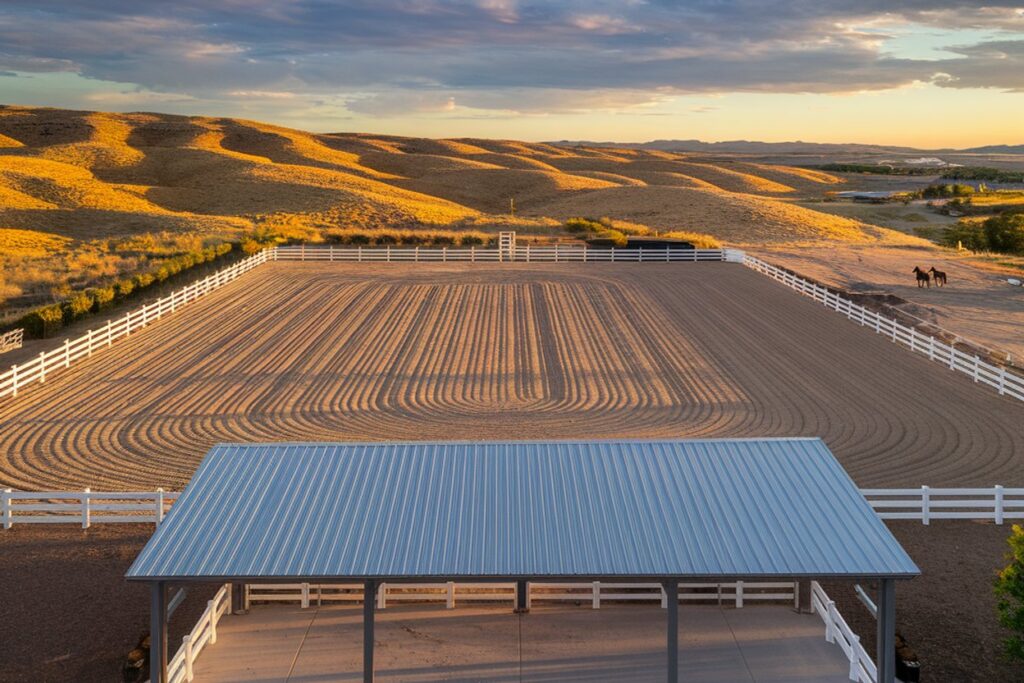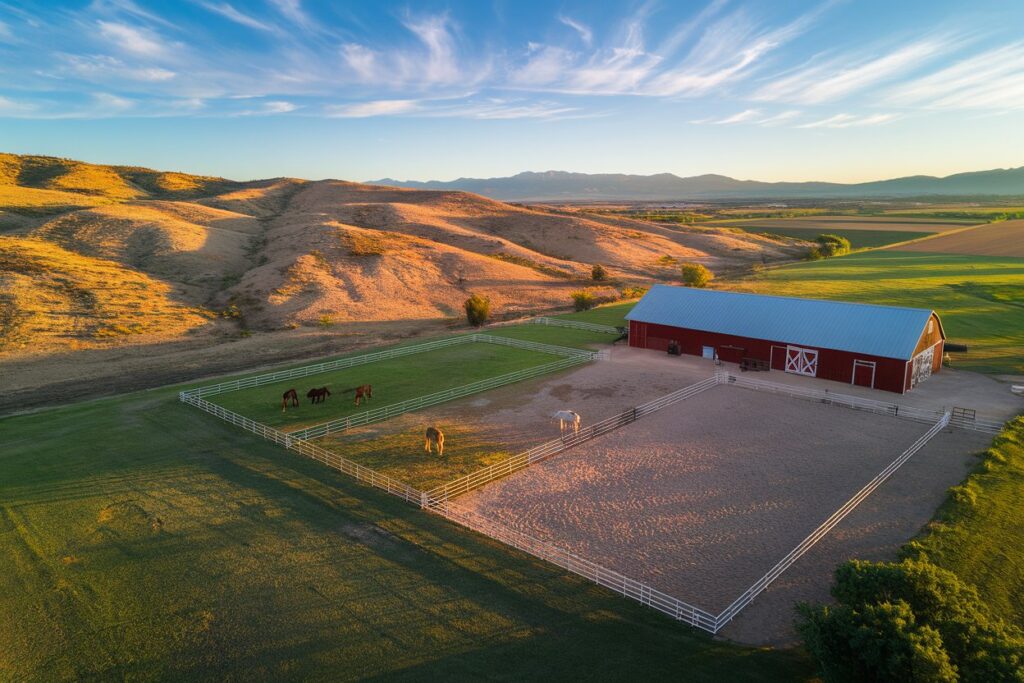
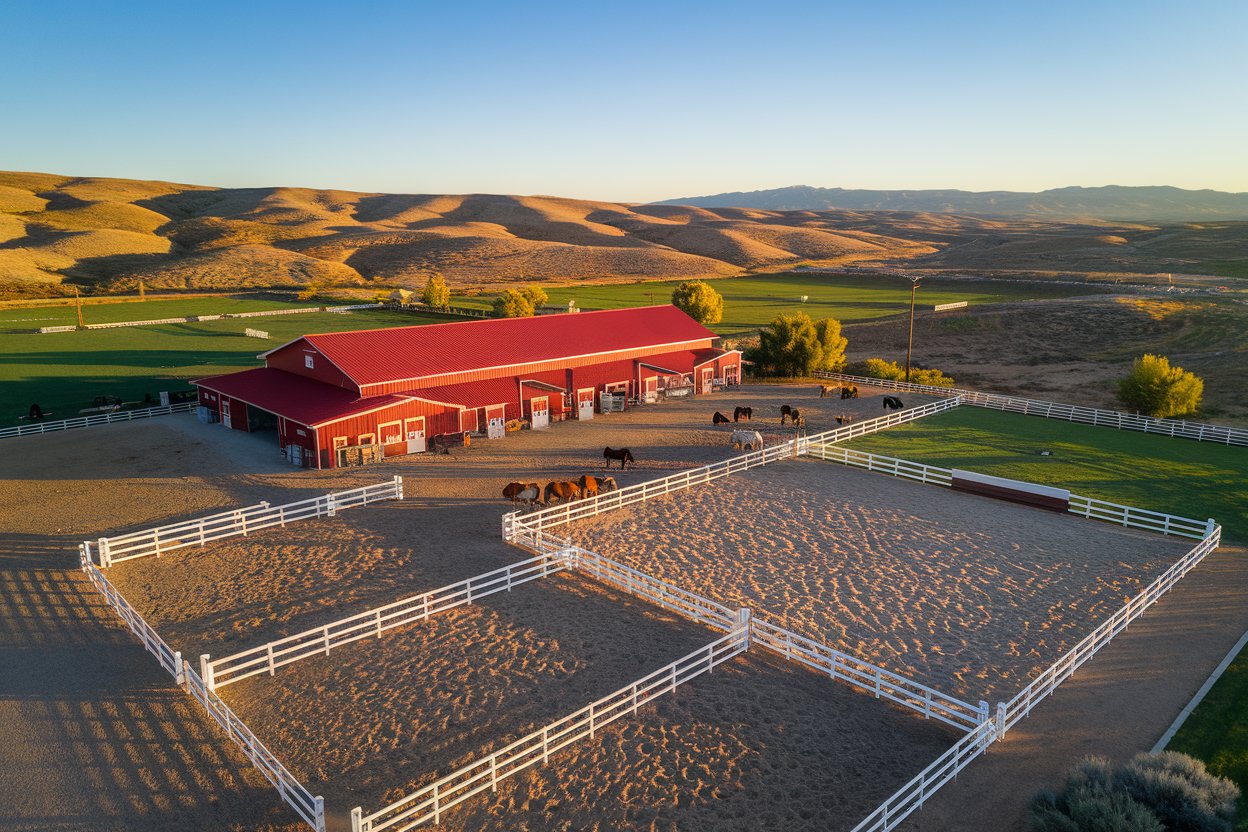
Your horse property doesn’t have to be a money pit. With the right approach, that barn, those pastures, and your equine expertise can generate meaningful income—whether you’re looking to offset ownership costs or build a full-fledged business. From boarding operations earning $500-900 per horse monthly to hay production yielding 6+ tons per irrigated acre, the opportunities are real. But so are the challenges: liability concerns, zoning requirements, and the relentless seven-day-a-week commitment that comes with caring for other people’s horses.
This guide breaks down the actual numbers, regulatory requirements, and practical considerations for turning your Oregon or Idaho horse property into a profitable operation. We’ll cover everything from boarding economics to event venue permits—with verified figures and specific state requirements you need to know before hanging out your shingle.
In This Guide
Income Opportunities for Horse Property Owners
Horse properties offer multiple revenue streams, each with distinct profit margins, time commitments, and startup requirements. The most successful operations typically combine two or three income sources rather than relying on a single approach.
Horse Boarding Services
Boarding remains the foundation of most horse property businesses. Current market rates in Idaho and Oregon support the economics, though profitability depends heavily on your service level and operational efficiency.
Full-care board in the region averages $500-600 per month, with premium facilities commanding $800-950. Pasture board starts around $200-300 monthly, while training board—which includes daily professional rides—ranges from $700 to over $1,200. These rates reflect current market conditions; facilities near Boise or Portland metros tend toward the higher end, while rural Eastern Oregon properties price more competitively.
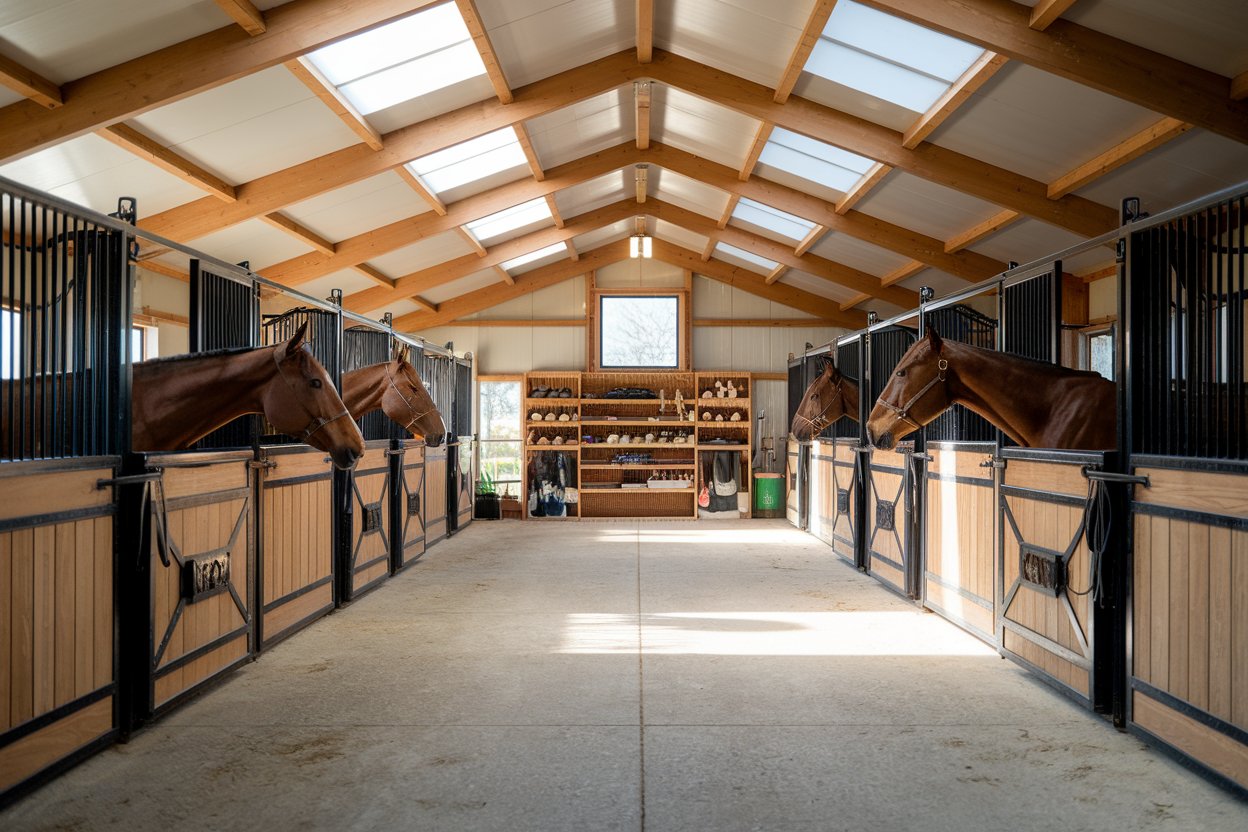
The math works like this: direct costs per boarded horse run approximately $285-330 monthly, including hay ($170-200), bedding ($100), and utilities ($20-30). At a $575 board rate, that’s roughly a 50% gross margin—before accounting for labor, insurance, and facility maintenance. Most boarding operations need 8-12 horses to cover a typical mortgage and generate modest profit, assuming the owner provides significant labor.
The commitment is real. Horses need care 365 days a year, which means early mornings, evening checks, and being on-call for emergencies. Finding reliable help has become increasingly difficult as wages have risen 10-20% since 2020, and experienced barn staff remain in short supply throughout the region.
Riding Lessons and Training
Lesson programs can significantly boost property income without requiring additional horses or stalls. Private lessons in Oregon and Idaho typically range from $50-110 per hour, with group lessons at $40-80 per person. Specialty disciplines like dressage or reining command premium rates, while therapeutic riding programs can charge $125-250 per session.
Neither Oregon nor Idaho requires state licensing for riding instructors, but voluntary certifications through organizations like the Certified Horsemanship Association (CHA) or PATH International improve marketability and may reduce insurance costs. CHA certification runs approximately $650 and requires renewal every three years.
Training board represents another premium income stream. Beyond basic boarding fees, trainers add $200-600 monthly for horses in active training programs. A property with 10 training horses at a $300 monthly premium generates an additional $3,000 in revenue—though this requires significant expertise and time investment.
Event Hosting
Clinics, shows, and private events can generate substantial weekend income. Horse shows and competitions typically charge entry fees plus stall rentals, while clinics with visiting trainers command $75-200 per participant. The “rustic barn wedding” trend has made agricultural properties increasingly attractive as event venues, with rental fees ranging from $3,000 to $15,000 depending on facilities and services included.
Event hosting requires careful attention to zoning and permits—which we’ll cover in detail below—but offers the advantage of periodic income rather than daily operational demands.
Hay Production and Sales
If your property includes irrigated acreage, hay production can provide meaningful revenue while maintaining agricultural tax status. Irrigated alfalfa in Eastern Oregon and Idaho typically yields 6 tons per acre annually—significantly higher than the 2-4 tons common on dryland operations. At current prices of $160-200 per ton for premium alfalfa, a 20-acre irrigated field can gross $19,000-24,000 annually.
Equipment ownership versus custom harvesting is the critical decision. Custom operators charge approximately $45-60 per ton for complete harvest services, which works well for smaller operations. Equipment ownership becomes economical above roughly 230 tons annually—about 40 irrigated acres. A full hay equipment set runs $200,000-250,000 new, though entry-level used equipment starts at $25,000-40,000.
Combining hay production with a boarding operation creates natural synergies: your boarding clients become hay customers, and you control your feed costs and quality.
Setting Up a Boarding Business
Facility Requirements
Minimum viable boarding operations typically require 5-10 acres with at least basic shelter, safe fencing, and reliable water. Full-service facilities need stalls (10×12 minimum for most horses), turnout paddocks, feed storage, and tack rooms. An arena isn’t mandatory for basic board but significantly expands your market for training board and lessons.
Water infrastructure often determines capacity. Each horse needs 10-20 gallons daily for drinking alone, plus additional water for irrigated pasture. Properties with senior water rights or multiple water sources command premium prices and support larger operations. When evaluating ranch properties, water rights should be a primary consideration.
Insurance Considerations
Insurance is non-negotiable for any boarding operation. General liability coverage ($1 million minimum) costs $360-996 annually from equine-specialty providers. However, standard general liability policies explicitly exclude animals in your care, custody, and control—making Care, Custody, and Control (CCC) coverage essential.
CCC insurance protects against legal liability for death, injury, or theft of boarded horses. Coverage starts at approximately $40 per horse annually, with limits ranging from $5,000 to $2.5 million per horse. This coverage pays veterinary costs, legal defense, and settlements when something goes wrong with a client’s horse—and in the horse business, something eventually goes wrong.
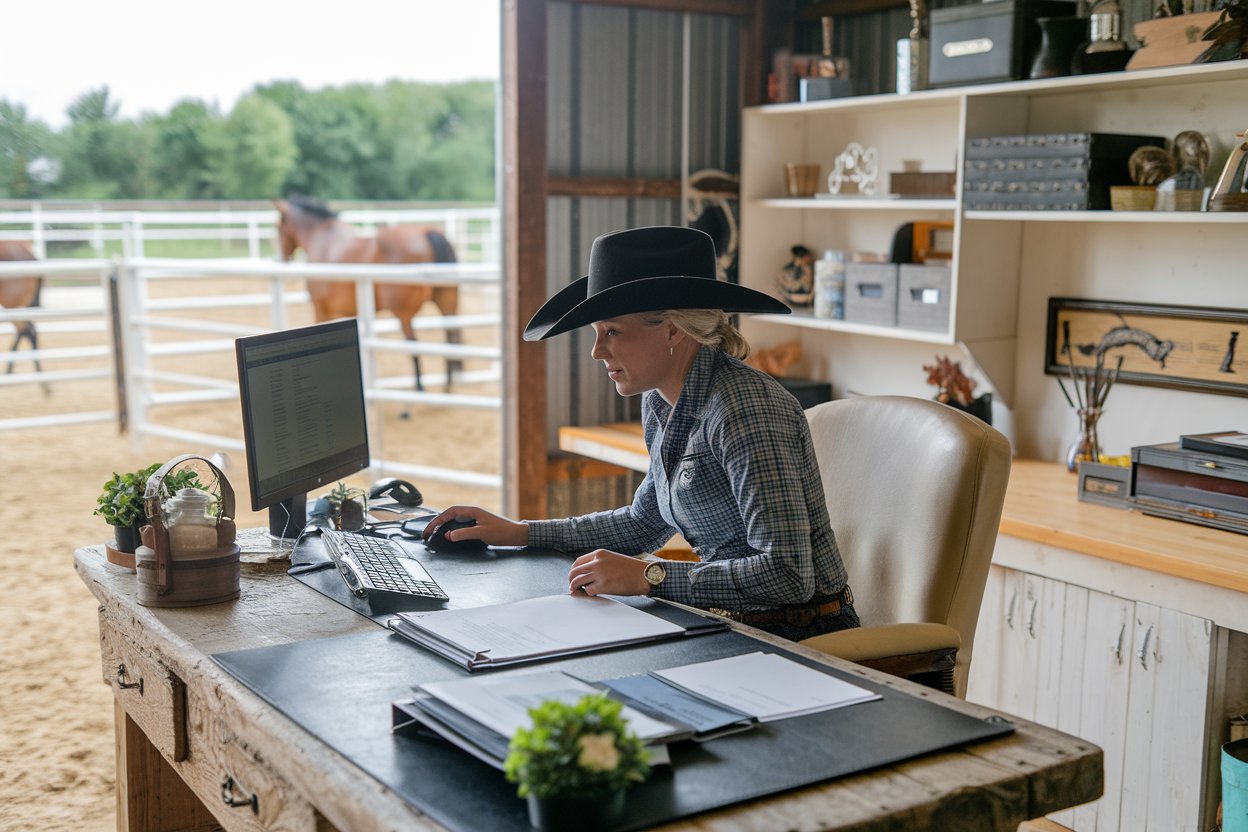
Both Oregon and Idaho have equine activity liability statutes that provide some protection for horse businesses. Under Oregon Revised Statutes 30.687-30.697, equine activity sponsors and professionals are protected from liability for injuries arising from inherent risks of equine activities—including boarding. However, protection is voided if you provide faulty equipment, fail to assess participant ability, or maintain dangerous conditions without proper warnings. Oregon requires written liability releases from adult participants.
Idaho Code 6-1801 and 6-1802 provides similar protections with somewhat more relaxed requirements—Idaho doesn’t mandate specific warning signs or contractual language for basic protection. Both states except liability for known dangerous conditions, willful disregard for safety, and intentional injury.
Pricing Strategies
Successful pricing requires understanding your local market. Survey comparable facilities within a 30-mile radius to establish baseline rates, then differentiate based on your amenities, location, and services. Premium features that justify higher rates include indoor arenas, quality footing, trail access, on-site trainers, and superior turnout options.
Boarding Rate Comparison by Service Level
| Service Level | Monthly Rate | What’s Included | Best For |
|---|---|---|---|
| Pasture Board | $200-$350 | Pasture, shelter, water, hay | Hardy horses, budget-conscious owners |
| Partial Care | $350-$500 | Stall, turnout, feed; owner handles extras | Hands-on owners with flexible schedules |
| Full Care | $500-$800 | Complete daily care, blanketing, turnout | Working professionals, show horses |
| Training Board | $800-$1,500+ | Full care plus 5-6 training rides weekly | Horses in active training programs |
Written boarding contracts are essential. Include feeding schedules, turnout arrangements, farrier and vet policies, emergency procedures, liability waivers, and clear payment terms. Require payment by the first of the month and enforce late fees—cash flow problems sink more boarding operations than any other single factor.
Turning Your Barn into an Event Venue
Permits and Regulations
Event hosting on agricultural property requires navigating zoning regulations that vary significantly by county. In Oregon, the Department of Land Conservation and Development governs agritourism activities on Exclusive Farm Use (EFU) zoned land. Events must be “related to and supportive of agriculture” and “incidental and subordinate to farm use.”
Oregon permit options range from expedited permits for single events with up to 100 attendees to conditional use permits allowing up to 18 events annually—the latter requires a public hearing and typically 80+ acres. A 2016 Court of Appeals ruling established that simply renting property for weddings does not qualify as permitted use in EFU zones without proper agritourism permits.
Idaho counties have begun adding specific “Rural Event Venue” provisions. Ada County requires 5-acre minimums for commercial activities with conditional use permits. Many counties now allow event use only as accessory to primary agricultural operations—ticketed public events are often prohibited entirely.
Liquor Licensing Considerations
When alcohol is provided free at private events—such as a wedding reception where guests don’t pay for drinks—no liquor license is required in either state. For events involving alcohol sales, Oregon requires temporary sales licenses through the Oregon Liquor and Cannabis Commission, with applications submitted at least two weeks in advance. Events serving distilled spirits must provide three different meal options; wine and beer events require two. Events with over 300 public attendees require $300,000 in liquor liability insurance.
Idaho operates a catering permit system allowing existing licensees to serve at off-site events. Permits cost $20 per day and require sheriff review plus county commissioner approval in many jurisdictions.
Marketing Your Venue
Wedding venue directories, social media, and partnerships with event planners drive most bookings. High-quality photography of your property is essential—professional images showing the venue in different lighting conditions and seasons significantly impact inquiry rates. The “rustic barn wedding” trend shows no signs of slowing, but competition has increased substantially. Differentiate through unique features: mountain views, on-site horse interactions for photos, or proximity to guest accommodations.
Tax Benefits of Agricultural Operations
Farm Tax Programs
Oregon’s Farm Use Special Assessment program values qualifying land based on agricultural income rather than market value—potentially reducing property taxes by 80% or more. Stabling, boarding, and training horses specifically qualifies as “farm use” under Oregon law. Properties in EFU zones qualify automatically if maintaining farm practices with profit intent. Non-EFU land must meet income requirements: $650 minimum for properties under 6.5 acres, $100 per acre for mid-sized properties, or $3,000 minimum for properties over 30 acres.
Idaho’s Agricultural Exemption operates similarly but with an important limitation: land used for grazing horses kept primarily for personal use does not qualify. The property must support a bona fide for-profit enterprise. Properties over 5 contiguous acres devoted to agriculture qualify without annual reapplication; smaller properties must demonstrate $1,000+ gross revenue annually.
Disqualification triggers significant back-tax penalties: 10 years of deferred taxes in Oregon for properties outside Urban Growth Boundaries, 5 years inside. Plan any changes in use carefully and consult with your county assessor before making decisions that could affect your farm status.
Depreciation and Equipment Deductions
Section 179 deductions allow immediate expensing of qualifying equipment purchases rather than depreciating them over multiple years. The 2025 limit stands at $2.5 million, covering tractors, hay equipment, livestock handling equipment, and single-purpose agricultural structures like barns. This can significantly reduce taxable income in years when you’re investing in facility improvements or equipment upgrades.
Working with a CPA experienced in agricultural operations is essential. Farm taxation involves complex rules around hobby loss limitations, self-employment taxes, and depreciation schedules that general accountants may not fully understand.
Properties with Income Potential
When buying property with business intentions, evaluate existing infrastructure against your planned operation. Properties with established boarding facilities, arenas, and multiple pastures command premium prices but may offer faster paths to profitability than building from scratch. Consider whether existing facilities meet current safety standards and market expectations—outdated barns may require significant investment before accepting boarders.
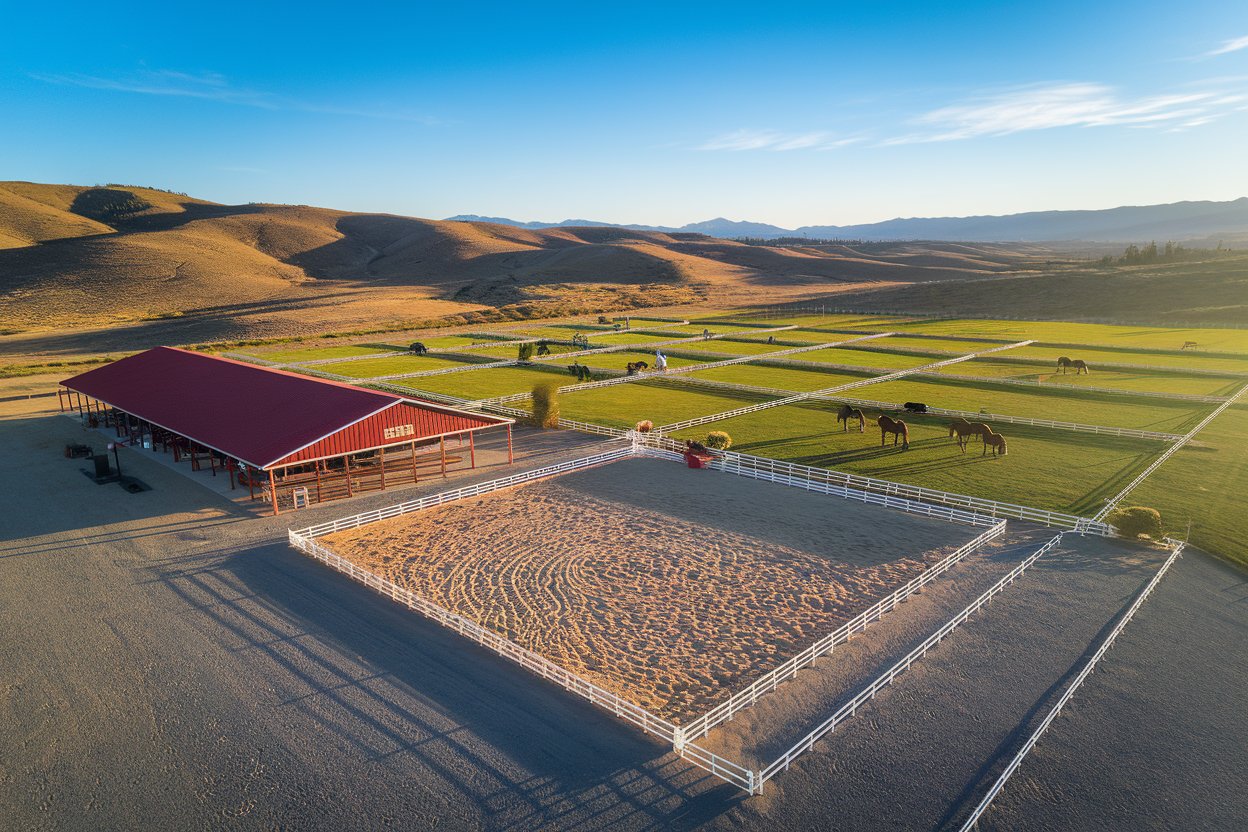
Due diligence for commercial horse properties extends beyond standard inspections. Verify water rights and their transferability, confirm zoning allows your intended use, review any existing boarding contracts or lease agreements, and assess the condition of specialized infrastructure like arena footing, fencing, and irrigation systems. Properties with existing income streams require careful analysis of actual versus reported revenues.
Browse our current farm properties and land listings to explore properties with income potential across Oregon and Idaho.
View Income-Generating Properties
Income Disclaimer: Income figures presented are estimates based on regional market conditions and industry data. Actual results vary significantly based on management, location, market demand, and individual circumstances. Consult with qualified professionals before starting any business venture.
Ready to Explore Your Options?
Whether you’re looking to purchase a property with existing income potential or want to discuss how to maximize returns on land you already own, Kellie Robinson brings 15+ years of experience in ranch and equine real estate—plus firsthand knowledge of the horse business from her competitive reining background. She understands both sides of the equation: finding the right property and making it work financially.
About the Author
Kellie RobinsonBroker/Owner of True North Real Estate Group, licensed in Idaho and Oregon. Competitive reiner, rancher, and 15+ years helping buyers find land that works.