True North Equine Land & Ranch is a licensed real estate brokerage in Idaho and Oregon. Information deemed reliable but not guaranteed. Full Disclaimer.
Buying horse property is one of the most significant investments you’ll make as an equestrian. Eastern Oregon offers something increasingly rare in the Pacific Northwest: affordable acreage, room to breathe, and a climate that’s genuinely kind to horses. But purchasing land here requires understanding factors that most real estate agents never mention—water rights that can make or break a property’s value, the critical difference between irrigated and non-irrigated pasture, and financing options designed specifically for agricultural purchases.
This guide walks you through everything you need to know before buying horse property in Eastern Oregon, from evaluating land and facilities to navigating the complexities of Oregon water law. Whether you’re relocating from out of state, upgrading from a smaller property, or exploring the region’s connection to horse properties in Western Idaho, you’ll find the practical, local knowledge that transforms a stressful purchase into a confident decision.
Ask any horse owner who’s dealt with months of Pacific Northwest mud, and they’ll understand immediately why Eastern Oregon appeals to equestrians. The region offers a fundamentally different ownership experience than you’ll find west of the Cascades—and at price points that make larger properties genuinely attainable.
Climate and Geography Benefits
Eastern Oregon’s high desert climate delivers approximately 200 sunny or mostly sunny days per year—roughly 50% more than Portland or the Willamette Valley. Cities like Burns average 214 sunny days annually, while Ontario sees 207-210. That translates to dramatically more riding days and year-round training opportunities that Western Oregon simply can’t match.
The low precipitation makes an even bigger difference for horse health and property management. Eastern Oregon receives just 9-14 inches of annual rainfall compared to 37-46 inches in Western Oregon. Less rain means less mud, and that’s not just about convenience—prolonged mud exposure causes thrush, white line disease, pastern dermatitis, and leg injuries. The region’s sandy, well-draining soils compound this advantage, creating naturally drier footing even after storms.
Average humidity runs around 58% compared to 73-78% west of the Cascades. Veterinary research consistently shows that humid climates increase risks of respiratory conditions and skin issues like rain rot. The drier air in Eastern Oregon reduces these concerns significantly. One caveat: extremely dry conditions require attention to dust management in barns and arenas, as respirable dust can also affect respiratory health.
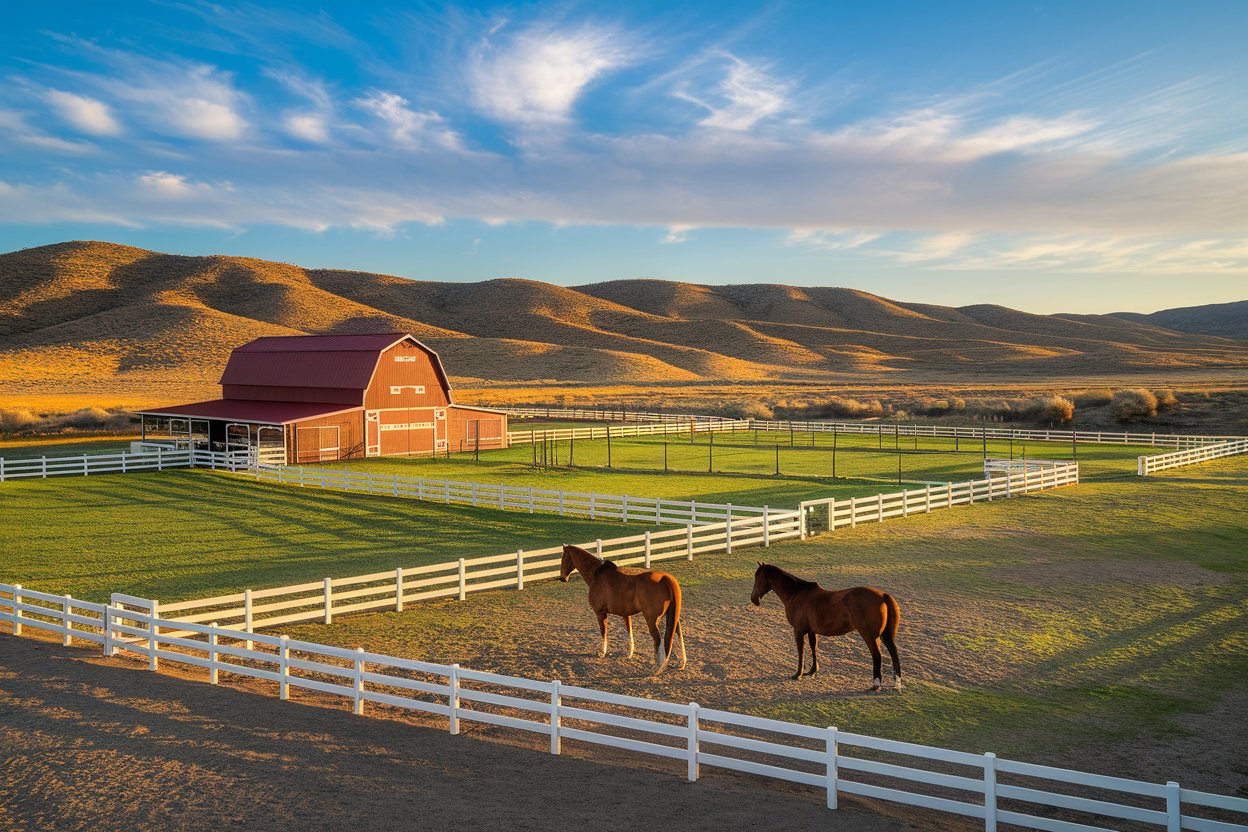
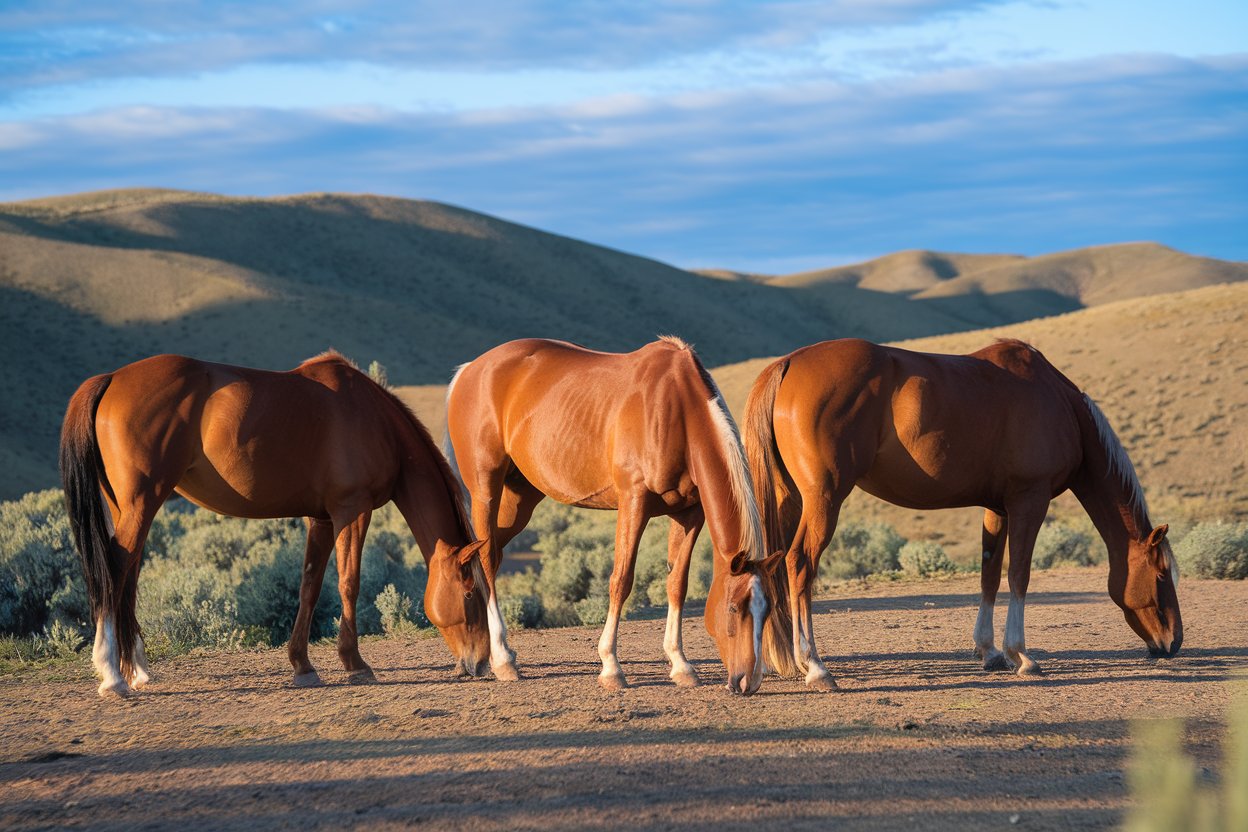
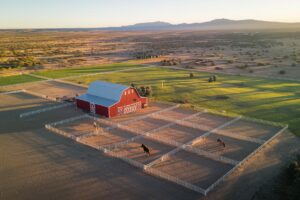
Eastern Oregon’s high desert climate means less mud and more riding days than Western Oregon
Beyond climate, the geography itself rewards horse owners. Open rangeland, BLM access, and proximity to national forests create riding opportunities that simply don’t exist in more developed areas. The BLM Vale District alone manages 5.1 million acres, with many properties throughout Malheur County providing direct trail access from your barn.
Eastern Oregon’s high desert climate means less mud and more riding days than Western Oregon
Land Availability and Pricing
The financial case for Eastern Oregon is compelling. Land prices run significantly lower per acre than in the Portland metro area or Willamette Valley—often by a factor of 10 to 50 times depending on the specific location and whether the land is irrigated.
Horse Property Land Prices: Eastern Oregon vs. Other Regions
Land Price Comparison by Region – Eastern Oregon, Western Oregon, and Western Idaho
Region
Price Per Acre
Typical Parcel Size
Development Pressure
Eastern Oregon (Rangeland)
$500 – $1,400
40 – 1,000+ acres
Low
Eastern Oregon (Irrigated)
$3,000 – $10,000
10 – 200 acres
Low
Western Idaho (Payette/Weiser)
$5,000 – $15,000
5 – 80 acres
Low to Moderate
Willamette Valley (Marion County)
$19,000 – $31,000
5 – 50 acres
High
Portland Metro
$27,000 – $52,000+
2 – 20 acres
Very High
Market data as of January 2026. Prices vary by specific location, water rights, and improvements. Contact us for current availability.
That differential means you can purchase 40 irrigated acres in Malheur County for less than 5 acres in Clackamas County. For horse owners who need space—for pasture rotation, arena placement, and buffer from neighbors—Eastern Oregon makes acreage achievable rather than aspirational.
The region also offers something increasingly scarce: large parcels. Malheur County alone currently lists over 100 properties covering more than 38,000 acres, with many individual listings ranging from 40 to 8,000+ acres. In contrast, Willamette Valley farms average under 100 acres and face constant pressure from residential development.
Market conditions currently favor buyers. In Malheur County, average days on market has increased to 108-136 days, and approximately half of homes sell below asking price. Competition from developers remains minimal, giving horse property buyers negotiating room that doesn’t exist in growth corridors. The adjacent markets in Western Idaho—including Payette, Weiser, and Fruitland—offer similar value with the added benefit of proximity to the Boise metro area. Browse current listings in both states to compare options.
Essential Features to Look For
Horse properties require evaluation beyond standard real estate considerations. The land, facilities, and infrastructure all need to support equine management—and deficiencies can be expensive or impossible to correct after purchase.
Acreage Requirements
How much land do you actually need? The answer depends entirely on whether the property has irrigated pasture or non-irrigated dryland—a distinction that matters more in Eastern Oregon than almost anywhere else.
According to Oregon State University Extension, well-managed irrigated pasture in Central and Eastern Oregon can support one 1,200-pound horse per 2 acres. That allows for proper grazing rotation and pasture recovery. If you’re running a small operation with 3-4 horses, 8-10 irrigated acres provides comfortable capacity with room for an arena, barn footprint, and dry lots.
Non-irrigated dryland is a completely different calculation. In semi-arid Eastern Oregon conditions, expect to need 10-38 acres per horse depending on native vegetation quality. Without irrigation, you’re not growing pasture—you’re managing rangeland that may provide only supplemental grazing rather than meaningful nutritional contribution.
Acreage Requirements: Irrigated vs. Non-Irrigated Land
Recommended Acreage Per Horse Based on Pasture Type
Pasture Type
Acres Per Horse
Hay Yield Per Acre
Best For
Irrigated Pasture
2 acres
3-5+ tons
Primary grazing, hay production
Non-Irrigated Dryland
10-38 acres
1-2 tons
Supplemental grazing, exercise
Dry Lot / Sacrifice Area
400-600 sq ft
N/A
Pasture rest, winter turnout
Beyond horse capacity, factor in space for hay production if you plan to grow your own. On irrigated ground, Pacific Northwest yields run 4-6+ tons per acre for alfalfa and 2-4 tons for grass hay. Non-irrigated dryland produces just 1-2 tons in good years. At average consumption of 2-2.5 tons per horse annually, you can calculate whether self-sufficiency is realistic for a given property.
Finally, consider buffer zones. Properties with adequate setbacks from neighbors reduce conflicts over flies, manure management, and early-morning barn activity. Room for future expansion—an additional paddock, covered arena, or guest barn—adds long-term value even if you don’t need it immediately.
Barn and Stable Considerations
Existing barn facilities range from assets to liabilities depending on their design and condition. Focus your evaluation on factors that affect daily functionality and horse health.
Stall sizing matters for long-term usability. A 12×12-foot stall accommodates horses up to about 1,000 pounds comfortably—the standard recommendation from most equine facility guidelines. If you ride larger Warmbloods or sport horses, look for 14×14 stalls. Draft breeds require 16×16 minimum. Retrofitting undersized stalls is expensive and often impractical.
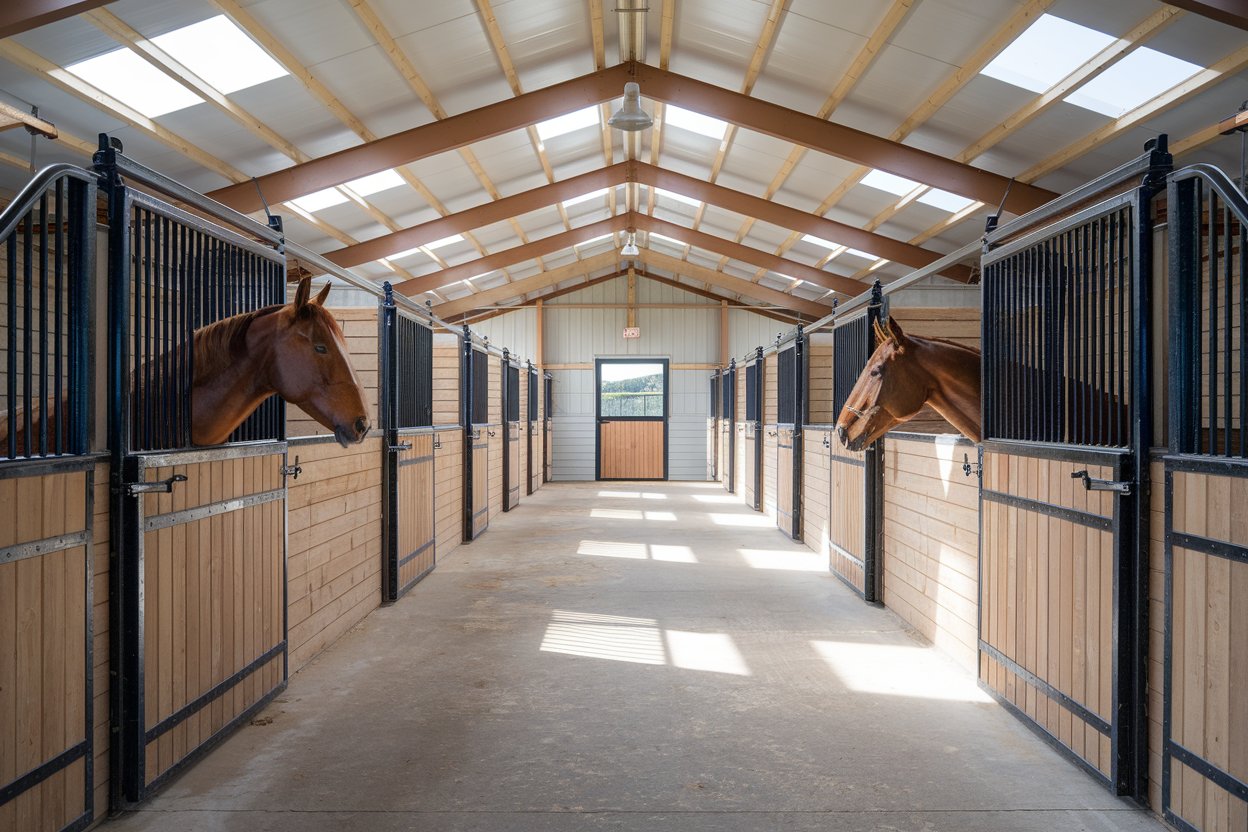
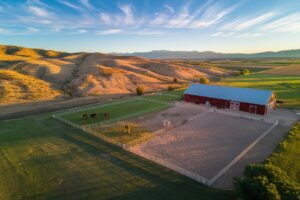
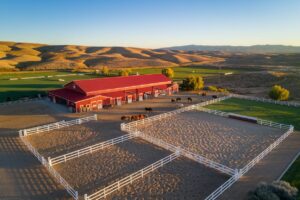
Look for barns with adequate ventilation, natural lighting, and stalls sized appropriately for your horses
Ventilation separates well-designed barns from structures that compromise respiratory health. Look for cupolas, ridge vents, or mechanical ventilation systems that move air without creating drafts. Natural light through windows or translucent roofing panels reduces electricity costs and supports horse wellbeing. Barns that feel stuffy or smell strongly of ammonia indicate inadequate airflow.
Practical features add daily convenience: a tack room large enough for your saddles and equipment, feed storage that protects against rodents and moisture, and a wash bay with drainage—ideally with hot water in this climate. Evaluate aisle width for equipment access and whether the barn layout supports efficient feeding routines.
Arena Considerations: Indoor vs. Outdoor
Eastern Oregon’s climate makes outdoor arenas viable for most of the year, but understanding your discipline’s requirements ensures the property supports your actual riding goals.
Arena Size Requirements by Discipline
Recommended Arena Dimensions for Different Riding Disciplines
Discipline
Minimum Size
Competition Size
Notes
Dressage (Small)
66′ x 131′
66′ x 198′
20m x 40m / 20m x 60m standard
Reining / Western
100′ x 200′
150′ x 300′
Larger allows full pattern work
Jumping / Hunter
100′ x 200′
150′ x 200’+
Rated shows need larger
General Riding
60′ x 120′
N/A
Adequate for basic schooling
Round Pen
50′ diameter
60′ diameter
Essential for groundwork, starting colts
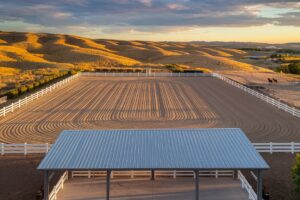
Outdoor arenas cost less to build, offer natural lighting, and can be constructed at any size your land allows. In Eastern Oregon’s climate, you’ll lose fewer days to weather than you might expect—but dust management becomes essential during dry summer months.
Indoor arenas represent significant investment but provide year-round riding regardless of weather, temperature, or daylight. In a region where summer temperatures can exceed 100°F and winter brings occasional ice storms, indoor facilities extend usable training hours substantially. Consider a covered arena as a middle-ground option—protection from sun and precipitation without full climate control costs.
For reining and western disciplines—which are popular throughout Eastern Oregon and Western Idaho—a standard arena of 100 x 200 feet works well for pattern work and training. The region’s strong western riding culture means you’ll find properties with appropriate facilities more readily than in some other markets.
Whatever arena type exists or you plan to build, evaluate the footing carefully. Sand, sand-rubber blends, and synthetic surfaces each have maintenance requirements and performance characteristics that affect soundness and training quality.
Fencing Requirements
Safe fencing protects your horses and defines your property’s functionality. Not all fencing is created equal—some types that work fine for cattle create serious injury risks for horses.
Safe horse fencing options include:
V-mesh (no-climb) wire: One of the safest options available. The small openings prevent hooves from catching while the wire flexes on impact.
Pipe fencing: Strong, durable, and highly visible. Excellent for high-traffic areas, stallion paddocks, and perimeter fencing. Higher cost but minimal maintenance.
Vinyl/PVC board fencing: Attractive, visible, and low maintenance. Flexes rather than shatters on impact. Works well for front paddocks and areas visible from the road.
Wood board fencing: Traditional and effective when properly maintained. Three or four boards with adequate spacing prevents horses from reaching through. Requires regular painting or staining to prevent deterioration.
Fencing to avoid for horses includes barbed wire, which causes serious lacerations and should never be used regardless of cost savings. Standard high-tensile wire can be made safer with vinyl coating, electrification, and visibility measures, but it’s not recommended as standalone horse fencing.
Evaluate perimeter fencing for security and interior cross-fencing for pasture management. Properties set up for rotational grazing—with multiple paddocks and gates that allow systematic movement—support better pasture health and parasite management than single large turnouts.
Water Rights: The Critical Factor
No single factor affects Eastern Oregon horse property value and usability more than water rights. Understanding Oregon water law isn’t optional—it’s essential to making an informed purchase. Properties that appear similar on the surface can have dramatically different capabilities based on their water rights documentation.
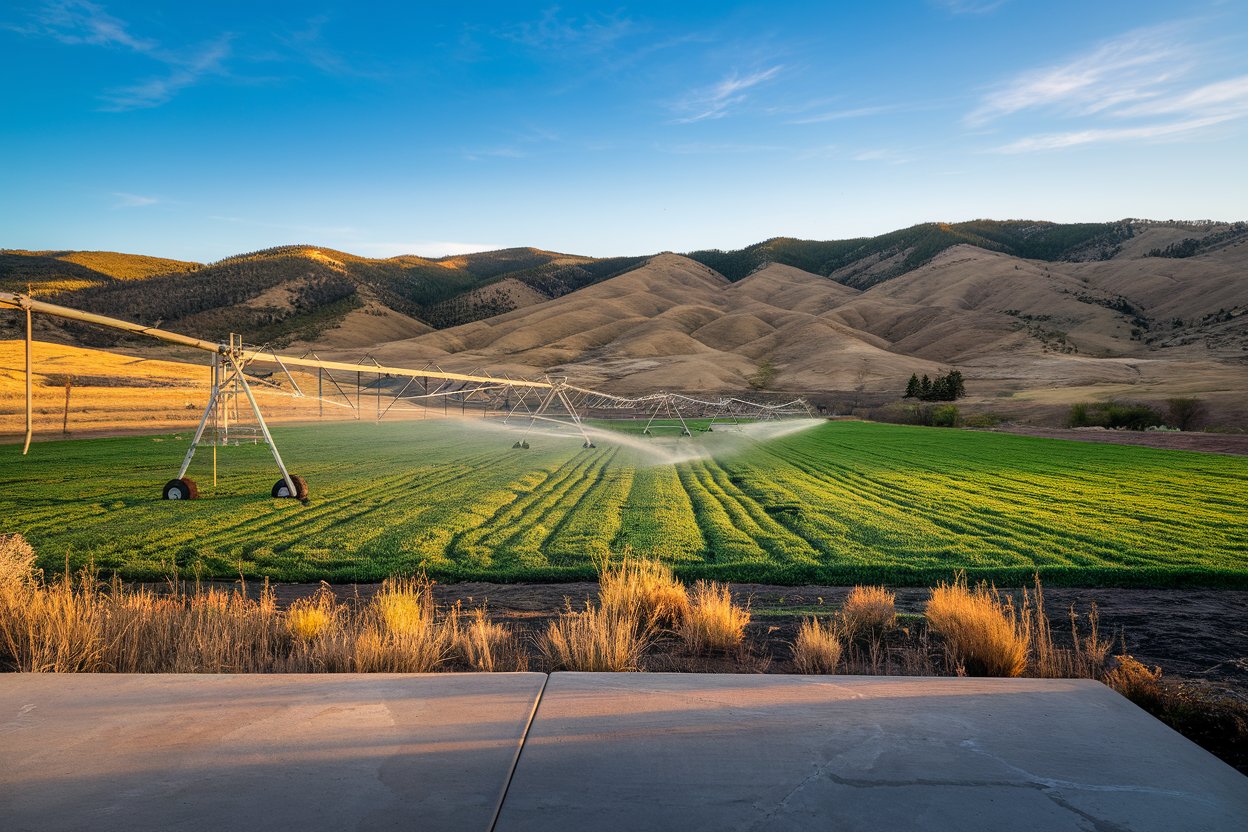
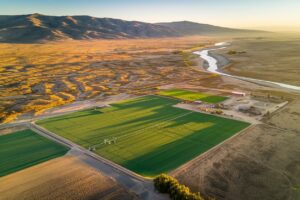
Water rights make the difference between green irrigated pasture and dry rangeland—verify before you buy
Understanding Oregon Water Law
Oregon operates under the prior appropriation doctrine, established in the state’s 1909 Water Code. The principle is straightforward: “first in time, first in right.” Water rights holders with earlier priority dates receive their full allocation before junior rights holders receive anything. During shortage years—increasingly common in parts of Eastern Oregon—junior rights may be curtailed entirely while senior rights continue uninterrupted.
All water in Oregon belongs to the public. Using water—whether from streams, rivers, ponds, or wells—requires legal authorization. This applies to irrigation, which many first-time buyers assume is included automatically with land purchases. The Oregon Water Resources Department administers all water rights in the state.
Surface water rights (streams, rivers, irrigation canals) have required permits since 1909. These rights specify the source, the amount, the place of use, and the permitted purpose. Changing any element requires state approval.
Groundwater rights came under similar regulation statewide in 1955. However, some domestic and stock watering uses remain exempt from permit requirements—a critical distinction for horse properties.
Here’s what horse property buyers need to know about exemptions:
Stock watering from wells: Exempt with no volume limit. You can water your horses from a domestic well without obtaining a water right.
Domestic use from wells: Exempt up to 15,000 gallons per day for household purposes.
Irrigation: NOT exempt regardless of size. Irrigating any pasture—even small acreage for horses to graze—requires a water right. There is no small-acreage exception.
This distinction matters enormously. A property with a good domestic well can support horse drinking water needs indefinitely. But without irrigation water rights, you cannot legally irrigate pastures, which means the “2 acres per horse” guideline becomes the “10-38 acres per horse” dryland calculation instead.
Water rights can be lost through non-use. Oregon’s forfeiture statute triggers after five consecutive years without beneficial use. When evaluating properties, verify that irrigation rights have been actively used and properly documented.
Note for buyers considering Western Idaho: Idaho also follows the prior appropriation doctrine, so the same principles apply. However, the specific regulations and agencies differ. The Idaho Department of Water Resources handles water rights verification for Idaho properties. Kellie Robinson is licensed in both states and can help navigate water rights verification on either side of the border.
Questions to Ask Sellers
Never assume water rights transfer automatically or that a seller’s representations are complete. Ask these questions and verify answers through official channels:
What water rights convey with the property? Get specific documentation—certificate numbers, permit numbers, or irrigation district records.
What is the priority date? Earlier dates mean more reliable water during shortages. Post-1970 rights in some basins may face significant curtailment risk.
Are there any restrictions or conditions? Some rights limit seasonal use, require minimum streamflows, or restrict purposes.
What is the well depth and capacity? Shallow wells may be affected by drought. Get pump test records if available.
Is the property in an irrigation district? Districts like the Owyhee Irrigation District (serving 67,266 acres near Ontario) hold water rights in trust for patrons. Annual assessments apply—currently around $76.50 per acre—but rights transfer automatically with land sales.
Financing Horse Property Purchases
Financing rural acreage works differently than residential mortgages, and understanding your options prevents surprises during the buying process. The good news: multiple programs exist specifically for agricultural and rural properties.
Conventional vs. Agricultural Loans
A common misconception holds that conventional mortgages only cover properties up to 10 acres. This isn’t accurate—Fannie Mae and Freddie Mac have no explicit acreage limits. The actual restrictions relate to property use and value allocation.
Conventional mortgages can finance larger acreage if:
The property is used primarily as a residence, not a commercial agricultural operation
The dwelling holds the primary value (land value doesn’t dominate the appraisal)
The property isn’t actively generating agricultural income
However, agricultural zoning, extensive farm improvements, and income-producing operations can disqualify properties from conventional financing regardless of acreage. This is where agricultural lenders fill the gap.
Agricultural loans through the Farm Credit System and specialized lenders are designed specifically for farm and ranch purchases. These lenders understand agricultural properties, including horse operations, and offer terms unavailable through conventional channels:
No acreage restrictions
Terms up to 30 years
Understanding of agricultural cash flow cycles
Ability to finance improvements like barns and arenas
The Farm Credit System holds approximately 40% of farm production loans and 49% of farmland real estate loans nationally. These are substantial, mainstream lenders—not obscure specialty shops.
Portfolio lenders—typically local banks and credit unions—offer another option. They keep loans on their own books rather than selling to secondary markets, giving them flexibility to approve properties that don’t fit conventional guidelines. Building relationships with local lenders who understand rural property in your target area often proves valuable.
USDA Loan Programs
Two distinct USDA programs serve rural property buyers, and understanding the difference prevents wasted applications.
USDA Rural Development (Section 502) loans offer attractive terms—low down payments, competitive rates—but restrict property types significantly. Income-producing agricultural operations, commercial enterprises, barns, and livestock facilities are ineligible. Land value cannot exceed 30% of total property value. These loans work for rural residential properties with modest acreage but generally don’t suit serious horse facilities.
USDA Farm Service Agency (FSA) loans are designed specifically for agricultural operations, including horse farms. Current programs available through the USDA Farm Service Agency include:
Direct Farm Ownership loans: Up to $600,000 with 0% down payment for qualified beginning farmers
Down Payment loans: FSA finances up to 45% (maximum $300,150) with only 5% borrower contribution required
Guaranteed loans: FSA guarantees loans from commercial lenders, making approval easier for agricultural properties
Oregon’s Aggie Bond Program provides additional support, offering interest rate reductions on loans up to $509,600 for beginning farmers and ranchers purchasing agricultural land.
For income-producing horse operations—boarding, training, breeding—FSA programs typically provide better terms than attempting to force conventional financing. For residential horse properties used personally, conventional or portfolio lenders may offer simpler processes.
Due Diligence Checklist
Thorough due diligence protects your investment and prevents expensive surprises. Horse properties require evaluation beyond standard home inspections—agricultural systems, water infrastructure, and land conditions all need professional assessment.
Complete these inspections and verifications before removing contingencies:
Property inspection: Home plus all outbuildings—barns, shops, equipment storage. Look for structural issues, roof condition, electrical adequacy, and code compliance.
Well and septic inspection: Well capacity testing, water quality analysis, septic system evaluation. For horse properties, confirm the well can support both domestic use and livestock watering.
Water rights verification: Search Oregon Water Resources Department or Idaho Department of Water Resources records. Confirm certificate or permit numbers, priority dates, and that rights haven’t been forfeited through non-use.
Soil and pasture assessment: Evaluate soil type, drainage, current pasture condition, and weed pressure. Consider a soil test if you plan to improve pastures or grow hay.
Zoning verification: Confirm permitted uses with county planning department. Agricultural zoning typically allows horse keeping, but verify any restrictions on commercial boarding, events, or number of animals.
Survey and boundary confirmation: For rural acreage, fences don’t always follow legal boundaries. A recent survey prevents disputes and confirms actual acreage.
Title search: Look for easements (utility, access, irrigation), deed restrictions, and any encumbrances that affect use. Irrigation easements are common in Eastern Oregon.
Environmental assessment: Consider for properties with past agricultural or industrial use. Underground storage tanks, chemical storage, and historical mining can create liability.
Insurance quotes: Obtain property insurance quotes before finalizing. Fire insurance has become challenging in rural Oregon—premium increases and coverage limitations are common. Budget for this expense and confirm coverage is available.
Working with an Equine Property Specialist
General real estate agents—even good ones—typically lack the specialized knowledge to properly evaluate horse properties. They may not know to ask about water rights priority dates, recognize inadequate stall ventilation, or understand why arena dimensions matter. These aren’t character flaws; they simply haven’t worked enough horse property transactions to develop the expertise.
An equine property specialist brings knowledge you can’t get from standard agent training:
Understanding of facility requirements for different disciplines and management styles
Ability to identify red flags in barn construction, fencing, and land use
Familiarity with agricultural financing options and USDA programs
Relationships with rural lenders, agricultural appraisers, and equine-knowledgeable inspectors
Knowledge of local horse community, services, and trail access
When interviewing agents, ask specific questions: How many horse properties have they sold in the past two years? Can they explain the difference between surface water rights and groundwater exemptions? What do they look for when evaluating arena footing? Answers reveal whether someone has genuine expertise or just enthusiasm for horses.
Kellie Robinson at True North Equine Land & Ranch brings over 15 years of experience in rural and ranch real estate, with personal expertise as a competitive reiner. She’s licensed in both Idaho and Oregon—a significant advantage when searching the border region around Ontario, Vale, Nyssa, Weiser, Payette, and Fruitland. That dual licensing means you can explore properties on both sides of the Snake River without switching agents or losing continuity.
Whether you’re relocating from out of state, upgrading from your current property, or purchasing your first horse acreage, working with specialists who understand what you’re actually trying to accomplish makes the difference between a stressful transaction and a successful one.
Eastern Oregon offers what many equestrians spend years searching for: affordable acreage, a climate that supports horse health, and communities where rural lifestyles remain viable. The region isn’t right for everyone—it requires embracing distance from urban amenities and understanding the critical role water plays in property value. But for buyers who know what they’re looking for, Eastern Oregon delivers opportunities that have largely disappeared from more developed markets.
Start by defining your non-negotiables: acreage, facilities, water requirements, and budget. Then browse current horse properties or use our advanced search to filter by your specific criteria. When you’re ready to explore specific properties or have questions about the buying process, our team is here to help.
Market data current as of January 2026. Prices and availability subject to change; contact us for current information. Verify all zoning and water rights with appropriate county and state agencies.