True North Equine Land & Ranch is a licensed real estate brokerage in Idaho and Oregon. Information deemed reliable but not guaranteed. Full Disclaimer.
When you're searching for a horse property in Oregon or Idaho, the riding arena often becomes a deciding factor. Do you need the weather protection of an indoor facility, or will an outdoor arena serve your needs in our high desert climate? The answer depends on your riding discipline, budget, and how you plan to use the property.
This guide breaks down the practical differences between indoor, outdoor, and covered arenas—including real construction costs, maintenance requirements, and how each option performs in Eastern Oregon and Western Idaho's unique climate. Whether you're evaluating properties with existing arenas or planning to build, you'll have the information you need to make the right choice.
Before comparing arena types, you need to understand two critical factors: how our regional climate affects arena usability, and what your riding discipline actually requires.
Climate Considerations in Oregon and Idaho
Eastern Oregon and Western Idaho share a high desert climate that's significantly more arena-friendly than the wet western side of the Cascades. According to the National Weather Service, the Treasure Valley receives only 11-13 inches of annual precipitation—compared to Portland's 40+ inches—with 206-210 sunny days per year.
This climate translates to practical riding advantages. Most horse owners in our service area can expect 280 or more usable outdoor riding days annually. The primary challenges aren't rain, but frozen footing during December through February and dust control during dry summer months when humidity drops to just 30-36%.
Eastern Oregon locations at higher elevations face additional considerations. Areas like Burns (elevation 4,100 feet) experience colder winters with temperatures occasionally reaching -30°F, reducing outdoor riding days by 30-60 compared to the Treasure Valley floor. Snowfall ranges from 18-21 inches in Boise to 36 inches in higher elevation areas.
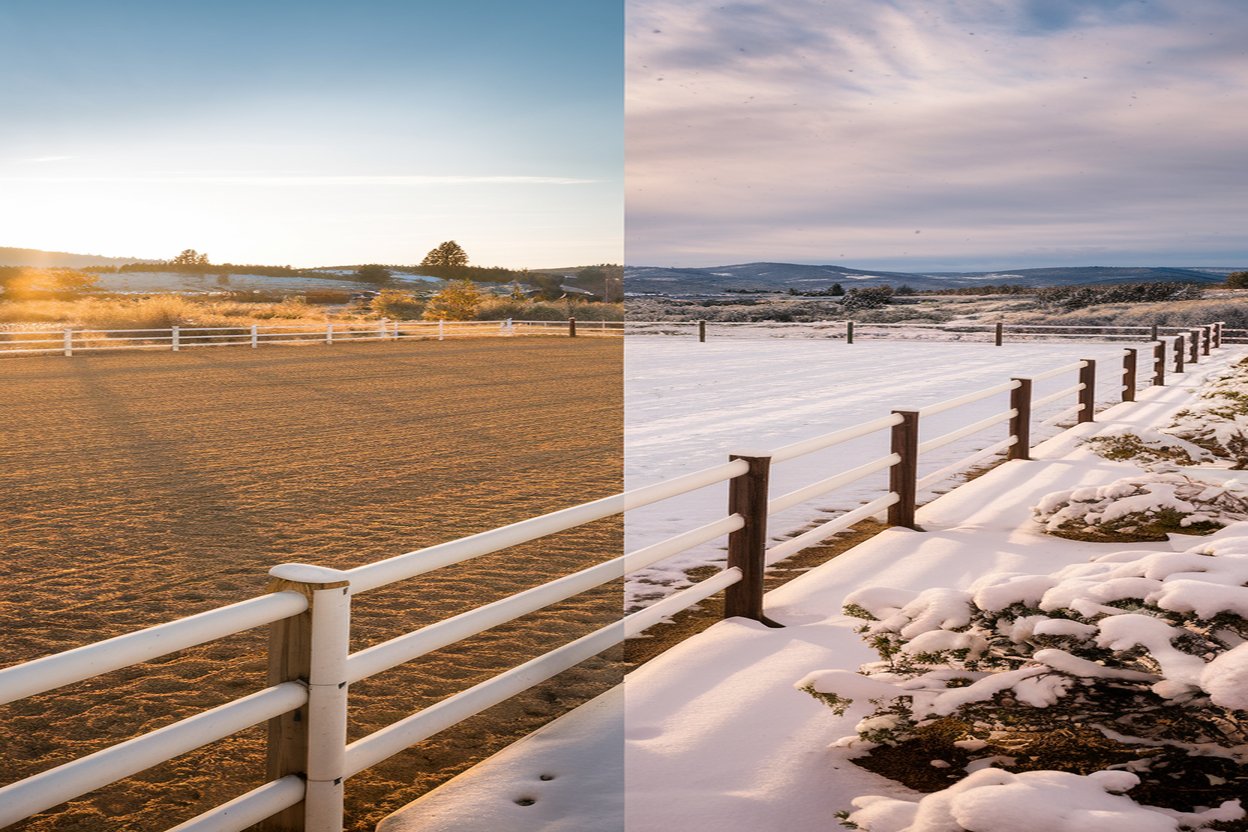
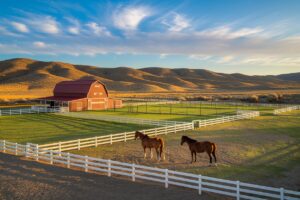
Split comparison showing the same Eastern Oregon arena in summer warmth and winter frost, demonstrating year-round usability
Your Riding Goals Matter
Different disciplines have different arena requirements, and understanding yours will narrow your options significantly.
Dressage Riders
Dressage riders need precise footing with firm contact—typically 2.5-3 inches deep—and benefit from controlled environments where footing remains consistent. An indoor arena eliminates variables that can affect a horse's way of going.
Jumpers
Jumpers require more cushioning (3-4 inches of footing) and larger spaces to set full courses. While training can happen in smaller arenas, serious competitors often need outdoor space for course variety.
Reining and Western Performance
Reining and western performance riders need the most space for sliding stops, large fast circles, and rundowns. They also benefit from slightly deeper footing (4-6 inches) and often prefer outdoor arenas where the larger footprint is more affordable to build.
Recreational Riders and Trail Horses
Recreational riders and trail horses have the most flexibility. A well-maintained outdoor arena handles most training needs, and the budget savings can go toward other property improvements.
If you're planning to run a business—whether that's an arena for lessons or boarding—year-round reliability becomes more important, potentially justifying the investment in covered or indoor facilities.
Outdoor Arena Benefits
For many horse owners in our region, an outdoor arena makes the most practical sense. The combination of favorable climate, lower costs, and flexibility creates compelling value.
Significantly Lower Construction Costs
The cost difference between outdoor and indoor arenas is substantial. A quality outdoor arena typically runs $25,000-$60,000 for a standard 60x120 foot space, while indoor arenas average $180,000-$450,000. That's a difference that could buy additional acreage, upgrade your barn, or fund years of horse care.
Outdoor arenas also require simpler permitting in most counties. Without a permanent structure, you're typically dealing with grading permits rather than full building permits—saving both time and fees.
Natural Lighting Advantages
Horses see differently than humans, and natural light provides the full spectrum they're designed for. Many trainers prefer outdoor work for young horses precisely because the natural environment—with its changing shadows, sounds, and sights—builds confidence and exposure.
For photography and video (increasingly important for sales and training documentation), outdoor arenas in our region offer exceptional natural light. The clear high desert air and abundant sunny days create ideal conditions without the harsh shadows of artificial lighting.
Greater Flexibility in Size
Without the constraint of building a structure, outdoor arenas can be sized to your exact needs. Standard sizes include 60x120 feet for basic work, 100x200 feet for jumping and versatile training, and 150x300 feet for reining and cattle work. Expansion later is straightforward if your needs change.
Footing Options and Considerations
According to Penn State Extension, outdoor arena footing requires more attention to drainage and weather resistance than indoor surfaces. The base layer is critical—proper construction includes 4-6 inches of compacted gravel or crusite base, crowned slightly (1-2% grade) to shed water.
For footing material, silica sand offers the best durability with a 10-year lifespan, though it costs 25-50% more than alternatives. Adding fiber or rubber helps stabilize the surface, reduces dust, and—importantly for our climate—helps prevent freezing by maintaining slight moisture without becoming saturated.
Dust control in summer requires regular watering, typically every 1-2 days during dry periods. Many property owners install simple irrigation systems to automate this task.
Indoor Arena Benefits
While outdoor arenas work well for most recreational riders in our climate, indoor arenas offer distinct advantages that justify their higher cost for certain users.
True Year-Round Riding
An indoor arena eliminates weather as a variable entirely. When December brings frozen ground or February delivers an unexpected snowstorm, you're still riding. For professional trainers maintaining client horses on schedules, competitive riders preparing for winter circuits, or anyone who simply can't tolerate weather-related interruptions, this reliability has real value.
The controlled environment also means consistent footing conditions. Indoor arenas maintain optimal moisture levels more easily, and the footing doesn't go through the freeze-thaw cycles that can damage outdoor surfaces.
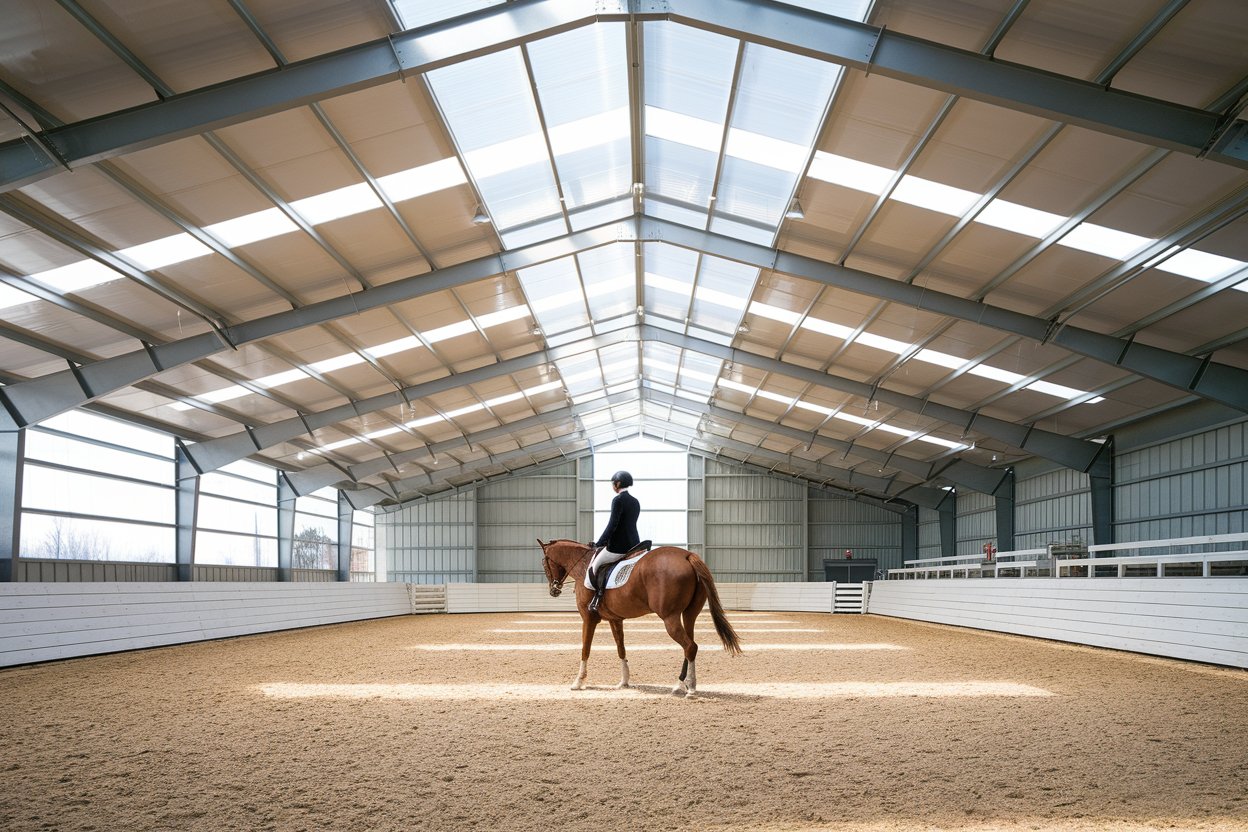
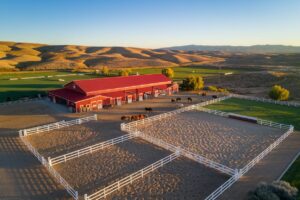
A well-designed indoor arena provides year-round riding with consistent footing conditions
Weather Protection Beyond Rain
Indoor arenas protect against more than precipitation. Wind—which can make outdoor riding genuinely dangerous—is eliminated. Summer heat is moderated by shade and ventilation. For horses sensitive to insects, enclosed arenas reduce fly pressure during peak seasons.
The structure also protects your footing investment. Sun degrades certain footing materials over time, and wind can redistribute sand unevenly. Indoor footing typically lasts longer and requires less frequent replacement.
Climate Control Options
While full climate control is expensive to operate, indoor arenas can be designed with practical temperature management. Radiant heating in viewing areas, heated tack rooms adjacent to the arena, and proper ventilation systems make winter riding comfortable for both horses and riders.
Lighting extends your riding hours year-round. During winter's short days, indoor arenas allow evening riding that would be impractical or unsafe outdoors.
Covered Arena: The Middle Ground
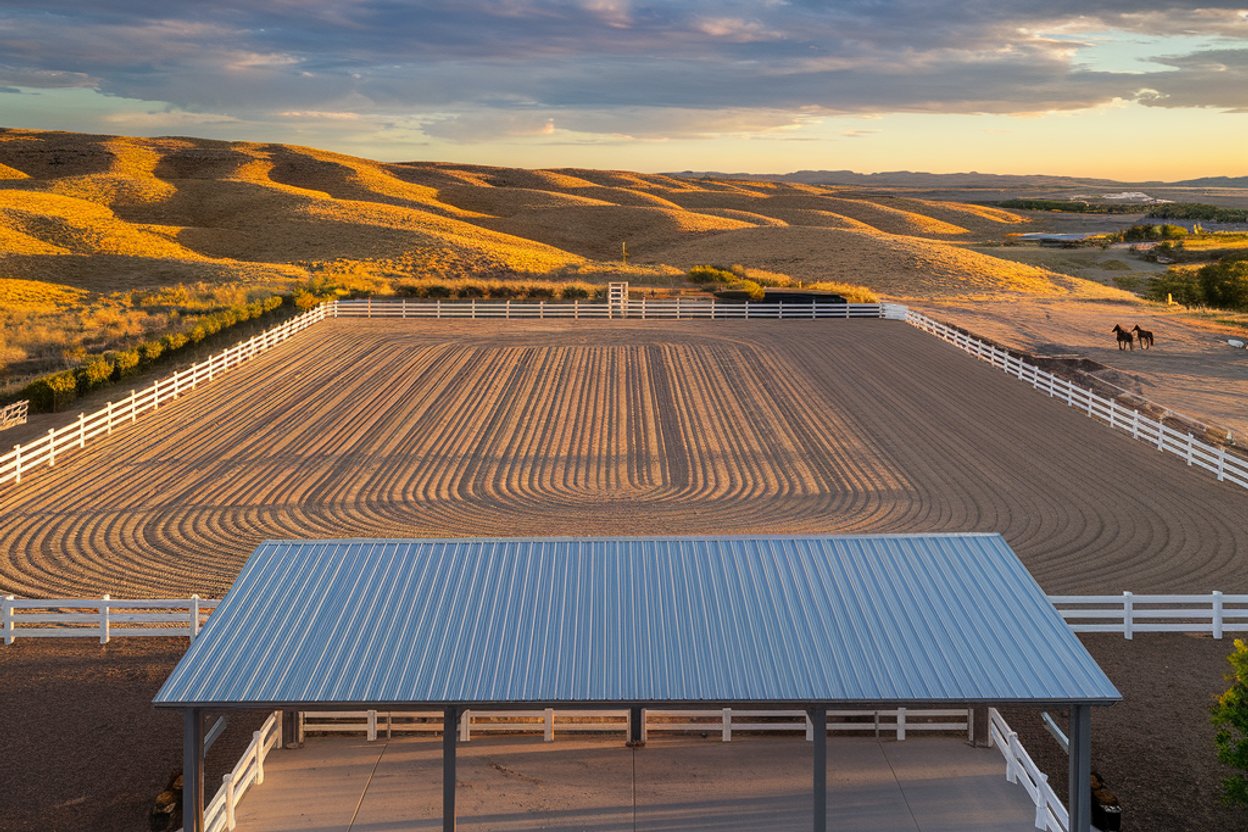
A covered arena—featuring a roof structure with open or partially open sides—offers a practical compromise that works particularly well in our high desert climate.
What Defines a Covered Arena
Covered arenas provide overhead protection while maintaining open-air ventilation. The roof blocks direct sun and precipitation, while open sides allow natural airflow and light. Most designs in our region use metal roofing on steel frame construction, sometimes with partial sidewalls (typically 4-6 feet high) to block wind while preserving ventilation.
Why Covered Arenas Work Well Here
In Eastern Oregon and Western Idaho, the primary weather challenges for outdoor riding are intense summer sun and occasional winter precipitation—not the constant rain that plagues western Oregon. A covered arena addresses both issues at a fraction of indoor arena cost.
The shade alone adds significant value. Summer temperatures regularly exceed 90°F, and riding in direct sun becomes uncomfortable for horse and rider alike. A covered arena can reduce perceived temperature by 10-15 degrees while protecting footing from UV degradation.
During winter, the roof keeps snow and ice off your footing, significantly extending usable riding days. While you'll still face cold temperatures, proper footing preparation (including salt additives or rubber content) can prevent freezing under a covered structure.
Cost Positioning
Covered arena costs fall between outdoor and indoor options, though the range is wide depending on size and finish level. Basic covered structures start around $50,000 for smaller arenas, with complete turnkey projects for an 80x100 foot covered arena typically running $80,000-$140,000. Premium designs with partial enclosure, electrical, and finished details can approach $180,000.
The key cost driver is the roof span. Longer clear-span structures require heavier engineering, and our region's snow load requirements add to structural costs. Budget 15-20% more than national estimates for Pacific Northwest construction due to seismic and snow load engineering requirements.
Cost Analysis and Property Value
Understanding true arena costs—both construction and ongoing maintenance—helps you evaluate properties accurately and plan realistic budgets.
The base and footing account for 40-50% of outdoor arena costs. For indoor and covered arenas, the structure itself becomes the dominant expense. Other significant factors include site accessibility (remote properties face higher delivery costs), electrical service requirements, and local labor rates.
Maintenance Cost Comparison
Ongoing maintenance varies significantly by arena type:
Outdoor Arenas
Outdoor arenas require the most active management: daily or twice-daily dragging during heavy use, watering every 1-2 days in summer, weed control around the perimeter, and periodic footing top-ups (typically every 2-3 years). Annual maintenance budget: $1,500-$4,000.
Covered Arenas
Covered arenas share similar footing maintenance needs but add roof inspections and occasional repairs. The protected footing typically needs watering less frequently (every 2-3 days) and lasts longer between replacements. Annual maintenance budget: $2,000-$5,000.
Indoor Arenas
Indoor arenas require the same footing care plus HVAC maintenance, lighting replacement, and more complex structural upkeep. However, the controlled environment means more consistent footing conditions and longer material life. Annual maintenance budget: $3,000-$8,000.
Property Value Impact
Arenas add measurable value to horse properties, though the return on investment varies. Industry data suggests indoor arenas typically return 50-70% of construction costs at resale. A $325,000 indoor arena might add $160,000-$225,000 to property value.
The premium is highest when the arena matches the property's overall positioning. A professional-quality indoor arena on a 5-acre hobby farm may be over-improvement, while the same arena on a 40-acre training facility could be essential infrastructure that enables income generation.
In Oregon and Idaho's equestrian markets, properties with quality arenas consistently sell faster than comparable properties without them. The buyer pool is more limited—not everyone needs an arena—but qualified buyers recognize the value and pay accordingly.
Dressage riders should note that the small arena (20x40 meters, or approximately 66x131 feet) is only permitted for Intro, Training, and First Level Test 1. All other tests require the standard arena (20x60 meters, approximately 66x197 feet). If you're serious about dressage, plan for the full-size arena from the start.
Multi-Purpose Users
Multi-purpose users often underestimate their space needs. While an 80x160 foot arena technically fits a dressage court, it leaves no room for warm-up or multiple horses working simultaneously. The industry standard of 100x200 feet (20,000 square feet) provides genuine versatility—enough for a full dressage arena with buffer space, basic jumping courses, and comfortable western work.
Find Properties with Arenas
Whether you've decided on indoor, outdoor, or covered—or you're still weighing options—the next step is finding properties that match your criteria.
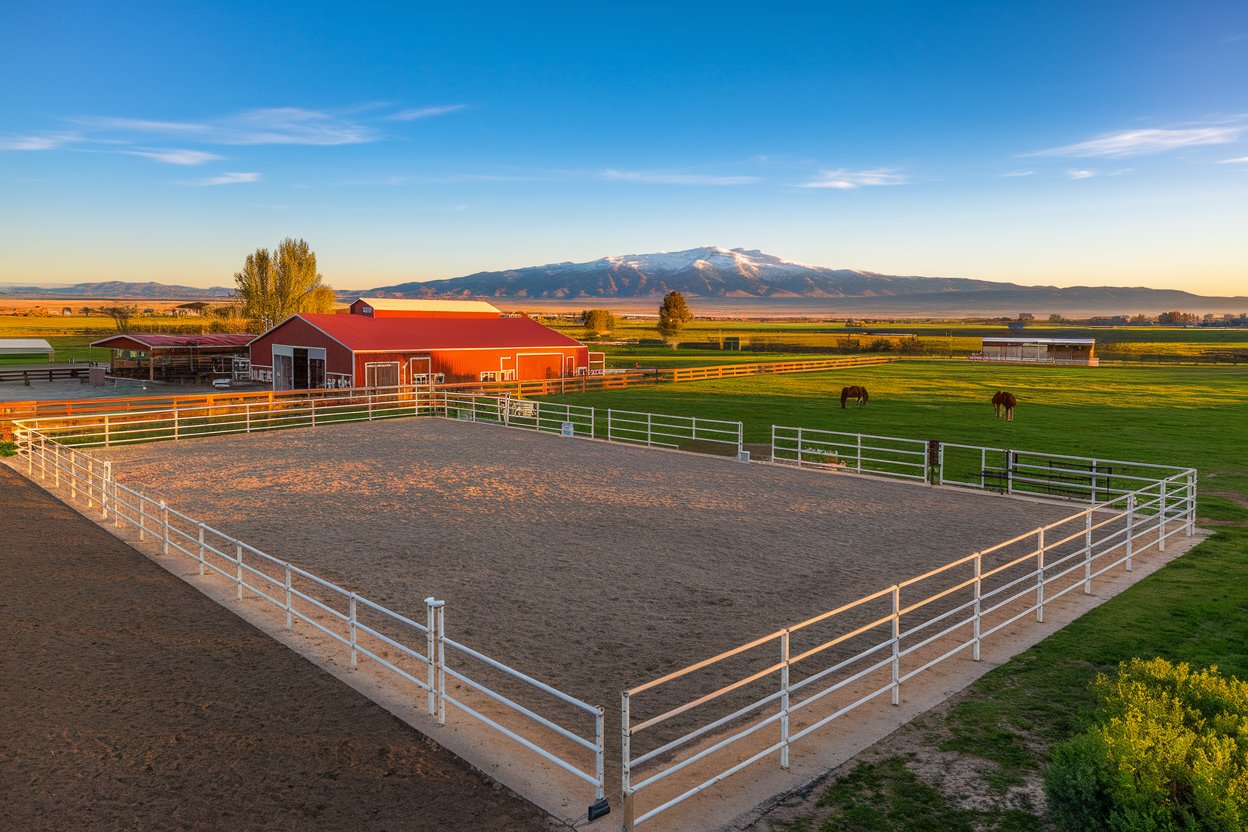
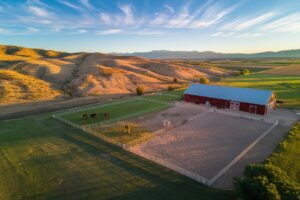
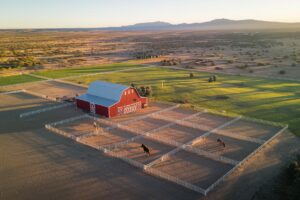
Quality horse properties with well-maintained arenas are available throughout Eastern Oregon and Western Idaho
True North Equine Land & Ranch specializes in horse properties throughout Eastern Oregon and Western Idaho. With 15+ years of experience in rural and equestrian real estate—and personal experience as a competitive reiner—broker Kellie Robinson understands what makes an arena functional, not just attractive in listing photos.
When evaluating properties with existing arenas, we assess footing condition, drainage, structural integrity of covered and indoor facilities, and realistic estimates of any needed improvements. For properties where you'd build an arena, we can help you evaluate sites for proper drainage, accessibility, and construction feasibility.
Read our complete horse property guide for more on evaluating equestrian properties, or browse current listings to see what's available.
The right arena depends on your specific situation—your discipline, your climate priorities, your budget, and your long-term plans. There's no universal answer, but there is a right answer for you.
If you'd like to discuss arena requirements for your property search, or if you have questions about specific listings, reach out to schedule a conversation. We're happy to help you think through these decisions before you start touring properties.