Cattle Ranches for Sale in Idaho: Grazing, Water, and Carrying Capacity
Kellie Robinson · July 14, 2026 · 14 min read
True North Equine Land & Ranch is a licensed real estate brokerage in Idaho and Oregon. Information deemed reliable but not guaranteed. Full Disclaimer.
Buyers searching for cattle ranches for sale in Idaho are looking at one of the most complex real estate transactions in the rural market — a purchase that’s not just about land and buildings but about permits, grazing rights, water infrastructure, carrying capacity, and the operational history of a working livestock enterprise. At True North Equine Land & Ranch, Kellie Robinson brings more than fifteen years of dual-licensed Idaho and Oregon rural real estate experience to these transactions, and we understand the difference between a cattle operation that’s priced on its productive reality and one that’s priced on optimistic projections.
This guide is specifically focused on cattle ranch acquisitions — a distinct category from our horse-property and general ranch content. Whether you’re an established rancher looking to expand, a family taking over an operation, or a first-generation buyer entering the livestock business, the sections below cover the key variables you need to evaluate: grazing structure, carrying capacity, water for livestock, fencing and handling infrastructure, the Idaho and eastern Oregon cattle country landscape, financing programs, and the due-diligence process specific to working ranches.
A working cattle ranch is not just a large parcel of land with some fencing. It’s an integrated operation built around the seasonal movement of cattle through a structured rotation of deeded ground, irrigated hay production, and — in many cases — leased or permitted grazing on public or state land. Understanding how these pieces fit together is prerequisite knowledge for evaluating any Idaho cattle ranch listing.
Set annually by formula; well below private lease rates
Calf price (recent avg)
$2.50-3.50/lb (500 lb calf)
Highly cyclical; check current CME feeder cattle futures
Deeded Ground
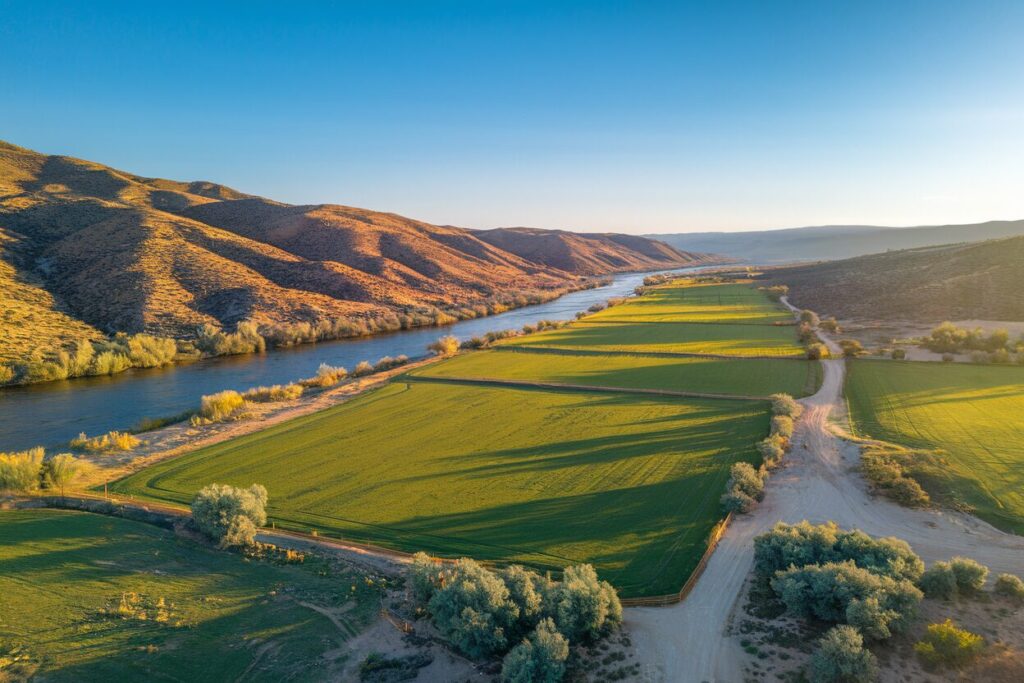
The privately owned land that forms the core of the operation. Deeded acres are the foundation: they provide winter-grazing and feeding ground, hay production to support the herd through harsh months, headquarters for equipment and handling, and residences for ranch personnel. The ratio of irrigated to non-irrigated deeded acres matters significantly — irrigated ground can produce multiple cuttings of hay and support much higher stocking rates than dryland pasture.
State Leases
The Idaho Department of Lands manages state endowment lands that are leased to private operators for grazing. These leases are term-limited and renewable, and they are tied to specific parcels and AUM authorizations. A ranch that includes state lease acreage has more total grazing area available, but buyers need to understand the lease terms, renewal history, and whether lease continuation is likely. State leases are not automatically transferred with the sale of adjacent deeded ground — they must be addressed explicitly in the transaction.
BLM Grazing Permits
Many Idaho cattle ranches hold Bureau of Land Management (BLM) grazing permits — authorizations to graze a specified number of AUMs on designated federal allotments. BLM grazing permits are not private property under federal law; they are privileges tied to the base property (the permitted ranch) and authorized by the federal government. However, they have historically transferred with the sale of the associated base property and carry significant practical value by extending a ranch’s total grazing capacity well beyond its deeded ground. The BLM Boise District Office administers much of the grazing permit structure for southwest Idaho federal lands. Buyers should understand the permit’s current AUM authorization, any outstanding compliance obligations, and the historical relationship between the base property and the allotment.
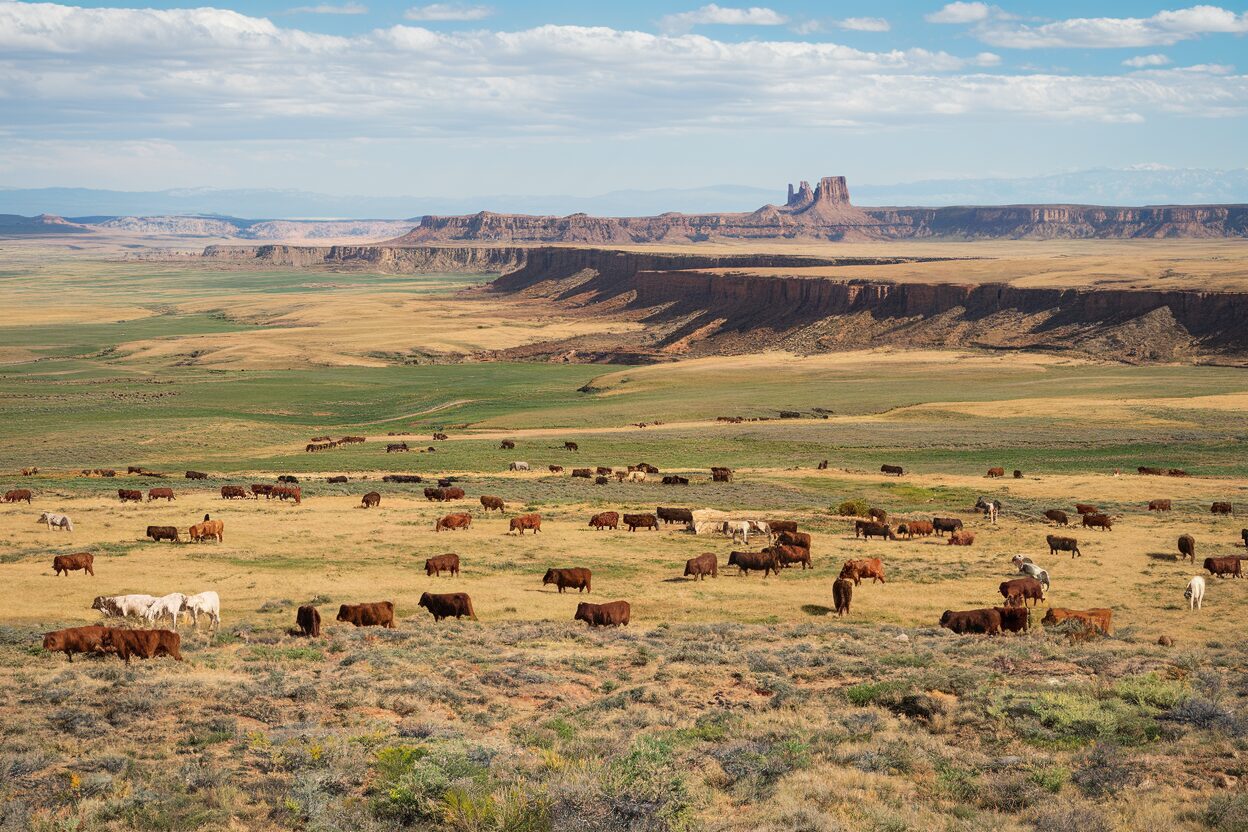
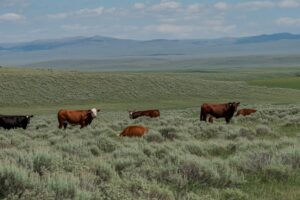
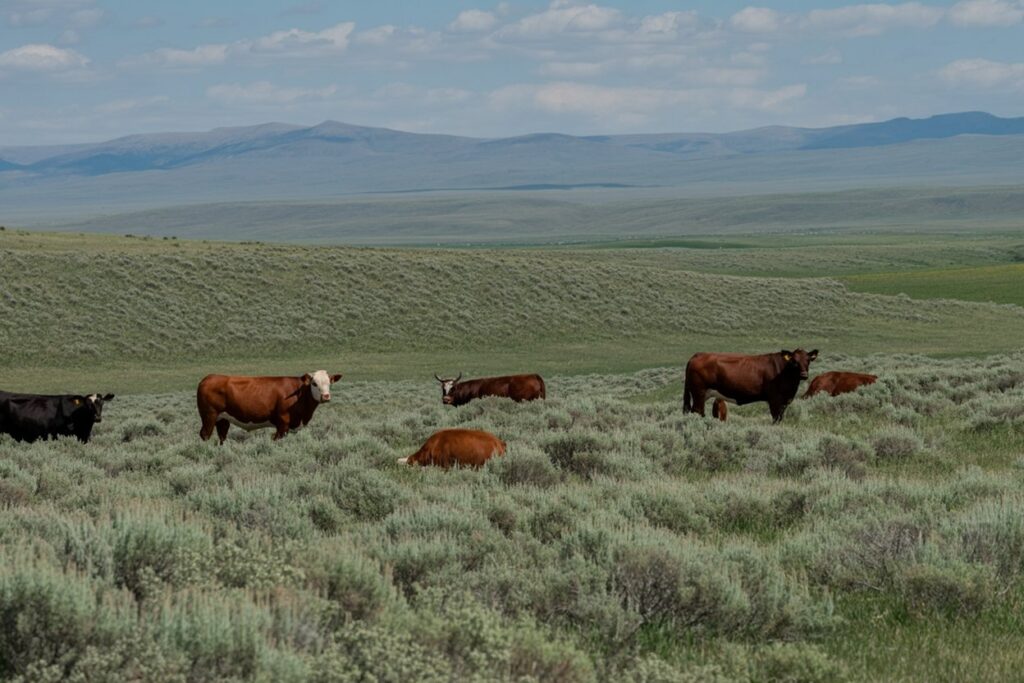
BLM-managed rangeland provides supplemental grazing for cattle operations across the Idaho-Oregon border region. Grazing permits are federal privileges tied to qualifying base property, not deeded land rights. (Information deemed reliable but not guaranteed.)
Carrying Capacity and Animal Unit Months
Carrying capacity — how many cattle a piece of land can support without degrading the forage base — is the operational heartbeat of any cattle-ranch purchase. It’s measured in Animal Unit Months (AUMs): one AUM equals the forage consumed by one mature cow (approximately 1,000 pounds) with calf for one month, typically estimated at around 800 pounds of dry matter per AUM (verify current NRCS standards, as methodology can vary).
BLM grazing districts relevant to Southwest Idaho cattle operations
BLM District
Approximate Coverage
Key Allotments
Note for Buyers
Boise District
4M+ acres
Snake River Plain, Owyhee Front
Largest district; fire rehab areas may have use restrictions
Vale District (OR)
5M+ acres
Malheur River, Jordan Valley
Cross-border permits possible for ID-OR operations
Twin Falls District
2M+ acres
South-central Idaho rangeland
Includes Magic Valley cattle country
How Carrying Capacity Is Estimated
Range scientists and NRCS range conservationists estimate carrying capacity by assessing the forage base: plant species composition, vegetative cover, soil type, precipitation, and current range condition. The output is an AUM-per-acre estimate for the specific pasture or allotment. Sellers may advertise carrying capacity based on historical peak stocking or on optimistic range conditions — buyers should request an independent range evaluation from a qualified range consultant or their local USDA NRCS office, which provides free technical assistance to agricultural producers.
Highly productive; rate depends on water availability and management intensity
Irrigated native grass pasture
0.8–1.8 AUM/acre
Spring through early fall
Lower than improved pasture; native species composition affects rate
Dryland native rangeland (sagebrush/bunchgrass, good condition)
0.15–0.5 AUM/acre
Spring and early summer primary season
Highly variable; precipitation year is critical factor
Dryland native rangeland (fair to poor condition)
0.05–0.15 AUM/acre
Spring only; rest required for recovery
Overgrazed or drought-stressed range may require multi-year rest
BLM/state allotment (permitted AUMs)
Varies by allotment; set by permit
Allotment-specific; often summer mountain range
Consult permit documents; AUM authorization is the binding number, not acreage
Irrigated alfalfa hay (cut and feed, not grazed)
Depends on yield and feeding program
Winter supplement
Hay production supports winter-feeding inventory, not direct grazing AUM
AUM-per-acre ranges are general estimates for southwest Idaho conditions. Actual carrying capacity depends on range condition, precipitation, management, and species composition. Consult your local NRCS office or a qualified range consultant for site-specific evaluation. Verify current figures before making any purchase decision.
Why Overstocking History Matters
A ranch that has been overstocked in recent years may carry far less forage than its nominal capacity suggests. Overgrazing depletes perennial grasses, encourages cheatgrass invasion, and takes years to recover. Request range-condition documentation and ask about the current stocking rate relative to permitted capacity — a well-rested range is worth meaningfully more than the same acreage in degraded condition.
Water for Livestock Operations
Cattle need reliable water access year-round — and in Idaho’s arid rangeland environment, water is often the limiting factor that determines how much of a range can actually be used. A parcel with excellent grass and poor water distribution will underperform its theoretical carrying capacity because cattle won’t travel more than about one to two miles from water under normal conditions.
Stock Water Rights
In Idaho, the right to use water for livestock (stock water) is a separately appropriated right governed by the same prior-appropriation doctrine that applies to irrigation water. Stock water rights are appurtenant to the land and should be conveyed with the ranch deed. Confirm that all stock-water rights serving the property’s water sources — springs, stock ponds, piped systems — are properly documented and in good standing through the Idaho Department of Water Resources (IDWR). The same verification applies to any irrigation water supporting hay production. We cover water-right verification in depth at Understanding Water Rights When Buying Ranch Property in Oregon and Idaho — read that post before making any offer on a ranch with irrigation or stock-water components.
Developed Water Sources
Beyond legal rights, evaluate the physical water infrastructure: stock ponds (dam condition, spillway integrity), pipeline systems (age, pressure capacity), spring developments (reliability in dry years), and any windmills or solar pumps serving remote pastures. A ranch with water distributed across the grazing area via pipeline is operationally superior — and more valuable — than one relying on a single centralized pond.
Riparian Areas and Stream Access
Properties with perennial stream access provide water redundancy that buyers prize. Confirm what riparian-area restrictions apply — Idaho and BLM rules may limit direct livestock access to streams on certain allotments — before assuming stream miles translate to unlimited stock-water availability.
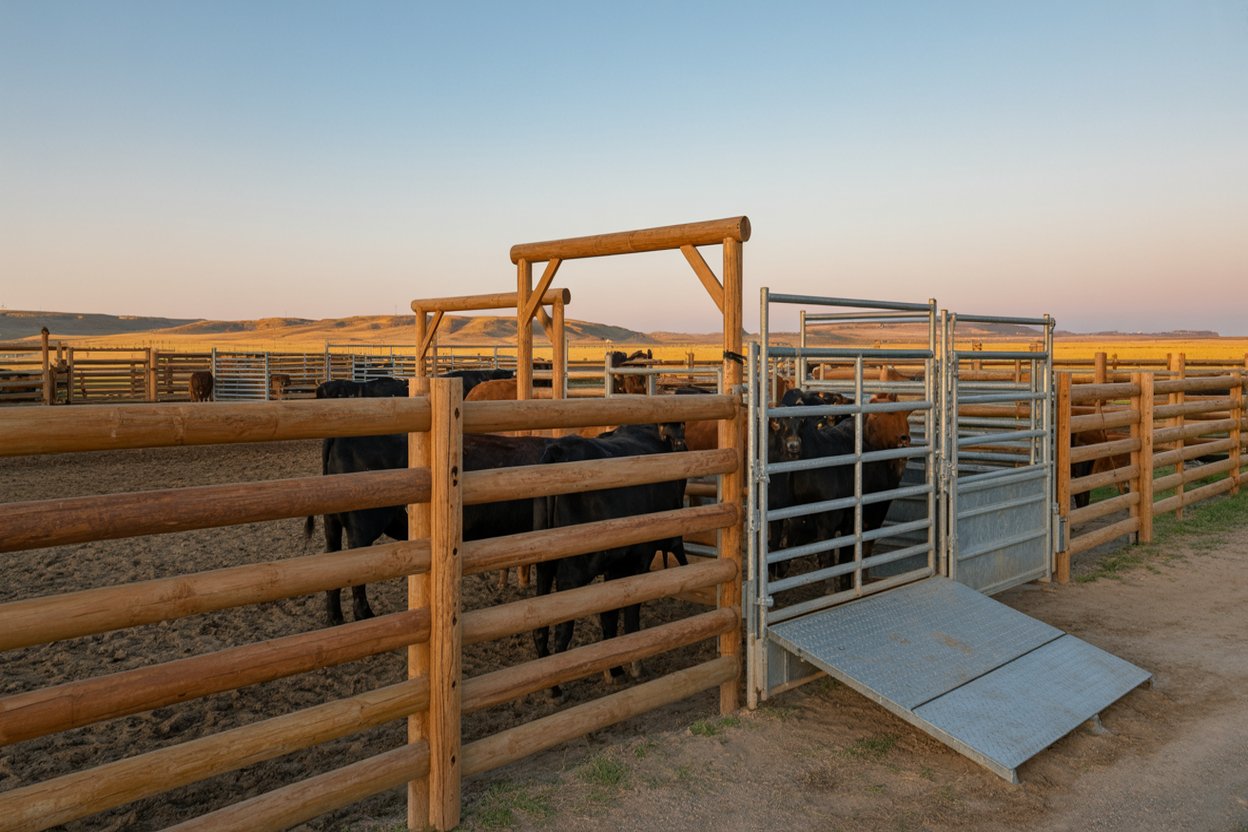
Quality corral and working-facility infrastructure reduces labor, improves cattle handling safety, and is a meaningful value component in a cattle-ranch purchase. Inspect squeeze-chute condition, pen capacity, and loading access during your showing. (Photo for illustrative purposes.)
Fencing, Corrals, and Handling Infrastructure
A working cattle ranch’s fencing and handling infrastructure represents decades of capital investment, and its condition directly affects the operation’s labor requirements, cattle-handling safety, and day-to-day efficiency. Buyers who underestimate the cost of bringing neglected fencing or corrals up to working standard often find their acquisition economics significantly worse than projected.
Perimeter and Cross-Fencing
Total perimeter-fence replacement can reach six figures even at modest material costs — evaluate condition honestly on a per-linear-foot basis. Cross-fencing enables rotational grazing, the management practice most effective at sustaining long-term range productivity. Walk fence lines away from the road, not just the visible sections, and budget realistically for first-year repairs.
Working Corrals and Squeeze Chute
Evaluate total pen capacity, alleyway design and flow, squeeze-chute condition, and loading-ramp compatibility with modern trailers. A well-designed working facility built from quality materials is worth significantly more than the same square footage in poorly designed or deteriorated infrastructure.
Cattle Guards and Gate Infrastructure
Cattle guards eliminate the labor of opening gates on frequently traveled routes. Inspect structural integrity, depth, and channel drainage — and confirm that any shared cattle guards covered by easements are legally documented.
Southwest Idaho and Eastern Oregon Cattle Country
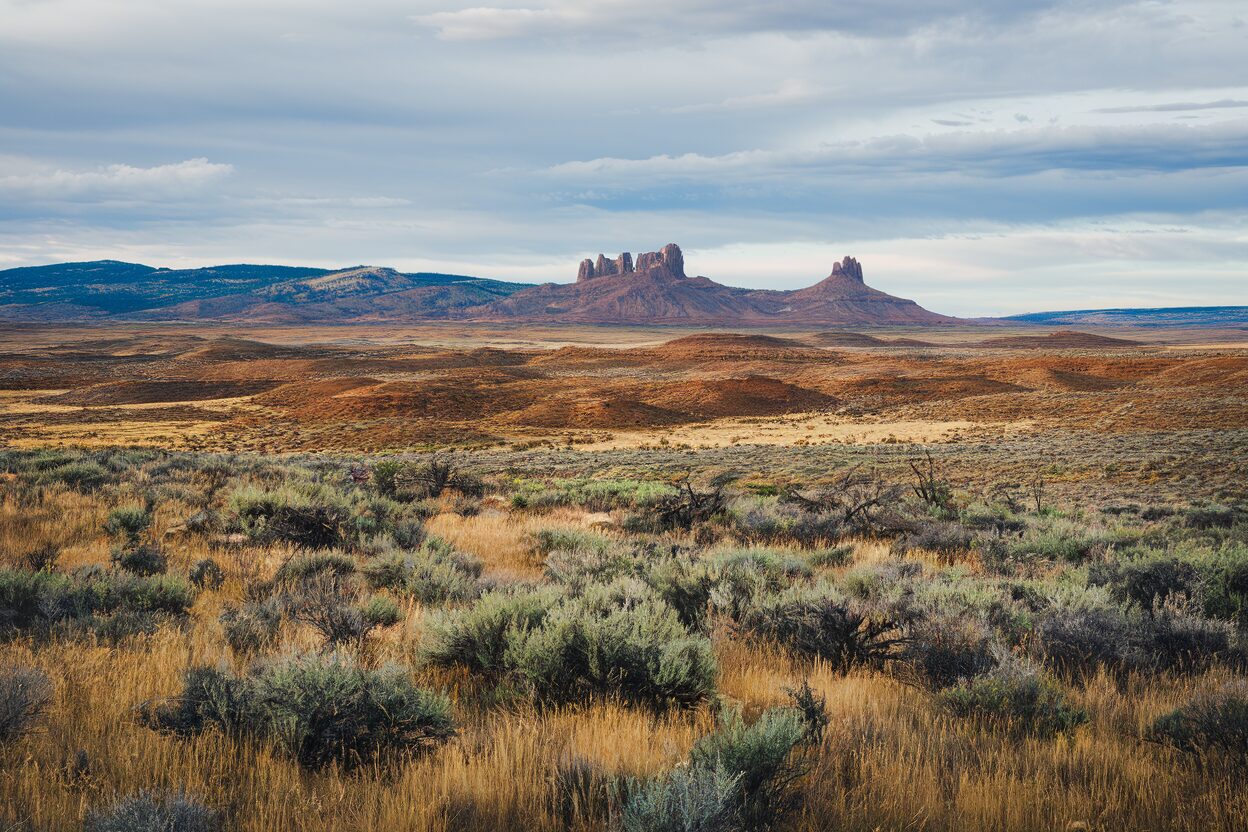
Southwest Idaho’s cattle-ranching landscape spans a remarkable range of environments: from the irrigated river bottoms of the Payette and Snake Valleys to the high desert benchlands of Owyhee County and the mountain foothills of Washington and Adams Counties. Each zone has its own carrying-capacity profile, seasonal management rhythm, and market access considerations.
Owyhee County: Idaho’s Ranching Frontier
Owyhee County — Idaho’s largest county by area — is home to some of the state’s most traditional cattle operations: large-acreage deeded ranches supplemented by BLM grazing allotments in a high-desert landscape of sage and seasonal drainages. Per-acre prices here are generally lower than in the Treasure Valley, reflecting both distance from urban markets and the carrying-capacity constraints of arid range. Buyers seeking room to run a meaningful cow-calf operation often focus here first.
Washington and Adams Counties
The Weiser and Council areas offer a transitional environment: lower-elevation irrigated valleys for hay production and winter range, with access to summer-mountain grazing on higher ground. This seasonal vertical migration is the traditional management rhythm of many operations here — understand the grazing-season calendar and move logistics before you buy.
Eastern Oregon Connectivity
Many buyers shopping Idaho cattle ranches also look at Malheur and Baker Counties, Oregon, where the landscape and cattle culture are continuous across the state line. We’re licensed in both states and evaluate opportunities on either side with equal fluency.
Financing a Working Ranch Purchase
Cattle-ranch financing is a specialized discipline. The collateral — land, permits, water rights, livestock, and equipment — doesn’t fit neatly into conventional residential underwriting, and buyers who approach traditional banks first often find the process slow and the terms unsuitable.
USDA Farm Service Agency Programs
The USDA Farm Service Agency (FSA) offers Farm Ownership Loans for beginning farmers and ranchers who cannot obtain commercial credit on reasonable terms. Limits and interest rates change periodically — contact your local FSA county office early, as processing times can be substantial. For a full overview of rural financing programs, see our Complete Guide to Buying Horse Property in Eastern Oregon.
Farm Credit Institutions
Farm Credit System lenders — including AgWest Farm Credit and similar cooperatives — are the most common source of agricultural real estate financing for established producers in Idaho. They understand how to value water rights, grazing permits, and livestock carrying capacity as components of ranch collateral. Amortization periods of twenty to thirty years are common on agricultural real estate loans, which reduces annual debt service compared to shorter-term commercial financing. Plan to have a down payment of at least twenty to thirty percent, as most agricultural lenders in the current environment expect meaningful equity from buyers.
Due Diligence Before You Buy
Cattle-ranch due diligence is more complex than residential or even general rural property due diligence. These are the key components that experienced buyers and their advisors work through systematically.
Permit and Lease Verification
If the ranch includes BLM or state grazing permits, obtain copies of the current permit documents, including the AUM authorization, permitted seasons, allotment boundaries, and any outstanding compliance obligations (weed control, fence requirements, water-development commitments). Confirm with the relevant BLM field office or Idaho Department of Lands office that the permit is in good standing and that no pending actions could reduce the AUM authorization. State lease records are available through the Idaho Department of Lands.
Water-Right Verification
Pull a full IDWR water-rights report on all rights appurtenant to the property, including stock water and irrigation. Confirm that no rights have been forfeited for non-use, that no curtailments are active, and that the priority dates are consistent with what the seller has represented. This is non-negotiable due diligence — do not skip it or defer it to the post-closing period.
Range-Condition Assessment
Commission an independent range-condition evaluation from a qualified range consultant or your county NRCS office. The report will identify vegetative composition, cover, and productivity, flag invasive-species problems, and deliver an independent carrying-capacity estimate. A meaningful gap between the seller’s stated capacity and the consultant’s finding is a negotiating point — or a deal-breaker if the economics don’t hold.
Infrastructure and Operational Records
Have qualified professionals inspect irrigation infrastructure (pump tests, well logs, delivery-system condition), fencing (sample multiple fence lines away from the road), and corral and working facilities. If livestock are included, request health records, vaccination history, and current pregnancy-check results. If the ranch has been leased, review the lease terms and the tenant’s operational history — understanding historical stocking rates relative to permitted capacity reveals whether the range has been managed sustainably.
Ready to explore current Idaho cattle-ranch listings? Browse our inventory:
Frequently Asked Questions
How much does a cattle ranch cost in Idaho?
Cattle ranch prices in Idaho range from under $1 million for smaller operations to $20 million+ for large legacy ranches with extensive deeded and permitted acreage. In our Southwest Idaho service area, working cattle ranches with irrigated hay ground and BLM grazing permits typically price between $3,000 and $8,000 per deeded acre depending on water rights, improvements, and carrying capacity. LandSearch reports an average listing of about $5.1 million across 53 current Idaho cattle ranch listings.
What is the best state to own a cattle ranch in?
Idaho offers a strong combination of affordable land, available water, established BLM grazing allotments, and a ranching-friendly regulatory environment. Compared to Montana or Wyoming, Idaho cattle country (particularly the Snake River plain and Owyhee County rangeland) often delivers more AUMs per dollar. Oregon’s Malheur County also offers competitive pricing with access to Vale BLM District grazing allotments.
How many cows do you need to make $100,000 a year?
The number depends on your cost structure, calf prices, and whether you own or lease grazing land. A rough industry estimate is 200 to 300 cow-calf pairs to generate $100,000 in net income, but that assumes efficient management, low debt, and favorable market conditions. Many ranchers supplement income with hay sales, hunting leases, or off-ranch employment. We help buyers evaluate realistic income projections based on the specific property’s carrying capacity.
Are cattle ranches profitable?
They can be, but margins are thin and highly dependent on cattle prices, feed costs, water availability, and management skill. USDA data shows average cow-calf returns fluctuating significantly year to year. Properties with strong water rights, low-cost BLM grazing, and on-ranch hay production tend to be more resilient. We help buyers distinguish between lifestyle ranches and genuinely income-producing operations during due diligence.
How much would a 10,000 acre cow farm be worth?
It depends entirely on water, improvements, and whether the acreage is deeded or permitted. A 10,000-acre ranch with irrigated hay meadows, senior water rights, and an established BLM grazing permit could be worth $15 million to $30 million+ in today’s market. The same acreage in dry rangeland without water or permits might sell for $1 to $3 million. Per-acre pricing means very little without understanding the water and permit situation.
If you have a specific operation size, AUM target, county preference, or budget range in mind, let’s talk. We can help you identify properties that fit your criteria before they hit the open market.
Written by Kellie Robinson, broker/owner of True North Equine Land & Ranch, licensed in Idaho and Oregon. Kellie specializes in rural land transactions including working cattle ranches, horse properties, and agricultural land across southwest Idaho and eastern Oregon.
Market data disclaimer: AUM-per-acre estimates, carrying-capacity ranges, and other quantitative information in this post are general estimates drawn from NRCS and extension resources and should be treated as orientation figures only. Actual carrying capacity for any specific property requires independent range evaluation by a qualified professional. BLM permit and water-right information changes over time — verify current status with IDWR and the relevant BLM field office before making any purchase decision. True North Equine Land & Ranch does not guarantee the accuracy of third-party data. Full Disclaimer.
Broker/Owner of True North Real Estate Group, licensed in Idaho and Oregon. Competitive reiner, rancher, and 15+ years helping buyers find land that works.