Farms and Farmland for Sale in Idaho: What Buyers Should Know
Kellie Robinson · July 14, 2026 · 14 min read
True North Equine Land & Ranch is a licensed real estate brokerage in Idaho and Oregon. Information deemed reliable but not guaranteed. Full Disclaimer.
When buyers search for Idaho farm property for sale, they’re often picturing something specific: clean irrigated ground, dependable water delivery, and soils with a track record of producing high-value crops. Southwest Idaho — centered on Payette County, Canyon County, and the Snake River Plain — delivers all three in a geography that has been feeding the region’s agricultural economy for more than a century. At True North Equine Land & Ranch, we help buyers navigate this market with the same rigor and local knowledge we bring to ranch and horse-property transactions. Kellie Robinson, our broker-owner with fifteen-plus years in Idaho and Oregon rural real estate, knows the difference between a soil survey that looks promising on paper and ground that actually performs.
This guide is specifically about farm and cropland purchases — a distinct category from the ranch and horse-property content that fills most of our blog. Whether you’re a beginning farmer pursuing your first irrigated parcel, an existing operator looking to expand, or an out-of-state investor interested in Idaho’s agricultural land market, the sections below will orient you to the key variables: land types and crops, water and soil, financing programs, tax and zoning rules, and the due-diligence steps that separate smart farmland acquisitions from expensive mistakes.
Farm vs Ranch: Different Intentions, Different Searches
The words “farm” and “ranch” are often used interchangeably in casual conversation, but in the rural real estate market they describe meaningfully different property profiles and buyer needs. Understanding the distinction helps you focus your search and ask the right questions during due diligence.
What Defines a Farm Purchase
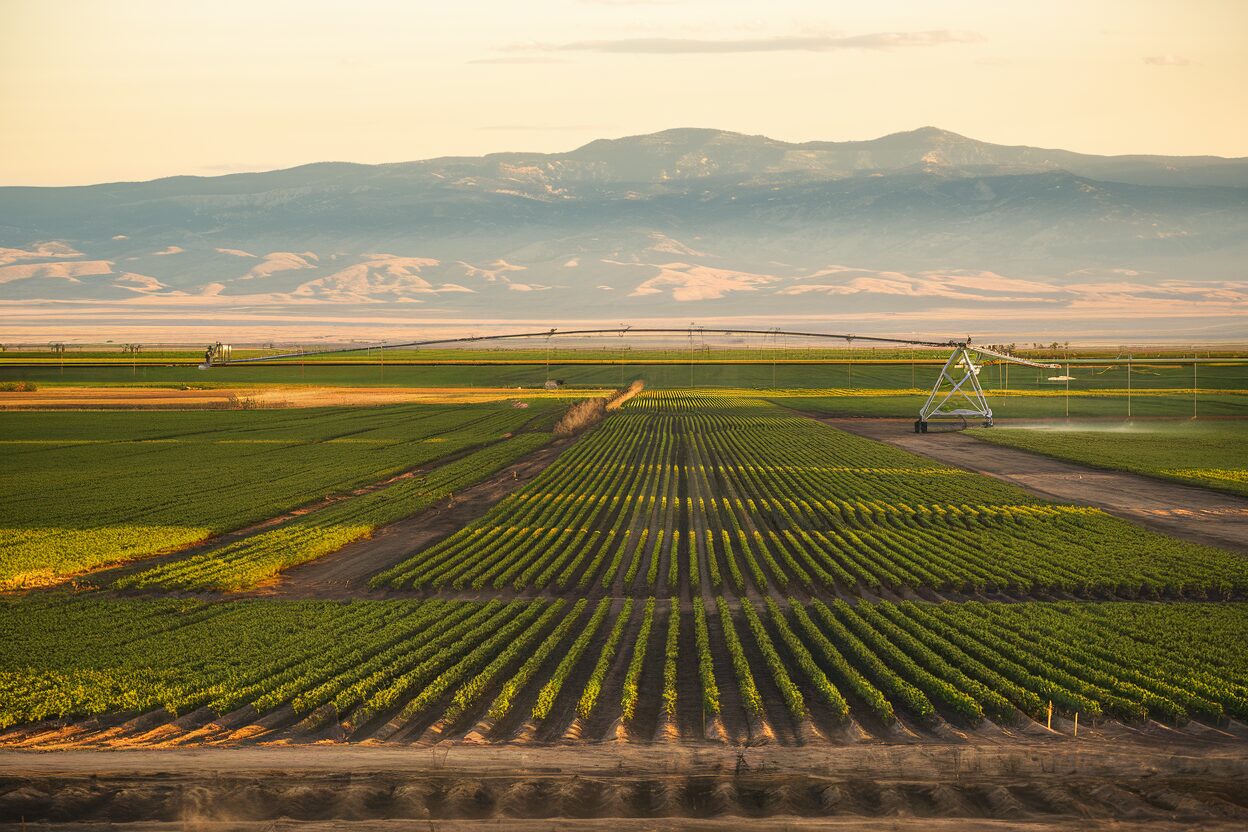
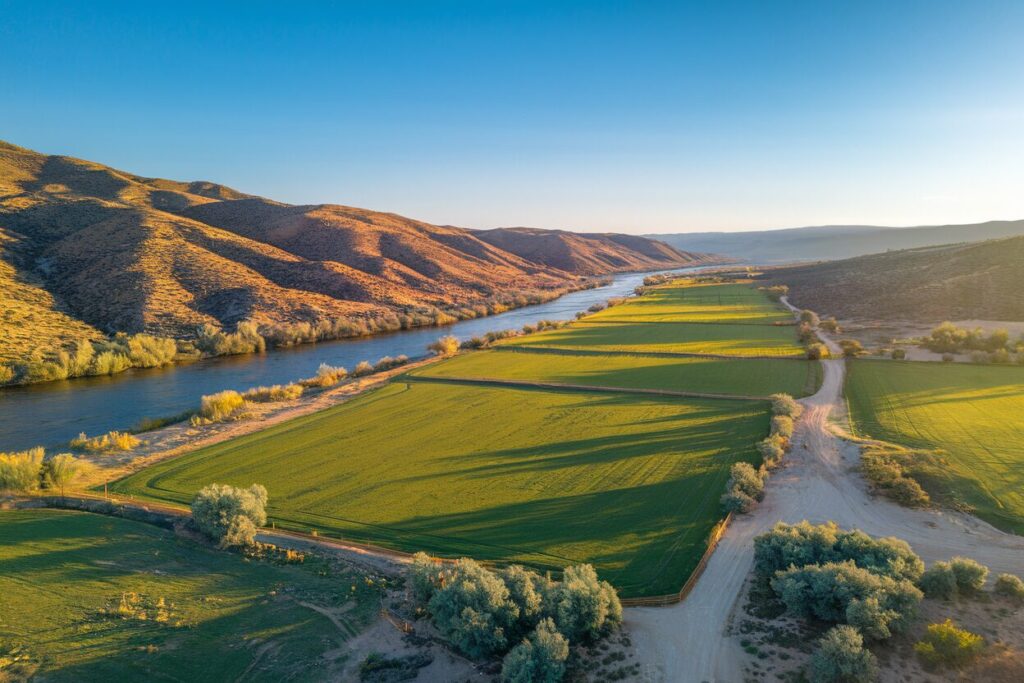
In the context of southwest Idaho real estate, a farm property is primarily about crop production from tilled soil. Buyers are evaluating tillable acres, soil class, water availability, and — increasingly — existing lease arrangements with tenant farmers. The residence and outbuildings matter, but they play a supporting role to the productive cropland. Irrigated cropland in Idaho’s Snake River Plain grows onions, sugar beets, hay, corn, small grains, mint, and specialty crops depending on soil type, water availability, and local market access. The National Resources Conservation Service (NRCS) soil survey data, accessible through the Web Soil Survey tool, is a primary due-diligence resource for any farmland buyer.
What Defines a Ranch Purchase
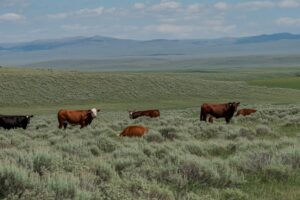
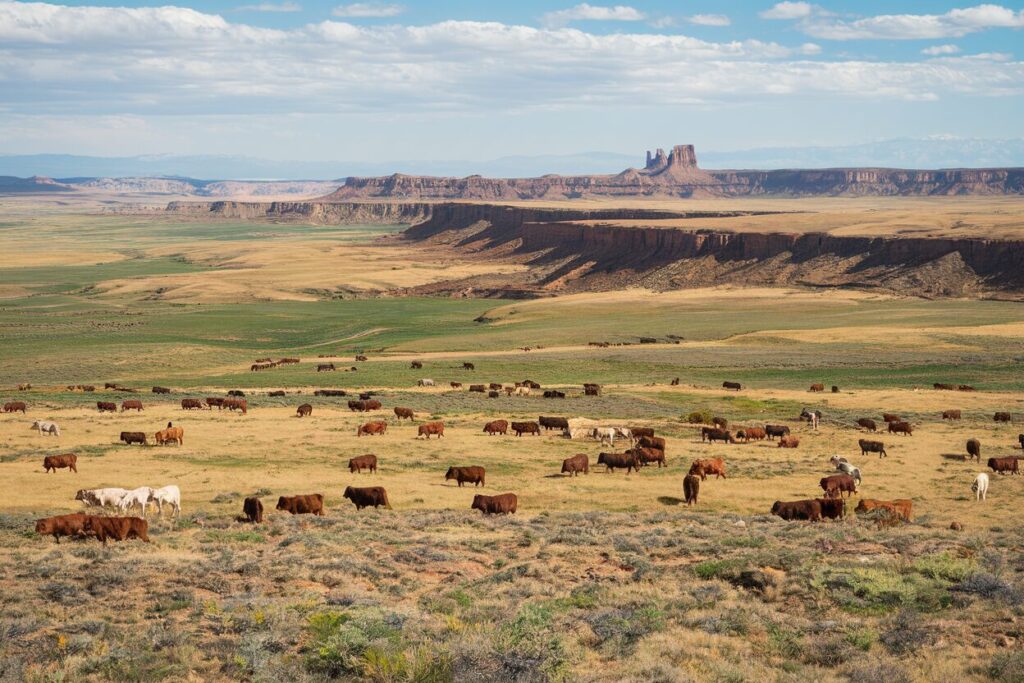
Ranch properties, by contrast, are evaluated more on grazing capacity, livestock infrastructure, and carrying capacity. Tilled cropland may be present — a hay field or grain plot — but the operational heart of the ranch is its ability to support cattle, horses, or other livestock on perennial pasture and range. We cover the ranch buyer’s framework in depth in our companion guide, Idaho Ranch Property for Sale: A Buyer’s Guide to the Payette & Treasure Valley Region.
Overlap: Mixed-Use Operations
Many properties blend the two categories: irrigated alfalfa ground that also supports a small cow herd, or a farm that runs horses for working cattle. These mixed-use properties require a buyer who understands both worlds — or a broker who does. When you’re evaluating a property that straddles both categories, be clear about which element is driving your purchase decision, because it shapes which comparables are most meaningful in valuation and which due-diligence steps matter most.
Southwest Idaho’s Agricultural Heartland
Southwest Idaho’s agricultural production is anchored in the Snake River Plain, where volcanic soils and an arid climate that rewards irrigation have created some of the most productive dryland-converted-to-irrigated cropland in the American West. The region’s agricultural profile is diverse:
Common crops and estimated returns in Southwest Idaho
Crop
Water Requirement
Typical Yield
Market Note
Alfalfa hay
3-4 acre-feet/season
4-6 tons/acre
Steady local demand from livestock operations
Grass hay
2-3 acre-feet/season
2-4 tons/acre
Lower input cost, good for horse hay market
Corn (silage)
2.5-3.5 acre-feet/season
20-25 tons/acre
Requires established dairy/feedlot market
Sugar beets
2.5-3 acre-feet/season
25-30 tons/acre
Contract with Amalgamated Sugar required
Onions
2-2.5 acre-feet/season
400-600 cwt/acre
Malheur County is a major production area
Onions
The Treasure Valley — straddling the Idaho-Oregon border around Ontario, Nyssa, Parma, and Payette — is one of the largest onion-producing regions in the United States. Malheur County, Oregon and Canyon and Payette Counties, Idaho contribute substantially to national supply. Land with a history of successful onion production carries a premium because of established irrigation infrastructure, appropriate soil drainage, and proximity to packing and storage facilities.
Sugar Beets
The Snake River Plain has a long history of sugar-beet production tied to the Amalgamated Sugar Company’s processing facilities in the region. Sugar-beet contracts are an important part of the cash-flow picture for farms in this corridor; buyers should understand how acreage contracts work and whether existing contracts can be transferred.
Hay and Alfalfa
Alfalfa and grass hay are the backbone of much of southwest Idaho’s irrigated crop mix, feeding both local livestock operations and an export hay market that has grown substantially over the past decade. Multiple cuttings are possible in most of the region given the long growing season, and well-managed irrigated alfalfa ground is consistently in demand from ranchers expanding their winter-feed base.
Specialty Crops: Mint, Corn Seed, Dry Beans
The Treasure Valley’s warm summers and reliable irrigation also support niche crops including peppermint, spearmint, corn seed, and dry beans. These carry higher per-acre gross revenue potential than commodity crops but come with more complex marketing requirements and tighter agronomic management windows. If you’re purchasing ground with a history of specialty-crop production, confirm whether existing contracts or production relationships are transferable.
Soil Quality, Irrigation, and Water Access
The combination of soil class and water availability is the engine of Idaho farmland value. Neither element alone tells the full story — premium ground marries high-capability soils with reliable, senior water rights and modern irrigation delivery infrastructure.
Reading a Soil Survey
The USDA Natural Resources Conservation Service (NRCS) publishes Web Soil Survey data for all of Idaho, including Payette, Canyon, Washington, and Owyhee Counties. Soil capability classes run from Class I (the best, with few limitations) to Class VIII (unsuitable for cultivation). Most high-value irrigated cropland in southwest Idaho falls in Classes I through III. Before making an offer on any significant farm parcel, pull the NRCS Web Soil Survey, understand what proportion of the mapped acres are in each capability class, and note any limitations for your intended crops. Your NRCS county office can walk you through the data — contact the USDA NRCS district office in your target county.
Irrigation Infrastructure
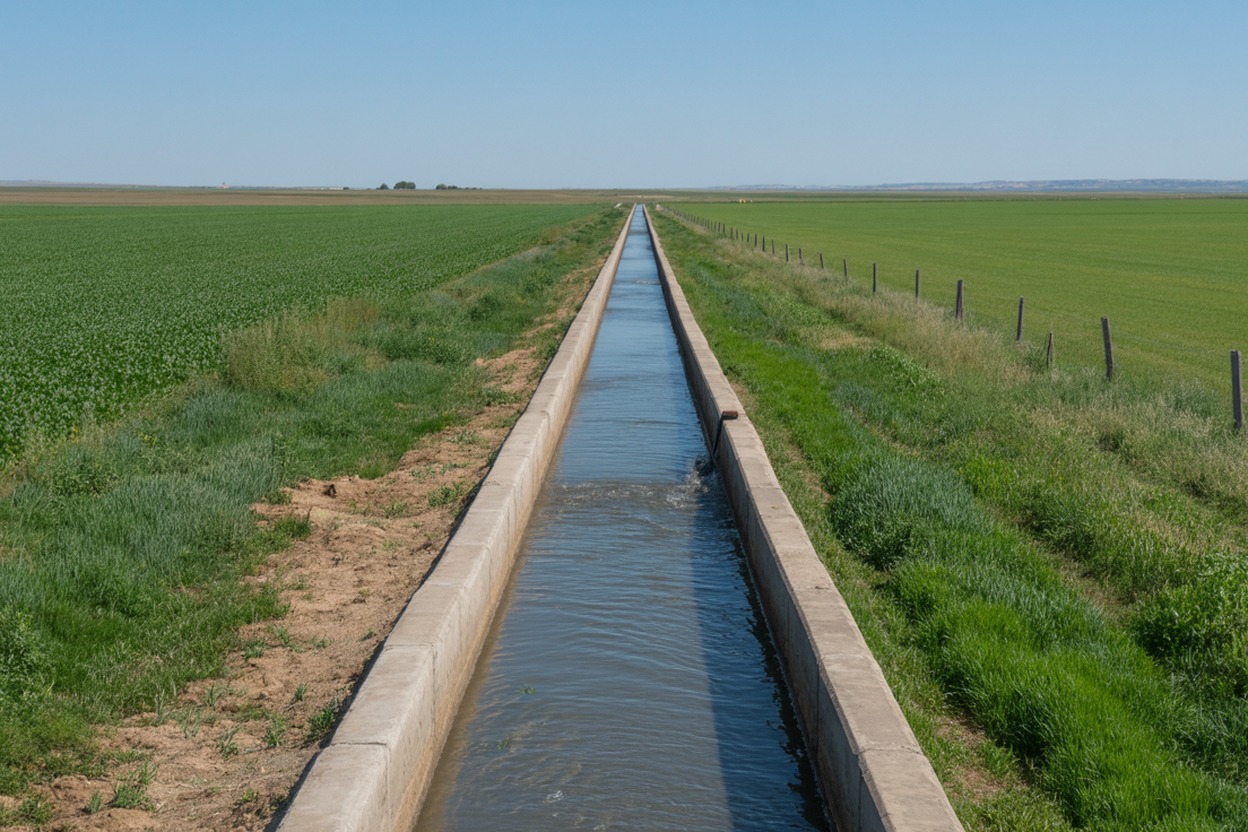
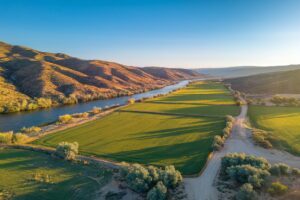
Southwest Idaho farmland is irrigated through a mix of gravity canals (delivered via irrigation districts), center-pivot sprinkler systems, wheel-line systems, and flood-furrow setups. Each infrastructure type carries different operating costs, labor requirements, and water-use efficiency profiles. Center-pivot systems require capital investment but reduce labor substantially; gravity-canal delivery is low-cost per acre-foot but requires active ditch management and coordination with district delivery schedules.
Irrigation districts like Boise Project and Black Canyon deliver water through an extensive canal network across the Treasure Valley. Verify district membership, annual assessments, and delivery reliability during due diligence. (Information deemed reliable but not guaranteed.)
Land/Crop Type
Typical Parcel Size
Primary Irrigation Need
Notes for Buyers
Irrigated row crops (onions, beets, beans)
20–200+ acres
High; 24″–36″+ applied water per season
Verify district delivery reliability and senior water-right status
Check cutting history, soil drainage, and hay market access
Dryland grain/small grains
80–500+ acres
Low/none; relies on precipitation
Yields variable; suited to higher-elevation benchlands
Specialty crops (mint, corn seed)
10–100 acres
Moderate to high; crop-specific timing critical
Contract transferability and processor relationships matter
Mixed irrigated/pasture
20–150 acres
Moderate; seasonal flood or wheel-line typical
Evaluate both crop and livestock carrying capacity
General guidance as of 2026. Irrigation needs vary by crop variety, soil type, and season. Verify with local extension and your agronomist before purchase.
Water Rights for Idaho Farmland
Idaho follows the prior-appropriation doctrine: “first in time, first in right.” In drought years, junior water-right holders are curtailed first. For farmland, understanding the priority date of the appurtenant water right — and how it ranks relative to other rights on the same source — is critical to assessing drought-year risk. We cover prior appropriation and water-right verification in depth in our dedicated post: Understanding Water Rights When Buying Ranch Property in Oregon and Idaho. The Idaho Department of Water Resources (IDWR) maintains a public water-rights database that should be reviewed during due diligence on any irrigated farmland purchase.
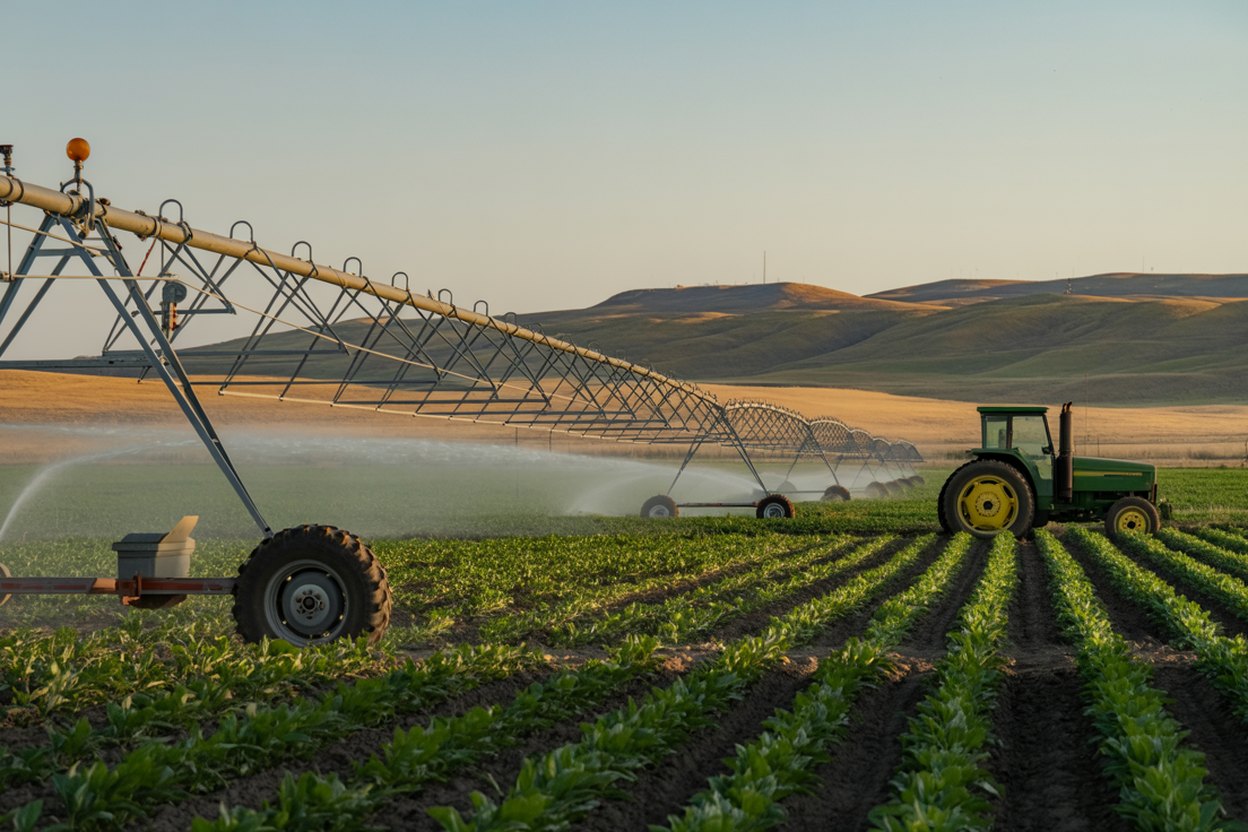
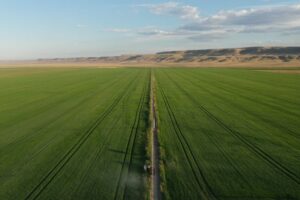
Equipment infrastructure and field condition give early signals about a farm’s operational history. Request maintenance records and soil test results as part of your due diligence. (Information deemed reliable but not guaranteed.)
Agricultural Financing Programs
Farmland financing in Idaho is distinct from residential lending. Lenders who specialize in agricultural real estate — rather than conventional banks applying residential underwriting criteria to rural properties — will give you a more realistic assessment of what’s achievable and at what cost.
Farm financing comparison for Idaho agricultural property
Lender Type
Typical Down Payment
Best For
Key Consideration
AgWest Farm Credit
20-30%
Working operations with revenue
Understands ag collateral and seasonal cash flow
USDA FSA
Up to 0% (direct)
Beginning farmers/ranchers
Must show viable farm plan; longer processing
Commercial bank
25-35%
Diversified farm/ranch buyers
May require off-farm income documentation
Seller financing
10-25% negotiable
Buyers who don’t qualify conventionally
Review balloon clauses and transfer terms
USDA Farm Service Agency (FSA) Loans
The USDA Farm Service Agency (FSA) offers Farm Ownership Loans and Beginning Farmer loans that can be valuable for buyers who are early in building their agricultural equity base. FSA Direct Farm Ownership Loans are targeted to farmers who cannot obtain commercial credit on reasonable terms, with loan limits and interest rates set periodically — verify current program parameters directly with your local FSA county office, as they change. Beginning Farmer loans carry specific eligibility criteria and may offer more favorable terms for first-time agricultural land purchasers.
Farm Credit Institutions
AgWest Farm Credit and other Farm Credit System institutions specialize in agricultural lending and are generally more fluent in evaluating rural land collateral — including water rights, leases, and specialty-crop income — than conventional mortgage lenders. Farm Credit lenders can often provide longer amortization periods and more flexible terms on agricultural real estate than commercial banks. They are worth contacting early in your financing search.
Owner Financing and Land Contracts
In the farmland market, seller financing (also called a land contract or contract for deed) is more common than in residential real estate, particularly for established operators selling to trusted buyers or family. These arrangements can offer more flexible terms but require careful legal structuring — use an Idaho real estate attorney with agricultural experience.
Agricultural Zoning and Property Tax Assessment
Idaho’s agricultural land protections operate at the county level through zoning designations and at the state level through preferential tax assessment — two separate but related systems that significantly affect the economics of farm ownership.
Agricultural Zoning by County
Payette, Canyon, Washington, and Owyhee Counties each maintain their own zoning ordinances. Most productive farmland is zoned agricultural with minimum parcel sizes designed to preserve land in productive use and prevent fragmentation. Conditional uses — such as operating an agritourism business, building additional residential structures, or pursuing value-added processing on site — may require a conditional-use permit. Review the county zoning code before assuming any planned use is permitted outright.
Idaho’s Agricultural Property Tax Assessment
Under Idaho Code, qualifying agricultural land is assessed on its agricultural production value rather than its highest-and-best-use market value. On productive irrigated cropland, this can reduce the assessed value — and therefore the property tax obligation — substantially compared to a market-value assessment. The catch: if qualifying land is converted to non-agricultural use, the Idaho State Tax Commission may assess a rollback of the deferred tax benefit for up to five years. For buyers who plan to continue agricultural use, the benefit is real and meaningful. For buyers who might later develop or subdivide, the rollback exposure is a liability to quantify before closing. Consult with the county assessor’s office and a tax advisor familiar with Idaho ag-assessment rules. The University of Idaho Extension produces landowner resources on Idaho’s agricultural property tax programs that are a good starting point.
Due Diligence for Farmland Buyers
Farmland due diligence has a different checklist than a residential purchase or even a ranch acquisition. Here are the steps we consistently emphasize with our farmland buyers.
Soil Testing and Field History
Request current soil-test results from the seller — pH, organic matter, nutrient levels, and any contamination testing if the land has a history of herbicide-intensive cropping. If the seller doesn’t have recent tests, budget for an independent soil-sampling program before removing your due-diligence contingency. Field history (what crops were grown when) affects soil health, pest and disease pressure, and your rotation options going forward.
Existing Lease Review
Farmland is frequently leased to tenant farmers on annual or multi-year cash or crop-share leases. If you’re purchasing ground that’s under lease, understand the lease terms, the termination notice requirements, and whether the existing tenant relationship is one you want to continue or exit. Idaho law governs how agricultural leases transfer on sale — review this with your attorney before closing.
Equipment, Outbuildings, and Infrastructure
Irrigation infrastructure — pivots, pumps, wells, mainlines — is expensive to replace and its condition has a direct bearing on operating cost and efficiency from day one. Request maintenance records, pump test results (for wells), and a professional evaluation of irrigation system components. The same diligence applies to any grain storage, equipment shed, or processing facility included in the sale.
Water-Right Verification
As noted above, pull a current IDWR water-rights report on all rights appurtenant to the property. Confirm that the rights are in good standing, that no decrees or curtailments are active, and that the priority dates align with what the seller has represented. This is not optional — it is the most important piece of farmland due diligence in the western United States.
Ready to start searching Idaho farmland listings? Browse our current inventory:
Frequently Asked Questions
How much does farm land cost per acre in Idaho?
In our service area across Payette, Ada, Canyon, Gem, and Owyhee counties, irrigated farmland with senior water rights typically trades between $4,000 and $9,000+ per acre. Non-irrigated pasture and dryland crop ground runs significantly less. Statewide USDA figures show Idaho irrigated cropland averaging around $9,290 per acre, but local prices depend on water rights, soil quality, irrigation district, and proximity to Boise.
What should I look for when buying farm property?
Start with water: verify what water rights convey, check well permits and flow rates, and confirm irrigation district membership and annual assessments. Then evaluate soil quality (request a NRCS soil survey), drainage patterns, road access for equipment and deliveries, zoning restrictions, and whether the property qualifies for agricultural tax assessment under Idaho Code 63-604. We build a property-specific due diligence checklist for every farm buyer.
How do water rights work when buying farm land in Idaho?
Water rights in Idaho are separate from the land and follow the prior appropriation doctrine: first in time, first in right. When buying farm property, you must verify that the water rights convey with the sale, confirm they have been used within the past five years (to avoid forfeiture risk), and understand the priority date relative to other users in the basin. We check IDWR records, irrigation district status, and well permits before every offer.
Is farm land a good investment in Idaho?
Idaho farmland has appreciated steadily over the past decade, driven by water scarcity in other Western states and growing demand for irrigated ground. Properties with senior water rights tend to hold value well even in market downturns. However, farm returns depend on commodity prices, water availability, and management quality. We help buyers evaluate both the investment potential and the operational realities of farm ownership.
What is the best state to buy farm land?
Idaho consistently ranks among the top Western states for farmland value relative to productivity. Eastern Oregon (particularly Malheur County) offers even lower per-acre prices for irrigated ground. Both states have strong irrigation infrastructure built by the Bureau of Reclamation. Our dual-licensed brokerage covers both sides of the Idaho-Oregon border, so buyers can compare options across state lines.
Written by Kellie Robinson, broker/owner of True North Equine Land & Ranch, licensed in Idaho and Oregon. Kellie specializes in rural land transactions including farmland, ranch, and equine properties across the Treasure Valley and eastern Oregon.
Market data disclaimer: Acreage ranges, irrigation figures, soil-capability descriptions, and other quantitative information in this post reflect general market observation and publicly available data as of early 2026. Buyers should independently verify all data with licensed appraisers, USDA NRCS, IDWR, county assessors, and other relevant authorities before making any purchase decision. True North Equine Land & Ranch does not guarantee the accuracy of third-party information. Full Disclaimer.
Broker/Owner of True North Real Estate Group, licensed in Idaho and Oregon. Competitive reiner, rancher, and 15+ years helping buyers find land that works.